Introduction
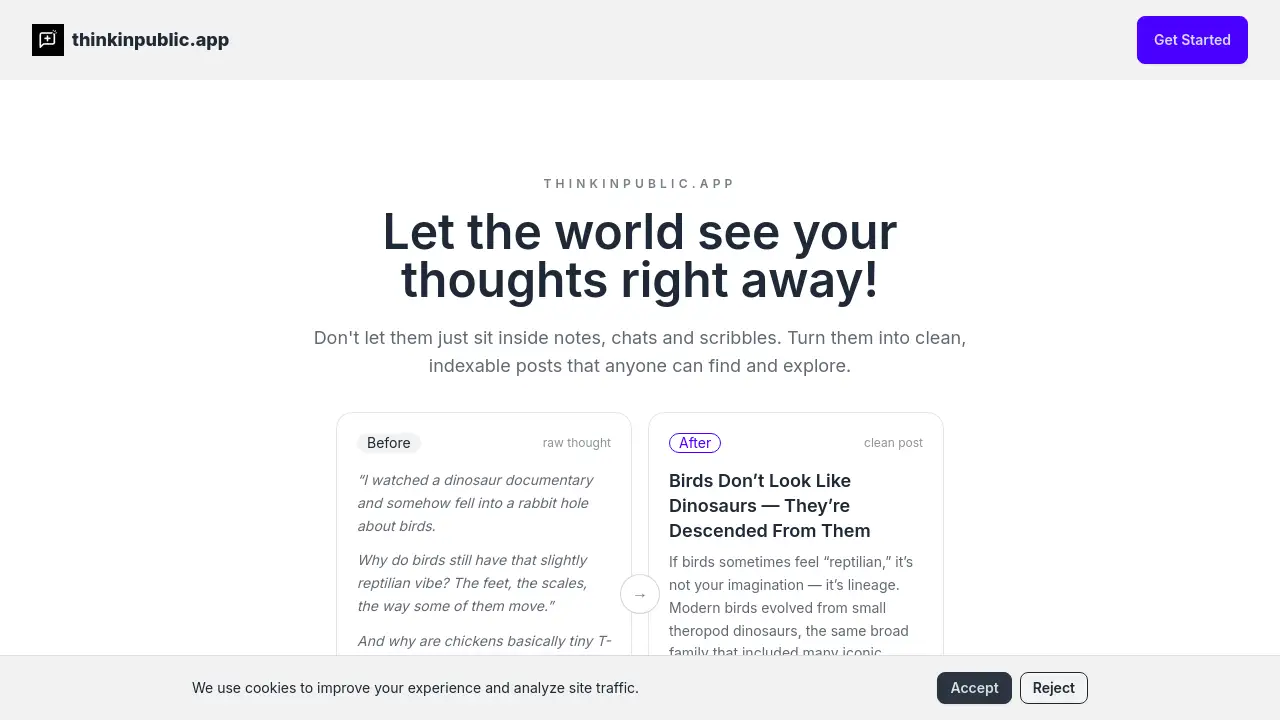
ThinkInPublic is a unique platform that turns raw notes and AI chats into clean, publishable blog posts.
What is ThinkInPublic?
ThinkInPublic is an online tool designed to bridge the gap between informal thinking and polished, public content. It addresses a common problem: many people have valuable thoughts trapped in private notes, rough drafts, or sprawling ChatGPT conversations, but lack the time or desire to format them into a proper blog post. This platform takes that raw, text-based input and automatically transforms it into a clean, readable, and well-structured article. The result is a publishable piece that can be shared with the world, indexed by search engines, or kept for personal reference. It is particularly suitable for thinkers, researchers, hobbyists, and professionals who want to document and share their ideas without the friction of traditional writing and formatting. By lowering the barrier to publishing, ThinkInPublic helps users build a personal knowledge base and establish credibility online through authentic content.
Key Features of ThinkInPublic
Paste and Publish Simplicity
Users can simply copy and paste text from any source—like a ChatGPT conversation, personal notes app, or a rough draft—and the platform handles the cleaning and structuring.
Automatic Structure and Formatting
The tool intelligently formats messy text, adding logical headings and paragraph breaks to create a clean, readable post without requiring manual template selection.
Flexible Publication Controls
Every post can be published publicly for indexing, kept as an unlisted link for sharing with select people, or made completely private for personal knowledge management.
Idea-Centric Organization
Content is organized around ideas, tags, and topics rather than a chronological feed, fostering discovery based on shared thinking instead of algorithmic engagement.
SEO-Friendly Output
Published posts are generated with clean URLs and semantic HTML structure, making them inherently indexable by search engines like Google to aid in discoverability and personal branding.
Credit-Based Pricing
Instead of a subscription, the platform uses a simple pay-as-you-go credit system for generating posts, offering flexibility without long-term commitment.
Use Cases for ThinkInPublic
Transforming AI Conversations
One of the core use cases is turning detailed ChatGPT or other AI assistant dialogues into coherent, standalone blog posts that capture the original thinking and insights.
Sharing Personal Research and Notes
Individuals can quickly publish their research notes, reflections, or technical reasoning on a topic, transforming private scribbles into public knowledge.
Building a Public Thought Log
Users can consistently publish their evolving thoughts on subjects of interest, creating an organic, indexable archive that builds credibility and thought leadership over time.
Creating a Personal Knowledge Base
Even for private use, the tool's structuring capabilities help users organize and clarify their own rough notes into a more usable and searchable format.
How to Use ThinkInPublic
The process to create a post with ThinkInPublic is straightforward:
- Sign up for an account on the ThinkInPublic website.
- Copy the raw text from your chosen source, such as a note-taking app or a ChatGPT conversation.
- Paste the text into the ThinkInPublic editor.
- Let the platform process the text, which automatically applies clean formatting and structure.
- Choose your publication setting (public, unlisted, or private) and publish your new blog post.
Target Audience for ThinkInPublic
- Individuals with frequent ideas and notes who dislike the formal writing process.
- Researchers and students documenting their learning and thought processes.
- Professionals looking to build an online presence and share expertise without maintaining a traditional blog.
- Hobbyists and enthusiasts who want to publicly explore niche topics.
- Anyone using AI tools like ChatGPT for brainstorming and wanting to share the results.
Is ThinkInPublic Free?
ThinkInPublic operates on a credit-based pricing model. Users need to purchase credits to generate and publish posts. There is no free tier for creating content, but reading public posts does not require an account. According to the homepage, small credit bundles start at $5.
| Plan | Price | Key Feature |
|---|---|---|
| Credit Pack | Starting at $5 | Pay-as-you-go for generating posts. No subscription. |
ThinkInPublic's Pros and Cons
| Aspect | Pros | Cons |
|---|---|---|
| Usability | Extremely low friction from thought to publication; no formatting skills needed. | Primarily for text; not suited for media-rich content management. |
| Pricing Model | Simple, credit-based pay-as-you-go system with no subscription lock-in. | No free tier for publishing; costs are incurred per post generated. |
| Content Strategy | Excellent for authentic, consistent publishing and organic SEO through indexable posts. | Less control over advanced layout and design compared to full CMS platforms. |
| Platform Philosophy | Focus on ideas and knowledge, avoiding social media-style feeds and engagement algorithms. | Network effects for discovery are smaller than on large social or publishing platforms. |
Frequently Asked Questions about ThinkInPublic
What kind of content can I publish on ThinkInPublic?
The platform is focused on text-based content. This includes ChatGPT conversations, personal notes, essay drafts, research thoughts, technical reasoning, and reflective writing. The goal is to enhance clarity and readability for these text formats.
Does content published on ThinkInPublic rank on Google?
Yes. Posts are designed to be indexable by default. They are published with clean URLs and semantic structure, which helps search engines like Google understand and rank the content, aiding in SEO and discoverability.
How is ThinkInPublic different from Notion or Google Docs?
While Notion and Docs are primarily private or collaborative workspaces, ThinkInPublic is publication-first. It is built specifically to turn unstructured ideas into public, shareable, and discoverable web pages without the complexity of a full Content Management System (CMS).
Can I control the privacy of my posts?
Absolutely. Users have full control over post visibility. You can publish a post publicly for anyone to find, keep it unlisted (accessible only via a direct link), or make it completely private for your own reference.
Do I need to be a good writer to use ThinkInPublic?
No. The platform is designed for thinkers, not necessarily writers. If you can articulate ideas in notes or conversation, ThinkInPublic can help structure them into a readable format. Writing skill is optional.
Is ThinkInPublic a social network?
No. The platform explicitly avoids feeds, algorithms, and engagement metrics. Discovery is based on topics, tags, and shared interests in ideas, positioning it as a public thinking space rather than a social network.
ThinkInPublic Tags
ThinkInPublic, publish blog posts, ChatGPT to blog, turn notes into posts, AI conversation publishing, personal knowledge base, SEO blogging, thought leadership, public thinking, clean formatting, paste and publish, idea management