Introduction
TypeSafe AI delivers reliable machine decisions.
What is TypeSafe AI?
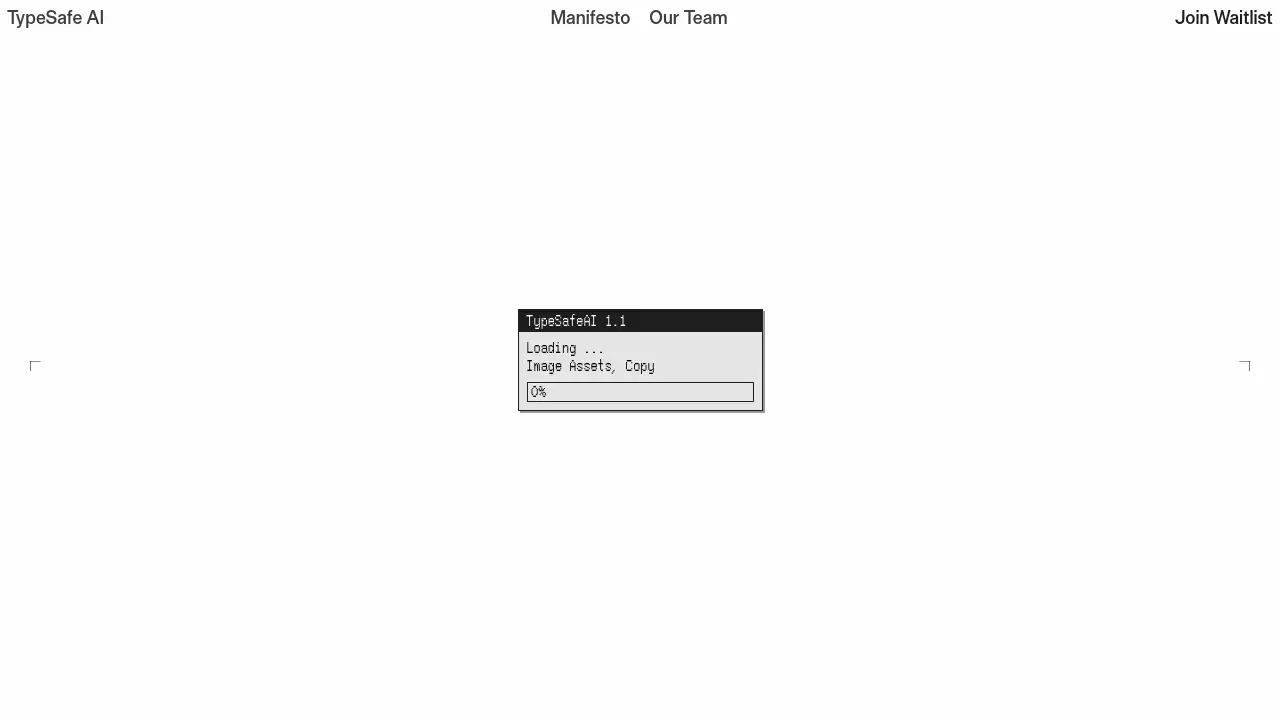
TypeSafe AI is an AI lab building machine-native intelligence infrastructure for automation. Instead of producing chat text for people, it focuses on decisions that software can act on. Its first public System One Model, Jev, is available in early access. TypeSafe AI aims to solve a practical problem: many LLMs are optimized for human preferences, instruction following, and conversation. That makes them useful for chat, but it can also create mode dropping, overconfidence, and reliability gaps. These issues often require a human in the loop. TypeSafe AI takes a different route. It builds System One Models that are natively used by machines, with a new architecture, a new sampler, and a training method called Reinforcement Learning for Calibrated Decisions (RLCD). The result is a type-safe AI system that returns typed decisions with calibrated confidence. For teams building AI automation, this means software can set thresholds, act autonomously when confidence is high, and request review when confidence is low. TypeSafe AI is not just another chat model; it is decision infrastructure for automation.
Key Features of TypeSafe AI
Machine-Native Intelligence
TypeSafe AI designs System One Models for machine use rather than human conversation. This machine-native intelligence approach produces outputs that software can parse and use directly.
Typed Decisions, Not Strings
Jev returns typed decisions instead of loose text. This makes TypeSafe AI more like code: reliable, fast, and type-safe for automation workflows.
Calibrated Confidence
Every Jev decision includes a confidence estimate. Teams can use calibrated decisions to set thresholds for autonomous action or human review.
Reinforcement Learning for Calibrated Decisions
TypeSafe AI trains models with RLCD, a training algorithm built for calibrated decisions. This differs from RLHF, which optimizes language models for human preferences.
Fast and Cost-Efficient Automation
TypeSafe AI reports that Jev can be 193.6x faster and 444.6x cheaper than LLMs on certain System One tasks. The listed price is $42 per billion input tokens, which is 238x lower input price than Claude Fable 5.1, according to the homepage.
Built for Software Workflows
Jev lets developers combine typed decisions in code to build larger workflows. This gives teams control over how intelligence is used inside their software.
Use Cases for TypeSafe AI
Software Automation
TypeSafe AI can support automation where software needs to make repeated decisions. Routing, classification, and rule-based action selection can use typed decisions with confidence estimates.
AI Decision Infrastructure
Teams can use TypeSafe AI as decision infrastructure rather than a chatbot layer. This fits products that need fast, reliable, machine-readable outputs.
Human-in-the-Loop Review
When Jev confidence is low, software can escalate the decision to a person. This helps balance automation speed with oversight.
Cost-Sensitive AI Workflows
Organizations with high-volume decision tasks may benefit from lower input pricing and faster completion times. TypeSafe AI positions Jev for workflows where LLM cost or latency is a bottleneck.
Early Access Testing
Developers can try Jev in early access to evaluate System One Models for their own automation tasks. This is useful for validating whether typed decisions and calibrated confidence fit a product.
How to Use TypeSafe AI
- Visit the TypeSafe AI website and review the early access information for Jev.
- Request access to the first System One Model if early access is available.
- Send structured questions to Jev and receive typed decisions with confidence estimates.
- Set confidence thresholds in software so Jev can act autonomously or ask for review.
- Combine Jev decisions in code to build larger automation workflows.
Target Audience for TypeSafe AI
- AI engineers and software developers building automation.
- Product teams that need machine-readable decisions.
- Data and platform teams working on AI decision infrastructure.
- Companies with high-volume classification, routing, or action-selection tasks.
- Teams exploring alternatives to chat-based LLMs for backend automation.
- Early adopters interested in System One Models and Jev.
Is TypeSafe AI Free?
Pricing information is limited. TypeSafe AI offers Jev in early access. The homepage lists $42 per billion input tokens. It also states Jev can be 238x lower input price than Claude Fable 5.1. There is no clear free plan in the reference information. Potential users should check the official TypeSafe AI site for current early access terms and pricing.
| Plan | Price | Features |
|---|---|---|
| Early Access | Not specified | Try Jev, evaluate System One Models |
| Listed usage price | $42 per billion input tokens | Jev typed decisions, calibrated confidence, automation workflows |
TypeSafe AI's Pros and Cons
| Aspect | Pros | Cons |
|---|---|---|
| Pricing | $42 per billion input tokens listed; much lower than some LLMs | No clear free plan or full public pricing details |
| Features | Typed decisions, calibrated confidence, fast performance claims | Early access only; independent benchmarks not widely available |
| Use Cases | Strong fit for software automation and machine-native intelligence | Not designed for human chat or general conversation |
| Reliability | Confidence estimates support human review and thresholds | Model can still be wrong; confidence is not a guarantee |
| Integration | More like code and type-safe | Requires developer effort to set thresholds and workflows |
Frequently Asked Questions about TypeSafe AI
What is TypeSafe AI?
TypeSafe AI is an AI lab building machine-native intelligence infrastructure for automation. Its first System One Model, Jev, returns typed decisions with calibrated confidence for software use.
What are System One Models and Jev?
System One Models are a new class of AI models built for decisions inside software. Jev is TypeSafe AI's first public System One Model, optimized for automation. Users send structured questions and receive typed decisions with probabilities.
Is Jev just a smaller LLM?
According to TypeSafe AI, Jev is not simply a smaller LLM. It is built with a different architecture, sampler, and training algorithm called RLCD, which focuses on calibrated decisions rather than human chat preferences.
How is this different from JSON mode or structured outputs?
JSON mode and structured outputs help LLMs format text as JSON. TypeSafe AI says Jev produces typed decisions with calibrated confidence, making it more like code and better suited for machine-native intelligence.
Can Jev still get things wrong?
Yes. TypeSafe AI includes confidence estimates so software can act when confidence is high and escalate when it is not. A confidence score helps manage risk, but it does not guarantee correct decisions.
How do I get started with TypeSafe AI?
Visit the TypeSafe AI website and review Jev early access information. Developers can request access, test structured questions, and set confidence thresholds for automation workflows.
TypeSafe AI Tags
TypeSafe AI, System One Models, Jev AI, machine-native intelligence, AI for automation, calibrated decisions, typed decisions, type-safe AI, AI decision infrastructure, RLCD, AI automation workflows, confidence estimates