Introduction
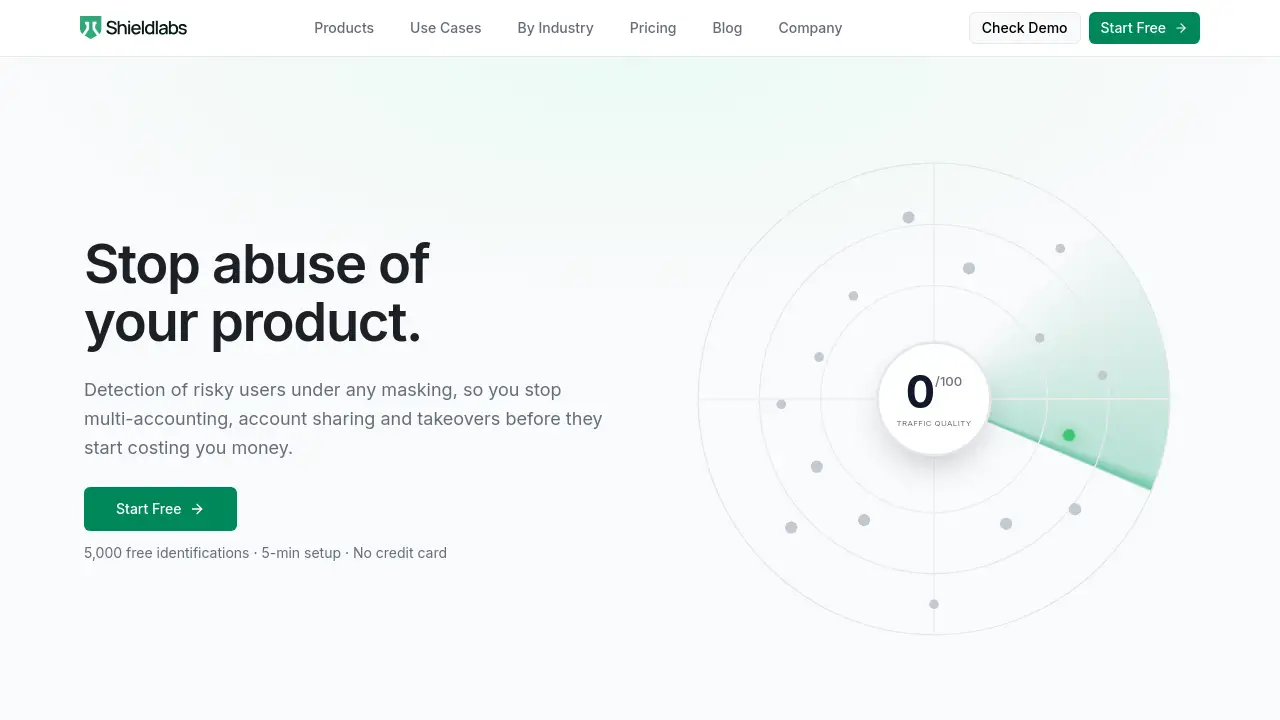
ShieldLabs is an account abuse prevention and bot detection platform that helps teams identify risky visitors, stop multi-accounting, and protect revenue. It turns anonymous traffic into explainable risk scores, so businesses can act before fake signups, account sharing, or takeovers damage growth.
What is ShieldLabs?
ShieldLabs is a visitor identification and anonymous-traffic detection platform built for account abuse prevention and bot detection. It reads device, browser, and network signals on the first visit, then creates a persistent identifier that stays accurate even after cookies are cleared, IPs rotate, or users open incognito sessions. The platform returns an explainable risk score from 0 to 100, along with the signals behind it, so teams can make better decisions about traffic quality.
The main problem ShieldLabs solves is hidden abuse. Multi-accounting, account sharing, account takeover, promo abuse, free trial abuse, and ad fraud often look like normal traffic at first. ShieldLabs surfaces these risks early, before they hurt margins, ad budgets, and customer metrics like CAC, LTV, and conversion. It is suitable for SaaS, subscription apps, marketplaces, e-commerce stores, fintech platforms, and any team that cares about clean traffic and honest accounts.
Key Features of ShieldLabs
Visitor Identification and Risk Scoring
ShieldLabs identifies each visitor using 100+ device, OS, browser, IP, and network signals. It then rolls those signals into a single risk score that is easy to act on.
Anonymity Signal Detection
The platform detects VPNs, proxies, Tor, privacy relays, datacenter IPs, anti-detect browsers, browser automation, incognito mode, and geolocation spoofing. These signals help teams understand how anonymous or risky a visit really is.
Pre-Built Abuse Patterns
ShieldLabs includes ready-made patterns for multi-accounting, account sharing, account takeover, account farms, and ban evasion. Each match is graded as Suspicious or Dangerous, with the accounts involved.
Traffic Quality Analytics
ShieldLabs measures traffic quality and shows how much of your traffic is anonymous, broken down by channel, referrer, and UTM. A single Traffic Risk score helps teams see which sources deliver real users and which ones bring invalid traffic.
API and Webhooks on Every Tier
ShieldLabs works as a detection layer. It sends risk scores and signals through an API and webhooks, so your own code decides whether to allow, review, or block a user.
Explainable Fraud Prevention
Every score comes with the signals that produced it, so ShieldLabs is not a black box. This makes fraud prevention easier to understand, test, and improve over time.
Use Cases for ShieldLabs
Multi-Accounting Detection
ShieldLabs catches one person creating many accounts from the same device, even with fresh emails, cleared cookies, or incognito mode. This helps stop repeat bonus claims and other account abuse.
Account Sharing Detection
The platform sees when one paid account is shared across many people, devices, and locations beyond a single household. This protects subscription revenue and seat-based pricing.
Account Takeover Prevention
ShieldLabs spots logins with stolen credentials while still recognizing legitimate users behind VPNs or incognito sessions. It helps reduce unauthorized access and account takeovers.
Promo and Bonus Abuse Prevention
ShieldLabs detects the same person farming sign-up bonuses, referral credits, and promo codes across throwaway accounts. This keeps promotions fair and protects marketing spend.
Free Trial Abuse Detection
The platform identifies users who cycle through free trials on fresh emails from the same device. This reduces free-riding and improves conversion quality.
Ad and Traffic Fraud Filtering
ShieldLabs filters bot clicks, datacenter traffic, and click farms out of paid campaigns. This helps teams pay for real people, not fake visits.
How to Use ShieldLabs
- Create a free ShieldLabs account and get 5,000 free identifications. No credit card is required.
- Add one JavaScript snippet to your website. Setup is designed to take about five minutes.
- ShieldLabs collects 100+ signals on each visit and identifies the visitor.
- Receive an explainable risk score from 0 to 100 through the API and webhooks.
- Set your own rules in your code to allow, review, or block users.
- Monitor traffic quality, patterns, and risk analytics to improve account abuse prevention over time.
Target Audience for ShieldLabs
- SaaS and subscription businesses that want to stop account sharing and free trial abuse.
- E-commerce stores and marketplaces that need cleaner traffic and fewer fake accounts.
- Ad and growth teams that want to reduce invalid traffic and protect ad budget.
- Fintech and online platforms that need stronger fraud prevention and account takeover detection.
- Trust and safety teams that need explainable risk scores and ready-made abuse patterns.
- Developers and product teams looking for a visitor identification API with webhooks.
Is ShieldLabs Free?
ShieldLabs offers a free start with 5,000 free identifications and no credit card. Paid self-serve plans scale with monthly identifications. The homepage shows the following plans, though pricing may change over time.
| Plan | Price | Features |
|---|---|---|
| Free | $0 | 5,000 free identifications, 5-minute setup, no credit card |
| Starter | $79/month billed yearly | 25,000 identifications/month, identification, anonymity signals, risk scoring, patterns, analytics, API, webhooks, support |
| Growth | $319/month billed yearly | 150,000 identifications/month, all core features, most popular |
| Scale | $799/month billed yearly | 500,000 identifications/month, all core features, 99.9% SLA |
ShieldLabs's Pros and Cons
| Aspect | Pros | Cons |
|---|---|---|
| Pricing | Free tier and transparent self-serve plans | Paid plans may be high for very small teams |
| Features | Visitor identification, risk scoring, anonymity signals, pre-built patterns, traffic analytics | It is a detection layer, not a full block/allow system |
| Setup | One JavaScript snippet, about 5-minute install | API and webhooks require some developer work |
| Accuracy | Homepage claims up to 99% accuracy and explainable scoring | Results depend on traffic mix and implementation |
| Support | API and webhooks included on every tier | No phone support mentioned in public content |
Frequently Asked Questions about ShieldLabs
What is ShieldLabs?
ShieldLabs is an account abuse prevention and bot detection platform. It identifies visitors, detects anonymous traffic, and returns explainable risk scores with the signals behind them.
How does ShieldLabs detect account abuse?
ShieldLabs reads 100+ device, browser, and network signals on the first visit. It links visitors, devices, and accounts into a single graph, then uses pre-built patterns to surface multi-accounting, account sharing, account takeover, and ban evasion.
Does ShieldLabs block users automatically?
No. ShieldLabs is the detection layer. It provides the risk score and anonymity signals, while your own code decides whether to allow, review, or block a user. You set the rules.
How much does ShieldLabs cost?
ShieldLabs starts free with 5,000 identifications. Paid plans shown on the homepage start at $79 per month billed yearly for 25,000 identifications. Higher tiers support 150,000 and 500,000 identifications per month.
Is ShieldLabs easy to install?
Yes. ShieldLabs uses one JavaScript snippet and is described as a 5-minute setup. API and webhooks are available on every tier for teams that want deeper integration.
Can ShieldLabs detect VPNs and anti-detect browsers?
Yes. ShieldLabs detects VPNs, proxies, Tor, privacy relays, datacenter IPs, and anti-detect browsers, and it can still recognize returning visitors after cleared cookies or rotated IPs.
ShieldLabs Tags
ShieldLabs, account abuse prevention, bot detection, visitor identification, fraud prevention, multi-accounting detection, account sharing detection, account takeover prevention, anonymous traffic detection, traffic quality, risk score, ad fraud filtering, free trial abuse, promo abuse prevention