Introduction
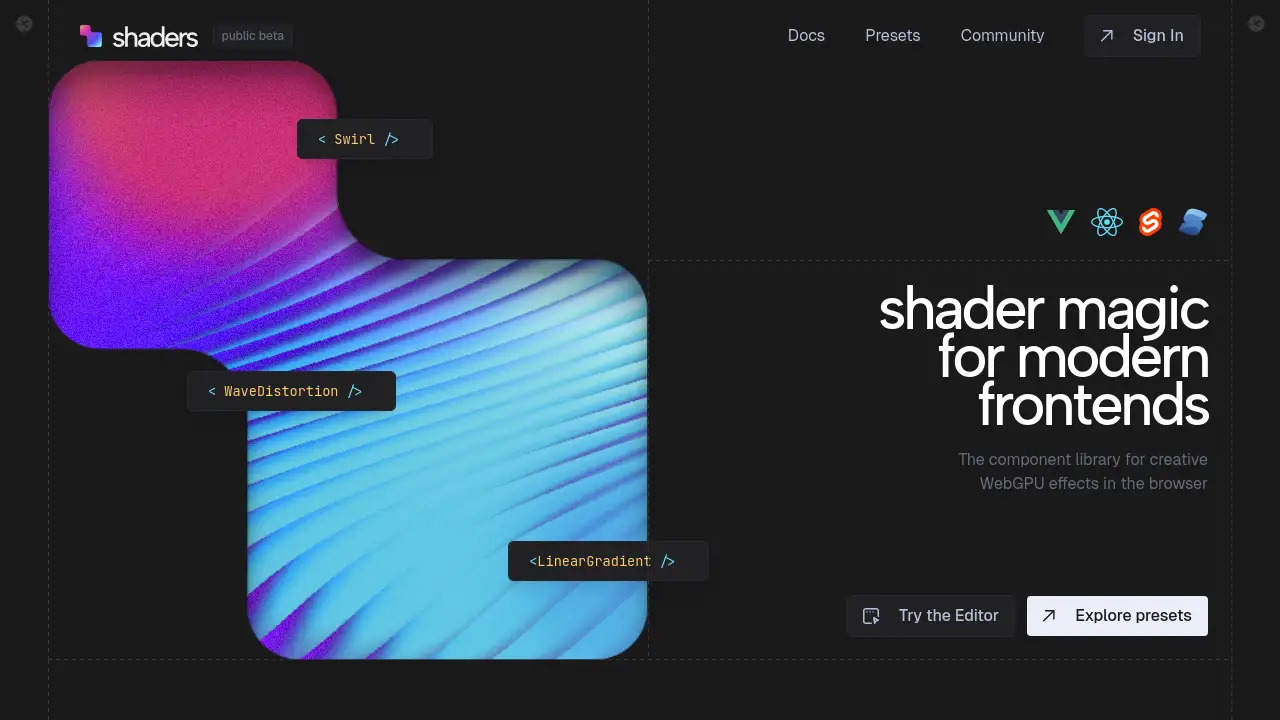
Shaders is a component library for creating creative WebGPU effects in modern frontend frameworks.
What is Shaders?
Shaders is a specialized library that provides a collection of pre-built components for implementing WebGPU-powered shader effects directly within popular frontend frameworks like Vue, React, Svelte, and Solid. It solves the problem of the high technical barrier and complexity typically associated with creating custom, interactive, and visually stunning graphics for the web using WebGL or WebGPU. This product is suitable for frontend developers and design engineers who want to enhance user interfaces with dynamic visuals without deep expertise in shader programming or graphics APIs. By offering a component-based, framework-native approach, Shaders matters because it democratizes access to high-performance web graphics, enabling teams to ship creative, engaging experiences faster and more reliably.
Key Features of Shaders
74+ Production-Ready Components
The library offers over 74 different components, such as WaveDistortion and LinearGradient, providing a wide range of creative WebGPU effects out of the box.
Framework-Agnostic Design
Components are designed to work seamlessly and natively within modern frontend frameworks including Vue, React, Svelte, and Solid, ensuring easy integration.
Visual Design Editor
Users can design and compose shader effects visually in an editor and then export clean, production-ready code for their specific framework.
Highly Composable Architecture
Components can be stacked, nested, masked, and blended together, allowing for endless customization and unique visual creations.
Optimized for WebGPU Performance
Effects are built on WebGPU, the next-generation web graphics API, ensuring high performance and smooth, interactive visuals in the browser.
Use Cases for Shaders
Enhancing Landing Pages
Add dynamic backgrounds, animated gradients, or interactive visual elements to hero sections and key UI surfaces to capture user attention.
Building Interactive Data Visualizations
Create engaging charts, graphs, or data-driven art with smooth animations and real-time user interaction.
Developing Immersive Web Experiences
Craft unique, visually-rich portfolios, product showcases, or artistic web projects that stand out from standard designs.
Creating Micro-Interactions
Implement subtle, polished animations for buttons, loaders, or state transitions that elevate the overall user experience.
How to Use Shaders
- Choose Your Framework: Start by ensuring your project uses a supported framework like Vue, React, Svelte, or Solid.
- Install the Library: Add the Shaders library to your project using its package manager (e.g., npm or yarn).
- Explore Components: Browse the component documentation to find effects like
SwirlorLinearGradient. - Import and Use: Import the desired component into your file and use it like any other UI component, passing props to customize its behavior.
- Design Visually (Optional): Use the visual design editor to experiment with effects and export the corresponding code directly into your project.
Target Audience for Shaders
- Frontend Developers building modern web applications.
- Design Engineers or UI Engineers who bridge design and code.
- Creative Developers working on artistic or experimental web projects.
- Teams at agencies or product companies looking to differentiate their web presence with advanced visuals.
Is Shaders Free?
Specific pricing plan details are not provided in the reference information. The product homepage mentions being "trusted by 5k+ design engineers," which may suggest a freemium or paid model. For accurate and up-to-date information on free trials, plans, and pricing, it is best to visit the official Shaders website.
Shaders's Pros and Cons
| Aspect | Pros | Cons |
|---|---|---|
| Ease of Use | Dramatically lowers the barrier to creating WebGPU/shaders, with a visual editor and simple component API. | May still require basic frontend framework knowledge to integrate effectively. |
| Performance & Technology | Leverages modern WebGPU for high-performance, smooth browser visuals. | WebGPU is not yet universally supported in all browsers, though adoption is growing. |
| Creativity & Flexibility | Highly composable components enable unlimited creative potential for unique effects. | The vast array of options might be overwhelming for users seeking very simple, static effects. |
| Integration | Offers native components for major frameworks (Vue, React, Svelte, Solid), simplifying workflow. | Tied to the specific frameworks supported; not a generic JS library. |
Frequently Asked Questions about Shaders
What frontend frameworks does Shaders support?
Shaders provides dedicated components for Vue, React, Svelte, and Solid, allowing developers to use these creative WebGPU effects natively within their preferred framework's ecosystem.
Do I need to know WebGPU or GLSL to use Shaders?
No, a primary goal of Shaders is to abstract away the complexity of shader programming. You can create sophisticated visual effects using pre-built components and a visual editor without writing custom WebGPU or GLSL code.
Are Shaders components production-ready?
Yes, according to the product information, the components are described as "production-ready creative effects," designed to be deployed across key UI surfaces in real-world applications.
Can I customize the visual effects?
Absolutely. The core feature of Shaders is composability. Components can be stacked, nested, masked, and blended with various properties, offering extensive customization to create unique visuals.
How does the visual design editor work?
The editor allows you to design and preview shader effects visually in a GUI. Once satisfied with the design, you can export clean, framework-specific code (e.g., for React or Vue) to copy directly into your project.
What is WebGPU and why does it matter?
WebGPU is a modern, low-level graphics API for the web that succeeds WebGL. It offers better performance, more direct access to GPU hardware, and improved safety. Shaders uses WebGPU to ensure its visual effects are fast and efficient.
Shaders Tags
WebGPU, shader components, frontend effects, Vue shaders, React visuals, Svelte graphics, Solid.js effects, creative web development, interactive UI, design engineering, visual component library, web animation, browser graphics