Grokipedia - xAI Launches New AI Knowledge Platform to Challenge Traditional Encyclopedias with AI Revolution
Grokipedia: Musk’s AI-Powered Encyclopedia Aiming to Redefine How Humans Access Knowledge
Recently, xAI, Elon Musk’s artificial intelligence company, launched a new knowledge platform called Grokipedia. This AI-driven dynamic encyclopedia aims to challenge Wikipedia’s dominance in the online knowledge space and to redefine how humans access and understand information.
As the operator of an AI tools navigation website, I believe it’s important to take a deep look at this emerging platform — to help readers understand both its potential value and its limitations.
What Is Grokipedia?
Grokipedia is an AI-generated online encyclopedia built on top of xAI’s Grok system. The platform officially released its v0.1 beta version on October 27, 2025, marking an important step in Musk’s effort to construct a full AI ecosystem.
Musk himself declared on X (formerly Twitter):
“Version 1.0 will be 10× better, but even 0.1 is already better than Wikipedia.”
That statement made Grokipedia’s positioning crystal clear — it’s not just another encyclopedia, but an ambitious attempt to use artificial intelligence to surpass traditional knowledge platforms.
Core Features and Technological Innovations
Grokipedia’s value proposition rests on several key technical features:
1. AI-Driven Dynamic Knowledge Generation
Unlike traditional encyclopedias that rely on human editors, Grokipedia uses AI knowledge synthesis algorithms to automatically generate entries by integrating multi-source data, real-time updates, and content from X (formerly Twitter).
As a result, entries are not static pages, but dynamically generated summaries that can refresh on a minute-by-minute basis.
2. Large-Scale Knowledge Coverage
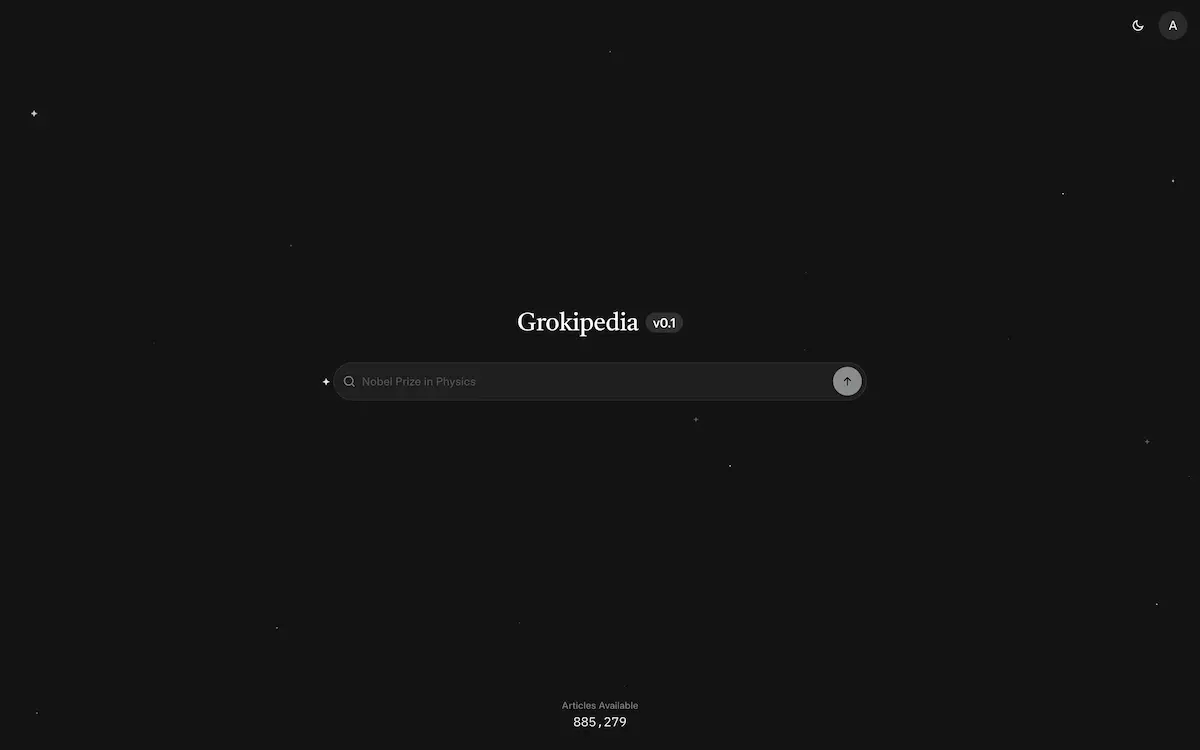
At launch, Grokipedia already contained over 885,000 articles. While this number still falls short of Wikipedia’s ~8 million entries, it represents a substantial foundation for an AI-driven platform in its early phase.
3. Real-Time Fact-Checking and Error Correction
According to xAI, Grokipedia performs “massive reasoning computations” across multiple data sources to automatically identify and correct factual errors, remove misinformation, and fill in missing context.
xAI claims the platform’s goal is to reduce Wikipedia’s estimated 3.2% error rate to below 0.8%.
4. Open Knowledge Policy
Grokipedia follows an open-source knowledge strategy, inviting developers and researchers to contribute to its improvement and expansion.
Key Highlights of Grokipedia
From an AI tools perspective, Grokipedia stands out in several areas worth noting:
1. Speed of Knowledge Updates
Thanks to automation, Grokipedia can theoretically shorten the time gap between the emergence of new information and its inclusion in the encyclopedia — a natural advantage over human-edited systems.
2. A Claim of Anti-Bias Neutrality
Musk has repeatedly criticized Wikipedia for “systemic bias.” Grokipedia, by contrast, claims a neutral and transparent approach, promising a focus on accuracy, openness, and factual integrity.
3. Integration with the xAI Ecosystem
Grokipedia is deeply integrated with the Grok chatbot, allowing users to obtain information through natural-language queries and directly link to relevant articles. This seamless connection represents a new model of AI-driven knowledge retrieval.
Grokipedia vs. Wikipedia: Philosophies in Contrast
Grokipedia’s most direct competitor is, of course, Wikipedia — but the two platforms embody radically different philosophies of knowledge creation.
1. Content Creation Model
- Wikipedia relies on global volunteer collaboration, emphasizing human consensus and transparent editorial processes.
- Grokipedia, by contrast, generates content automatically through AI with minimal human participation.
2. Transparency
- Wikipedia’s edit history and discussions are fully public, allowing anyone to trace content changes.
- Grokipedia operates as a black box, with no access to its algorithmic reasoning. Users can only report errors via forms; direct editing is not possible.
3. Ideological Orientation
Analyses suggest that Grokipedia presents different stances from Wikipedia on sensitive topics like climate change and gender identity — in some cases reflecting Musk’s personal worldview.
4. Scale and Maturity
As a new entrant, Grokipedia still lags far behind Wikipedia in both content depth and editorial maturity, though its AI-driven model might allow it to surpass Wikipedia in certain fast-moving or data-intensive domains.
How to Use Grokipedia
Currently, Grokipedia remains in its early testing phase, but using it is quite simple:
- Access: Visit grokipedia.com directly.
- Search: The interface is minimalistic — a single search box where users can enter keywords to retrieve AI-generated summaries.
- Verification: Since the platform is still immature, users should cross-verify information from multiple sources, especially on controversial topics.
It’s worth noting that shortly after launch, Grokipedia briefly went offline due to heavy traffic, highlighting that its technical infrastructure is still being optimized.
Prospects and Challenges
Grokipedia faces several substantial challenges. Early tests have already revealed factual inaccuracies in some entries and potential algorithmic bias. In addition, the platform must navigate complex issues such as balancing accuracy and timeliness, as well as copyright and intellectual property concerns.
Nonetheless, Grokipedia represents a new direction for knowledge production and management. It is not merely Musk’s critique of existing platforms, but also a large-scale experiment in applying AI to the very structure of human knowledge.
As technology evolves, Grokipedia may carve out unique value in specialized domains — such as real-time science updates, emerging technologies, or data-driven topics.
Conclusion
For AI enthusiasts and knowledge workers alike, Grokipedia is a platform worth watching. It could mark the beginning of a paradigm shift toward AI-generated knowledge systems, while also sparking deep debates about credibility, authority, and truth in the age of artificial intelligence.
Musk has stated his intention to make Grok completely independent of Wikipedia as an information source by the end of 2025. Only then will we be able to truly assess Grokipedia’s independent value and reliability.
As curators of AI tools, we will continue tracking Grokipedia’s progress — offering readers the latest evaluations and insights. Whether you’re a tech enthusiast or a researcher, this emerging platform deserves your attention.
Leave your comment
- No comments yet.
Recommended AI Tools
Carefully selected AI tools to improve your work, study, and live efficiency.






Related Articles
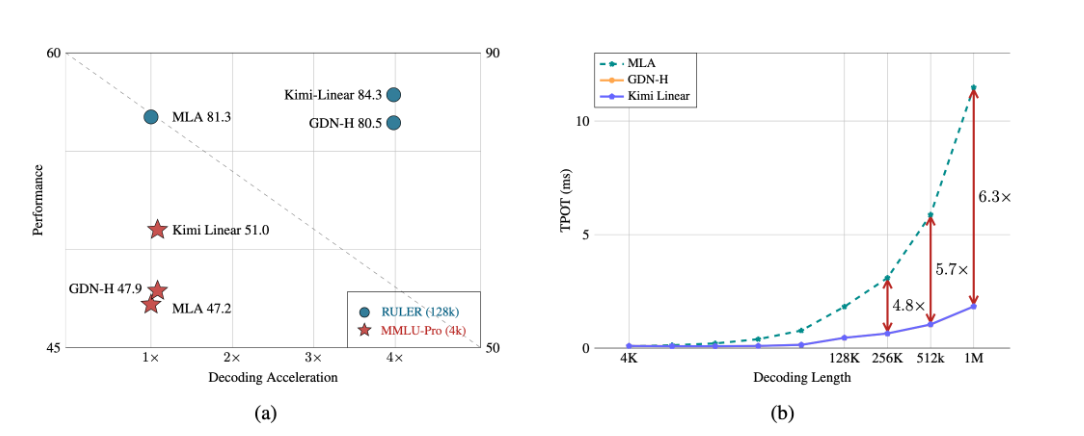
A major breakthrough has been achieved in the core architecture of large-scale models! The release of Kimi Linear marks the first time that linear attention technology has comprehensively surpassed and significantly outperformed the traditional Transformer full-attention model in both performance and efficiency. This "win-win" achievement is expected to significantly reduce the computational barriers and costs for long text processing, complex reasoning, and AI agent applications, potentially changing the competitive landscape of underlying technologies for large-scale models.
Over the past week, the AI community's attention has been drawn to a mysterious model that quietly emerged on the OpenRouter platform—Polaris Alpha. As a direct continuation of yesterday's discussion of the GPT-5.1 leak, this suddenly appearing model brings more technical details and strategic signals worthy of in-depth exploration.
Alibaba open-sources Qwen-Image-2.1: a 7B unified image model with native RGBA transparency and 10-reference editing.