In-depth analysis of OpenAI Polaris Alpha technology: A key sequel to the GPT-5.1 leak incident
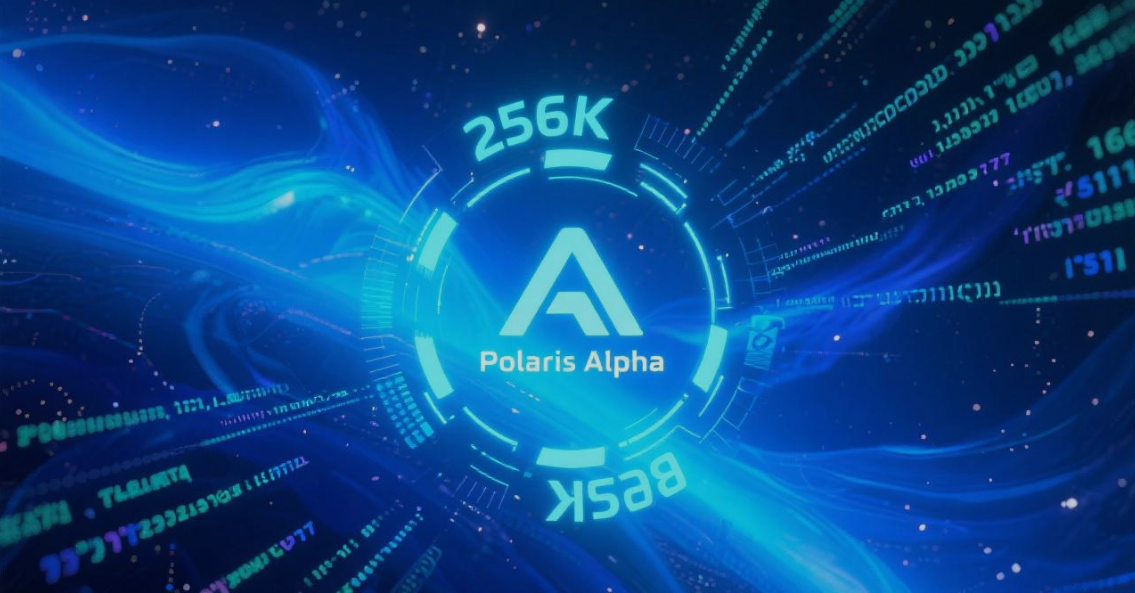
Technical Specifications Analysis: The Practical Significance of the 256K Context Window
Polaris Alpha's most striking feature is its 256K context window and 128K single-output capability. This parameter not only far surpasses the current mainstream GPT-4 Turbo (200K context), but more importantly, it marks a qualitative leap in the ability of large models to process long documents.
What Does This Mean?
-
Researchers can input an entire academic monograph (approximately 200,000 words) into the model for analysis at once, without needing to process it in segments.
-
Developers can obtain extremely detailed code generation results, and the model can maintain a holistic understanding of complex project structures.
-
In multi-turn dialogues, the model can remember far more historical records than before, achieving true long-range coherence.
Practical tests show that when processing academic papers of 100,000 words or more, Polaris Alpha can not only accurately extract key information but also point out potential data contradictions in the original text—a capability that previously required researchers to manually verify for hours.
Performance: A Comprehensive Evolution from Code Generation to Creative Writing
Substantial Improvement in Programming Ability
Multiple developers reported that Polaris Alpha performed exceptionally well in code generation. With a simple instruction like "design a Snake game," the model generated complete, runnable game code, including interaction logic, UI rendering, and boundary handling.
Even more impressively, the model could autonomously debug and correct bugs in the generated code. This self-correcting ability demonstrates that Polaris Alpha not only mastered the syntax but also deeply understood the logical flow of program execution.
Breakthrough in the Subtlety of Creative Writing
In creative writing tests, Polaris Alpha demonstrated remarkable style adaptability. Given a vague instruction like "write a monologue in a coffee shop in a cyberpunk style," the model generated multiple versions, each maintaining stylistic consistency and emotional subtlety approaching human levels. Particularly noteworthy is the model's broader knowledge coverage when citing sources, frequently referencing less common sources rarely covered in previous GPT series, indicating a significant expansion of its training data range.
Correlation Analysis with the GPT-5.1 Leak
Coincidence of the Timeline
The release date of Polaris Alpha (November 6th) perfectly aligns with the previously leaked GPT-5.1 release date (November 24th). This aligns with OpenAI's consistent "gradual release" strategy: first collecting feedback through anonymized models, then officially releasing the product.
High Degree of Match in Technical Features
The previously leaked GPT-5.1 specifications included three versions: Standard, Reasoning, and Pro. Polaris Alpha's 256K context, powerful coding capabilities, and knowledge update rate highly match the expected GPT-5.1 Standard version specifications.
Community developers, through similarity analysis, discovered a significant correlation between Polaris Alpha's response style and OpenAI's models, although its benchmark performance may be weaker than the expected GPT-5.1 level. This "performance limitation" may be intentional, a means of controlling the testing scope.
Strategic Intent Analysis: OpenAI's "Shadow Release" Strategy
Technology Validation and Market Warm-up
Polaris Alpha's completely free strategy clearly indicates its primary purpose is to gather real user feedback. OpenAI appears to be adopting a more open, iterative development model, optimizing the final official version's performance through real-world usage data. This move is also a strategic response to competitors (especially Google's upcoming Gemini 3). Demonstrating technological strength in advance helps maintain market confidence under competitor pressure.
Technical Preparation for NSFW Functionality
Leaked information suggests that Polaris Alpha is technically ready for OpenAI's planned NSFW (Natural Content Freedom) mode. If implemented, this sensitive feature would represent a significant balancing act for OpenAI regarding content moderation and creative freedom, and could also be part of its differentiated business strategy.
Practical Implications for Developers and Enterprises
Powerful Tools Available Immediately
Despite its undisclosed identity, Polaris Alpha is currently completely free, providing developers and enterprises with a valuable opportunity to test next-generation AI capabilities. We recommend focusing on its performance in the following scenarios:
-
Long document processing and analysis
-
Complex code generation and debugging
-
Multi-turn complex dialogue tasks
-
Creative content generation
Technology Roadmap Planning Reference
The technological directions showcased by Polaris Alpha provide important references for enterprises' AI strategies. Long context, strong inference capabilities, and specialized versions will be the key directions for large-scale model competition in the next six months. Enterprises can adjust their technology stack planning and talent development strategies accordingly.
Summary and Outlook
Polaris Alpha is likely not GPT-5.1 itself, but rather its technological outpost or simplified preview version. Its appearance confirms that the previously leaked GPT-5.1 specifications were not unfounded, and also demonstrates OpenAI's shift towards a more open and feedback-driven development model. With November 24th (the rumored official release date of GPT-5.1) approaching, we expect to see more official information released. Regardless of the final name, the technological capabilities demonstrated by Polaris Alpha have set a new benchmark for the next stage of large-scale model competition.
For AI practitioners, now is the golden window of opportunity to thoroughly test Polaris Alpha and prepare for the upcoming technological revolution. After all, in the rapidly evolving field of AI, understanding technological trends ahead of time often translates into a significant competitive advantage.
This article is based on publicly available community testing results and technical analysis, and does not represent the official position of OpenAI. Detailed model information is subject to the final official release by OpenAI.
Leave your comment
- No comments yet.
Recommended AI Tools
Carefully selected AI tools to improve your work, study, and live efficiency.



Related Articles
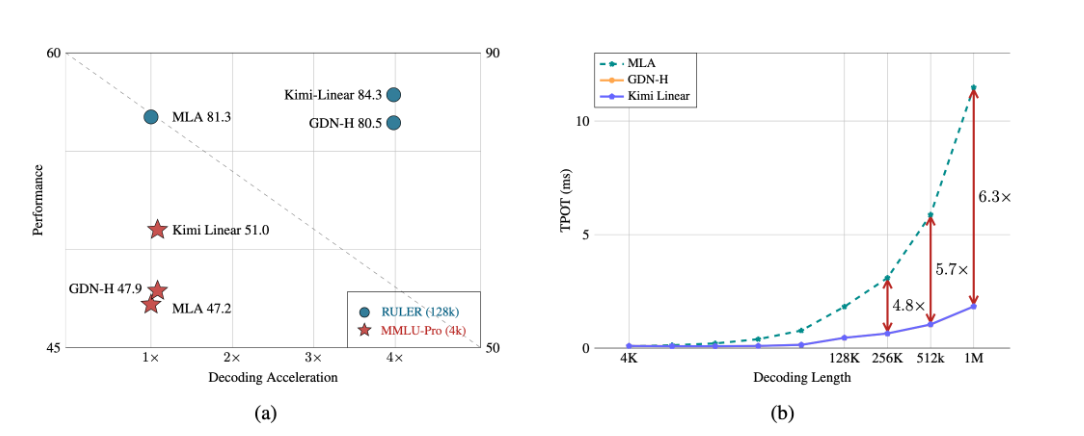
A major breakthrough has been achieved in the core architecture of large-scale models! The release of Kimi Linear marks the first time that linear attention technology has comprehensively surpassed and significantly outperformed the traditional Transformer full-attention model in both performance and efficiency. This "win-win" achievement is expected to significantly reduce the computational barriers and costs for long text processing, complex reasoning, and AI agent applications, potentially changing the competitive landscape of underlying technologies for large-scale models.
Over the past week, the AI community's attention has been drawn to a mysterious model that quietly emerged on the OpenRouter platform—Polaris Alpha. As a direct continuation of yesterday's discussion of the GPT-5.1 leak, this suddenly appearing model brings more technical details and strategic signals worthy of in-depth exploration.
Alibaba open-sources Qwen-Image-2.1: a 7B unified image model with native RGBA transparency and 10-reference editing.