2025, looking at the evolution of artificial intelligence
Standing at this moment in 2025, when we look back at the development journey of artificial intelligence, we witness how this revolutionary technology has reshaped every aspect of human society. From initial theoretical concepts to today's practical applications, each step forward in AI technology has changed the way we live. Let's revisit this fascinating journey together.
Early Development (1950-2010): The Foundation Period
In the 1950s, Alan Turing's proposed Turing Test laid the theoretical groundwork for artificial intelligence research. This simple yet profound thought experiment launched humanity's great quest to explore machine intelligence. In the following decades, artificial intelligence experienced several ups and downs:
- The 1956 Dartmouth Conference formally established "Artificial Intelligence" as an academic field
- In the 1960s-1970s, expert systems achieved initial applications in areas like medical diagnosis
- The 1980s saw important breakthroughs in neural network theory
- During the 1990s-2000s, machine learning algorithms continuously improved, but AI's practical applications remained limited due to computational power and data scale constraints
Breakthrough Period (2010-2020): The Deep Learning Revolution
In 2012, deep learning achieved a breakthrough in image recognition, opening a new chapter in AI development. Landmark achievements during this period included:
- In 2012, AlexNet demonstrated the enormous potential of deep learning in computer vision at the ImageNet competition
- In 2016, AlphaGo defeated Lee Sedol, showcasing AI's exceptional capabilities in complex strategic decision-making
- The introduction of the Transformer architecture in 2017 completely changed the technical paradigm in natural language processing
- In 2018-2019, pre-trained models like BERT demonstrated powerful language comprehension abilities
Explosion Period (2020-2023): The Era of Large Models Arrives
This period was one of the most rapid phases in AI development, with various breakthrough technologies constantly emerging:
- The GPT series models continuously broke scale barriers, from GPT-3 with 175 billion parameters to the more powerful GPT-4
- AI art models like DALL-E, Midjourney, and Stable Diffusion brought about a revolution in visual creation
- Various alternative models demonstrated capabilities comparable to commercial models
- Enterprise-level AI applications moved from experimentation to scaled implementation:
- Intelligent customer service greatly improved service efficiency
- Code assistants like GitHub Copilot significantly increased development productivity
- Medical imaging diagnostic assistance continuously improved in accuracy
Integration Period (2023-2025): Moving Towards Maturity
In this stage, artificial intelligence technology demonstrated unprecedented integration capabilities:
Breakthroughs in Multimodal Integration Deep integration of various modalities like vision, speech, and text reached new heights. Large models could simultaneously understand images, videos, audio, and text, enabling more natural human-computer interaction. This integration also brought more powerful comprehension and creativity, allowing AI systems to perceive and understand the world more comprehensively.
Deepening Industrial Transformation AI technology applications continued to deepen across various industries:
- Financial sector: Intelligent risk control and investment decision support
- Education sector: Personalized learning experiences and intelligent teaching assistants
- Medical field: From diagnostic assistance to drug development
- Manufacturing: Smart factories and predictive maintenance
These applications are reshaping traditional industries' production methods and service models.
Improved Ethical and Regulatory Frameworks As AI's influence expanded, countries worldwide established more comprehensive AI governance systems:
- Formal implementation of the EU AI Act
- Continuous improvement of China's AI governance framework
- Advancement of the US AI Bill of Rights
These efforts promoted responsible AI development.
Key Technological Breakthroughs
- Model efficiency optimization: New architectural designs and training methods significantly reduced resource consumption while maintaining performance
- Few-shot learning: Achieving efficient learning in limited data scenarios, greatly reducing data dependence
- Explainability research: New analytical methods made AI decision processes more transparent and interpretable
- Privacy computing: Technologies like federated learning enabled collaborative learning while protecting data privacy
- AutoML: Intelligent model design and optimization significantly lowered the barriers to AI application
Future Outlook
Looking back from 2025, we've witnessed the leapfrog development of AI technology from laboratories to real-world applications. In the future, with improvements in computational power, algorithm optimization, and expanded application scenarios, AI technology will continue to profoundly influence human society's development. However, we also need to pay special attention to:
- Technological ethics: Ensuring AI development aligns with human values and preventing technology misuse
- Data security: Strengthening privacy protection and security mechanisms to prevent data breach risks
- Employment impact: Actively addressing employment structure changes brought by AI and promoting human-machine collaboration
- Computational challenges: Balancing computational demands with energy consumption and promoting green computing
- Digital divide: Ensuring AI technological developments benefit a wider population
Looking back at this journey, we see not just technological progress but also the brilliance of human wisdom. In the coming AGI era, how to ensure AI technology always serves human welfare, and how to maintain innovation vitality while implementing good risk controls are questions that require our continuous exploration and reflection. The future has arrived—let's look forward together to the new possibilities AI technology brings to human civilization.
Leave your comment
- No comments yet.
Recommended AI Tools
Carefully selected AI tools to improve your work, study, and live efficiency.





Related Articles
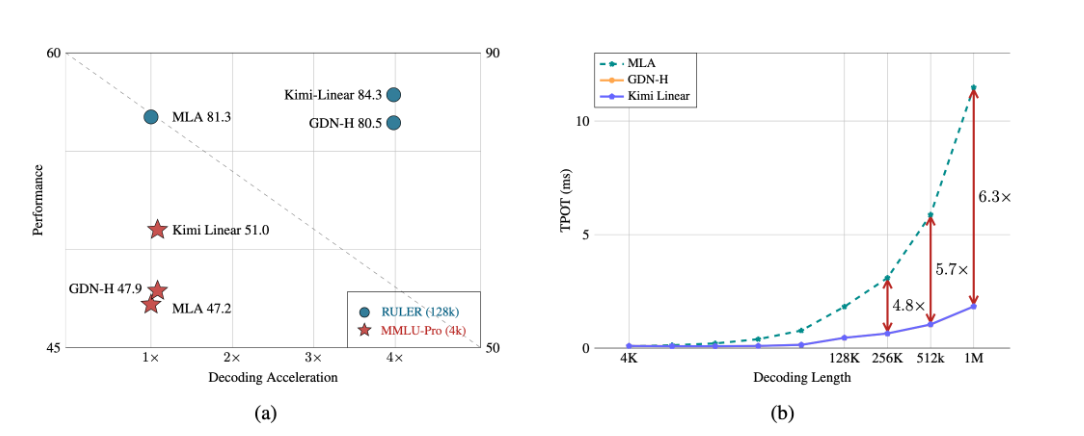
A major breakthrough has been achieved in the core architecture of large-scale models! The release of Kimi Linear marks the first time that linear attention technology has comprehensively surpassed and significantly outperformed the traditional Transformer full-attention model in both performance and efficiency. This "win-win" achievement is expected to significantly reduce the computational barriers and costs for long text processing, complex reasoning, and AI agent applications, potentially changing the competitive landscape of underlying technologies for large-scale models.

Over the past week, the AI community's attention has been drawn to a mysterious model that quietly emerged on the OpenRouter platform—Polaris Alpha. As a direct continuation of yesterday's discussion of the GPT-5.1 leak, this suddenly appearing model brings more technical details and strategic signals worthy of in-depth exploration.

Alibaba open-sources Qwen-Image-2.1: a 7B unified image model with native RGBA transparency and 10-reference editing.