Introduction
Muse Image AI is an independent guide and prompt workspace for Meta’s new image model. It helps users explore Muse Image AI text-to-image generation, reference edits, and practical image editing workflows. The platform makes it easier to turn ideas into polished, social-ready visuals with structured prompts and reusable examples.
What is Muse Image AI?
Muse Image AI is a web-based tool that tracks Meta’s Muse Image model and gives users a clean space to test prompts. It solves a common problem: writing a clear prompt that produces the right image. Many image generators fail when prompts are vague. Muse Image AI encourages users to think about subject, scene, style, camera, and constraints before generating.
This matters because Meta positions Muse Image as a model with advanced reasoning. It can combine multiple references, edit existing photos, and understand complex prompts. Muse Image AI turns that model capability into a guided workflow. Users can start with text-to-image or choose an edit task. They can upload a reference image, describe an idea, set an aspect ratio, and select an output format. The platform also provides a prompt gallery with reusable examples. This makes Muse Image AI useful for both image editing and new image creation.
Muse Image AI is suitable for beginners and professionals who want to create social-ready visuals without guessing. It is not just a prompt box; it is a learning tool that explains how to use references, edits, and output settings correctly.
Key Features of Muse Image AI
Text-to-image generation
Muse Image AI supports text-to-image prompts that turn a written idea into a new visual. Users can describe subject, scene, lighting, style, and composition in one structured prompt.
Reference image edits
Muse Image AI supports reference-based image editing by allowing users to upload a reference photo and assign it a role, such as identity, object, background, or style. This makes it easier to create images that follow a specific source.
Precise image editing
For existing images, Muse Image AI guides users to name the exact region and change they want. This helps preserve identity and composition while updating specific visual elements.
Prompt workspace
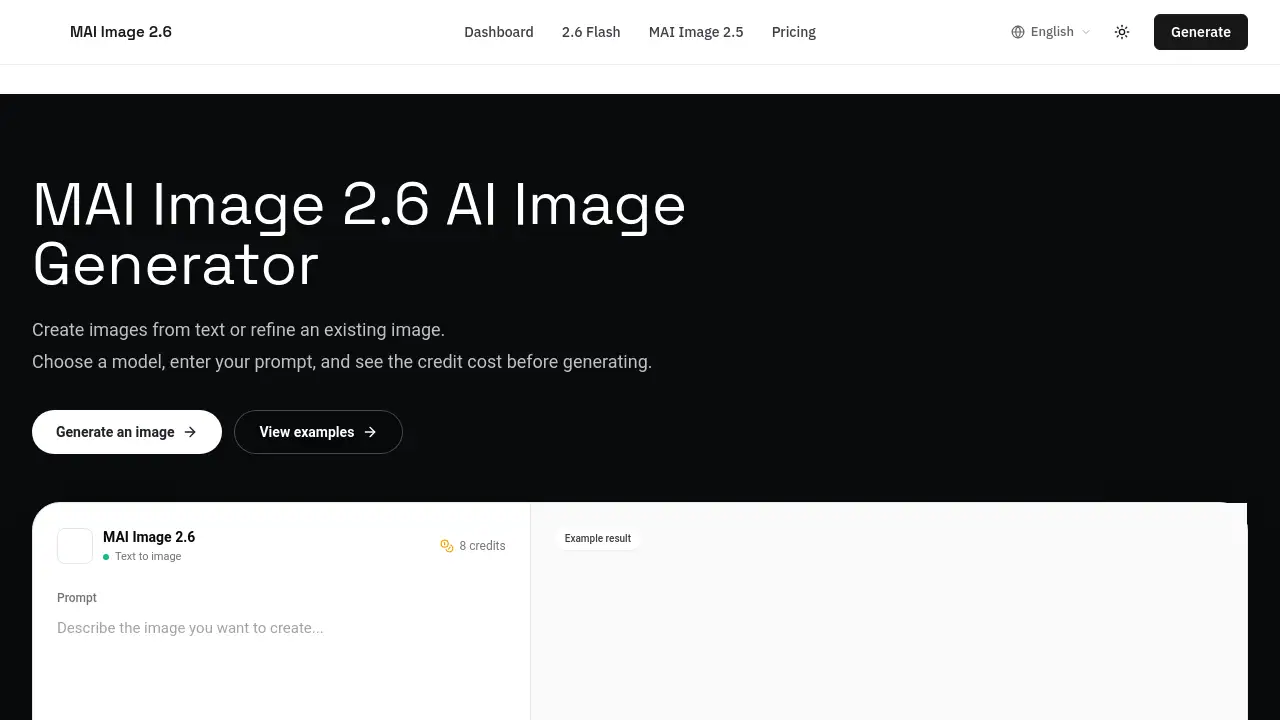
The Muse Image AI prompt workspace combines a reference image area, a prompt field, and output controls. Users can set aspect ratio and output format before submitting a generation or edit. This makes it easy to compare text-to-image and image editing tasks in one place.
Prompt gallery
The gallery offers reusable Muse Image AI prompt patterns for profile scenes, Instagram-style story visuals, product shots, room redesigns, posters, and precise image edits.
Credit-based workflow
Users can work with a free start and then use credits for Muse Image AI image generation, reference edits, prompt testing, and commercial visual workflows. This makes it easy to control usage.
Use Cases for Muse Image AI
Social-ready visuals
Muse Image AI can help create profile scenes and Instagram-style story visuals. Users can prompt for a specific crop or platform format to get launch-ready image drafts.
Product shots
E-commerce creators can use reference images to keep product details consistent while changing backgrounds, lighting, or camera angle.
Room redesigns
Interior design prompts can describe a room and a desired style. The model can then generate updated versions of the same space.
Precise image edits
The image editing workflow in Muse Image AI helps photographers and designers change one object, remove a background element, or adjust the style without recreating the whole photo.
Posters and concept art
Marketers can generate poster drafts by combining text prompts with reference styles. This makes early visual exploration fast and practical.
How to Use Muse Image AI
To get the most from the Muse Image AI prompt workflow, follow these steps:
- Choose generation or edit. Use text-to-image when you need a new visual direction. Use image edit when you already have a photo or generated image to refine.
- Write a concrete prompt. Include subject, scene, composition, lighting, style, and any constraints. For image editing, describe the exact region and the change you want.
- Assign each reference a role. If you upload reference images, state what each one controls: identity, pose, product detail, background, style, color palette, or composition.
- Set output options. Adjust aspect ratio and output format to match the target platform.
- Review and refine. Check the first result and make one clear change at a time. This keeps the Muse Image AI workflow predictable and controllable.
Target Audience for Muse Image AI
- Content creators who need social-ready visuals with consistent style.
- Social media managers who produce Instagram Stories, profile images, and campaign posts.
- Graphic designers who want fast image drafts and precise edits.
- E-commerce sellers who need product shots with consistent details.
- Photographers who want precise image editing without losing identity.
- AI prompt enthusiasts who want a structured way to test image generation ideas.
- Marketing teams and agencies that need commercial visual production.
Is Muse Image AI Free?
The homepage says users can start free, then use credits or paid plans for Muse Image AI image generation, reference edits, prompt testing, and commercial visual workflows. The exact free tier details and prices are listed on the official pricing page. Based on the homepage, the main paid plans offer monthly credit allowances and different levels of speed and support.
| Plan | Credits | Features |
|---|---|---|
| Starter | 250 credits per month | Muse Image AI workspace, text-to-image generation, reference image edits, private generations, commercial use |
| Pro | 600 credits per month | Everything in Starter, higher generation speed, priority queue, saved history, faster generation |
| High-volume | 1900 credits per month | Everything in Pro, high-volume production, fastest queue, priority support, extended history |
Muse Image AI's Pros and Cons
| Aspect | Pros | Cons |
|---|---|---|
| Pricing | Free start and flexible credit plans | Lower plans lack priority queue and team collaboration |
| Features | Supports text-to-image, references, and precise edits | Advanced results depend on prompt quality and reference roles |
| Usability | Clean prompt workspace with examples | New users may need time to learn the workflow |
| Availability | Built for social and commercial visual workflows | Some features may be limited by region at launch |
Frequently Asked Questions about Muse Image AI
What is Muse Image?
Muse Image is Meta’s image generation model announced for Meta AI and social creation workflows. It focuses on text prompts, image edits, reference composition, and shareable visual output.
Can Muse Image AI edit existing images?
Yes. Meta describes Muse Image as capable of precise edits and reference-aware generation. In practice, users should name the exact region, desired change, and what should remain untouched in their Muse Image AI image editing prompt.
What should I include in a Muse AI image generator prompt?
Include subject, scene, composition, lighting, style, output format, and any reference roles. For edits, describe the original image and the single most important change.
Where is Muse Image available?
Meta announced Muse Image for Meta AI and meta.ai, with Instagram Stories support in the US and WhatsApp availability in limited countries at launch. Availability may expand over time.
Is Muse Image AI free to use?
Muse Image AI offers a free start, then users can move to credit plans for more generations, faster processing, and commercial workflows. Check the pricing page for current free and paid details.
Who should use Muse Image AI?
Muse Image AI is useful for content creators, designers, e-commerce sellers, and teams who want a practical prompt workflow for text-to-image generation, reference edits, and social-ready visuals.
Muse Image AI Tags
Muse Image AI, Meta image model, Muse AI image generator, text-to-image, reference image editing, precise image edits, Muse Image prompt workflow, Meta AI image generation, social-ready visuals, AI image prompt gallery, commercial image generation, image editing tool