AI Agents for Creative Work: The Next Evolution of AI Tools
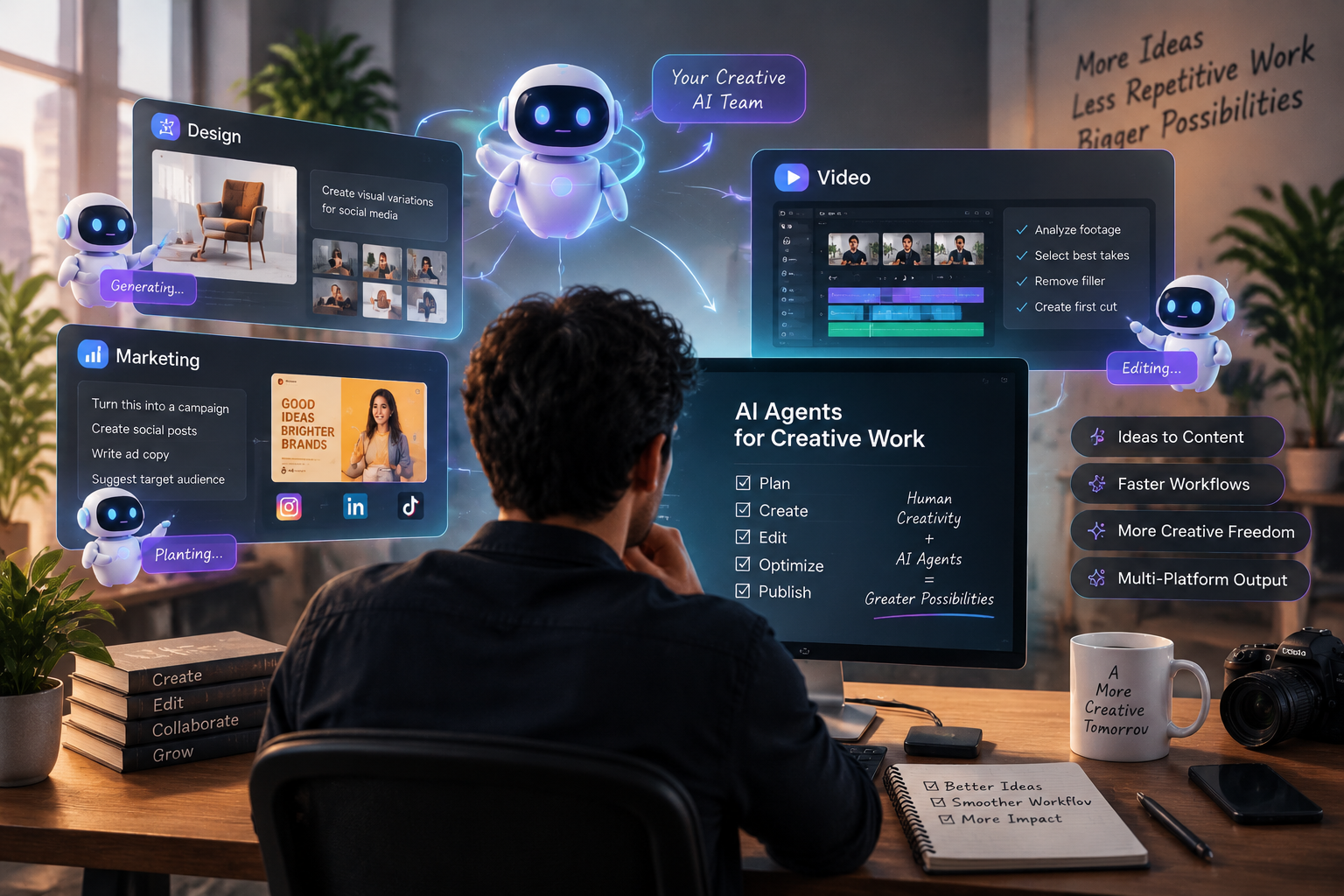
Artificial intelligence has already changed how people create digital content. From generating images and writing scripts to producing videos from simple prompts, AI tools have made creative work faster and more accessible. Even so, most early AI tools still depended on users directing every step of the process.
AI agents represent the next stage of that evolution. Rather than only responding to individual commands, AI agents can understand a goal, plan the steps needed to reach it, make decisions along the way, and complete multi-step workflows with less manual input.
This shift matters a lot for creative industries. Designers, marketers, video creators, and content teams often spend a significant chunk of their time managing repetitive tasks before they ever get to the actual creative output. AI agents are starting to take on parts of that execution work, freeing creators to focus more on ideas, storytelling, and creative direction.
What Makes AI Agents Different From Traditional AI Tools?
Traditional AI tools are usually built to complete one specific task at a time. A user gives an instruction, gets an output, and decides what to do next. An AI writing tool, for instance, might generate a blog outline, but the user still has to research, edit, organize, and finalize the piece themselves.
AI agents work differently because they're built around objectives, not isolated commands. They can break a larger goal into smaller actions, pull in different tools as needed, analyze information, and carry a workflow through to a defined outcome.
For creative professionals, that turns AI from a simple assistant into something closer to an active collaborator. A creator could hand off a goal, such as preparing a product video, developing a campaign concept, or organizing raw footage, and let an AI agent coordinate the pieces instead of managing every stage by hand.
This doesn't take human creativity out of the equation. It just reduces time spent on repetitive execution and leaves more room for the decisions that actually shape the creative outcome.
How Are AI Agents Being Used in Creative Workflows?
AI agents are proving useful across creative fields largely because so many creative processes are repeatable and multi-step by nature.
In design. Design work involves exploring ideas, producing variations, and adapting assets across platforms. AI agents can help generate early concepts, organize references, suggest refinements, and produce multiple versions of an asset. A designer building a brand campaign, for example, might need several visual directions, social formats, and presentation materials; an AI agent can handle the early concepts and repetitive adjustments while the designer keeps ownership of the final creative call.
In marketing. Marketing teams juggle large volumes of content across websites, social platforms, ads, and email. AI agents can help by analyzing audience data, suggesting content ideas, drafting copy, and adapting existing material for different channels, letting teams turn one long-form article into social posts, video scripts, and campaign assets without a proportional increase in manual work.
In video creation. Video production is where AI agents can make one of the biggest differences, since making a video involves so many connected steps: planning, scripting, selecting visuals, editing footage, adding audio, and producing multiple versions for different platforms. Rather than just generating a video from a single prompt, newer systems can now assist across several of these stages at once, from early planning through to editing.
How Can AI Agents Assist Video Editors?
Video editing has traditionally meant editors spend a lot of time organizing footage, reviewing clips, choosing takes, and building a timeline before any real creative refinement starts. For long recordings, interviews, podcasts, and multi-camera shoots, the first hurdle is usually just finding the right moments and getting to a workable starting point.
AI-powered editing workflows are changing that by taking on much of this preparation work. A modern AI-assisted editing tool can analyze footage, flag important sections, strip out unnecessary parts, and help build an initial edit for the creator to refine further.
Tools such as invideo editor show how this is playing out in practice, with AI agents moving beyond simple chat-based suggestions and into the actual editing environment itself. Instead of just offering ideas, this kind of tool can work inside a timeline, helping review footage, surface usable clips, cut repetitive sections, and produce an editable base cut based on the creator's direction.
This is particularly useful for anyone dealing with large volumes of raw footage: a YouTube creator with multiple takes, a filmmaker sorting through interview footage, or a marketing team producing several video versions from one shoot can all use this kind of AI assistance to cut down on repetitive editing work. Creators still keep control over the final result; the AI handles execution, while creative judgment stays with the editor.
How Do AI Agents Improve Content Repurposing?
Creators today often need multiple versions of the same content: shorter clips for social media, highlights for a website, and different formats for different platforms. Producing all of that by hand can take hours. AI agents can help by identifying the strongest moments in a piece of content and adapting them for different formats much faster than a manual pass would allow.
A podcast episode might be scanned for standout discussion points that become short videos. A product demo could be broken into several social clips. A webinar could be reshaped into educational content. This ability to squeeze more value out of existing material is a big part of why AI agents are becoming so important to creators and businesses producing content at scale.
What Does the Future of Human-AI Creative Collaboration Look Like?
The rise of AI agents doesn't mean creativity is about to become fully automated. Creative work still depends on human understanding, emotion, taste, and storytelling instinct in ways AI can't replicate.
AI agents are better understood as collaborators that help creators execute ideas more efficiently. They can take on repetitive tasks, explore options faster, and support workflows that would otherwise demand far more time and manpower. Over time, creative professionals may spend less energy managing technical steps and more time shaping concepts, refining ideas, and making strategic calls.
A video editor, for instance, may no longer need to manually comb through hours of footage before the real creative work begins. They could instead guide an AI assistant to prepare a first version, then focus on pacing, storytelling, and emotional impact. Designers and marketers may lean on AI agents for early-stage production work while putting their own attention toward building stronger brand experiences.
Are AI Agents Replacing Creative Professionals?
AI agents are reshaping creative workflows, but they're not replacing the need for human creators. The best results still come from pairing AI capability with human expertise. AI can analyze footage, generate ideas, and knock out repetitive tasks, but it doesn't understand audience emotion, brand identity, or creative intent the way a person does.
Creative professionals continue to bring the elements that make content actually resonate:
- Storytelling decisions
- Visual direction
- Brand understanding
- Emotional connection
- Final quality control
The future of creative work looks like closer collaboration between humans and AI systems, with each side contributing what it does best.
Conclusion
AI agents mark a real shift in how creative tools function. Instead of just helping users complete individual tasks, they're beginning to support entire workflows across design, marketing, and video production. Platforms like invideo editor are a good example of that shift already showing up in day-to-day production work, handling the repetitive parts of editing so creators can focus elsewhere.
For creators, that means less time spent on repetitive process and more time spent on genuine creative decisions. AI agents can help organize projects, speed up production, and make professional-level workflows more accessible to more people. As these tools keep developing, the relationship between creators and AI will look less like automation replacing creativity and more like smarter workflows that help people bring their ideas to life faster.
Leave your comment
- No comments yet.
Recommended AI Tools
Carefully selected AI tools to improve your work, study, and live efficiency.

Related Articles
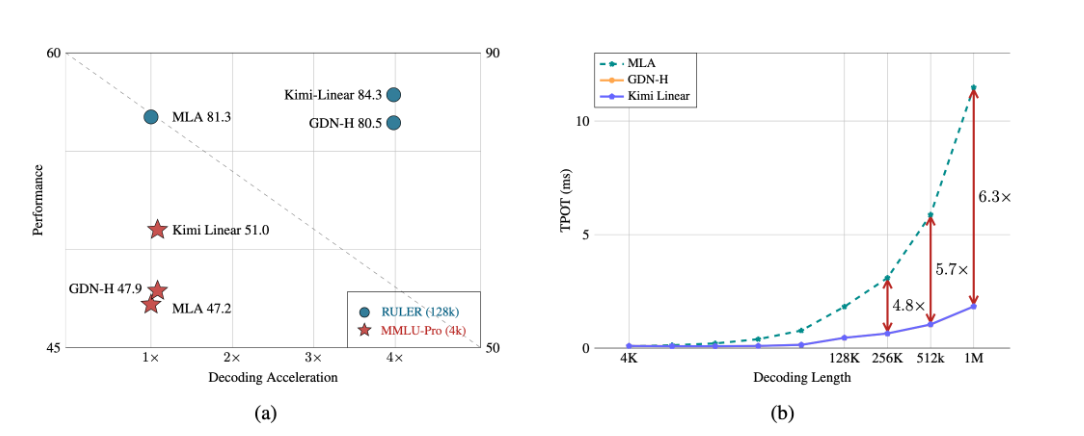
A major breakthrough has been achieved in the core architecture of large-scale models! The release of Kimi Linear marks the first time that linear attention technology has comprehensively surpassed and significantly outperformed the traditional Transformer full-attention model in both performance and efficiency. This "win-win" achievement is expected to significantly reduce the computational barriers and costs for long text processing, complex reasoning, and AI agent applications, potentially changing the competitive landscape of underlying technologies for large-scale models.
Over the past week, the AI community's attention has been drawn to a mysterious model that quietly emerged on the OpenRouter platform—Polaris Alpha. As a direct continuation of yesterday's discussion of the GPT-5.1 leak, this suddenly appearing model brings more technical details and strategic signals worthy of in-depth exploration.
Alibaba open-sources Qwen-Image-2.1: a 7B unified image model with native RGBA transparency and 10-reference editing.