A New Era of Computing Power: How OpenAI's $38 Billion Partnership with Amazon is Reshaping the Competitive Landscape of the AI Industry
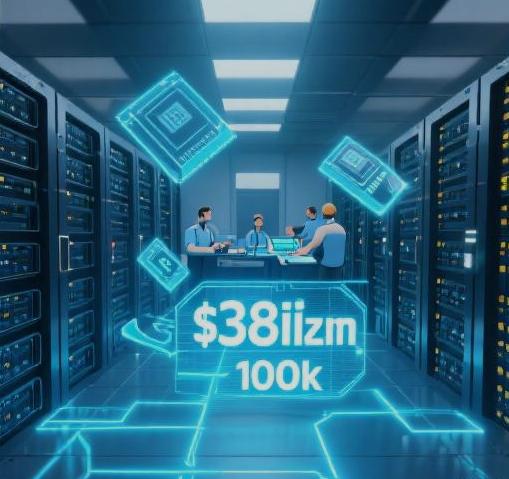
On November 4, 2025, OpenAI and Amazon Web Services (AWS) jointly announced a seven-year, $38 billion computing power procurement agreement, setting a new record for a single AI computing power contract.
According to the agreement, OpenAI will immediately utilize hundreds of thousands of NVIDIA's latest GB200/GB300 series GPUs provided by AWS, with the capability to scale to tens of millions of CPUs. This collaboration not only concerns the two companies but also reveals a fundamental shift taking place in the AI industry: computing power has replaced algorithms as the core bottleneck in AI competition.
01. Agreement Highlights: More Than Just a Purchase, It's a Strategic Restructuring
This collaboration goes far beyond ordinary commercial procurement; it embodies a deep strategic layout. AWS has specifically built a new architecture AI cluster for OpenAI, utilizing Amazon EC2 UltraServer's low-latency interconnect technology to achieve dynamic resource allocation for training and inference tasks. This customized solution will provide a highly efficient environment specifically for OpenAI's "Agentic" research.
All infrastructure is expected to be deployed by the end of 2026, with plans to reserve expansion capacity in 2027 and beyond to cope with subsequent growth pressures. This forward-looking planning reflects both parties' shared anticipation of the continued growth in AI computing power demand.
It is worth noting that this collaboration is a pure customer-supplier relationship, without involving complex equity transactions. Dave Brown, Vice President of Computing and Machine Learning Services at AWS, stated explicitly: “OpenAI is our customer; they commit to purchasing computing power, and we provide the service and collect fees—it's very simple and clear.”
02. OpenAI's Multi-Cloud Strategy: Breaking Free from Dependency and Building Resilience
This agreement marks a significant shift in OpenAI's computing power strategy. Since receiving investment from Microsoft in 2019, OpenAI has long been exclusively "bound" to Azure cloud computing services. Just last week, Microsoft's priority right to acquire computing power officially ended under the new agreement between the two parties.
OpenAI is actively building a decentralized computing power supply network. In addition to the $38 billion agreement with AWS, OpenAI has recently signed computing power procurement agreements totaling over $1.4 trillion with tech giants such as Microsoft, Oracle, and Google.
This "multi-cloud strategy" not only mitigates supply chain risks but, more importantly, gives OpenAI bargaining power and technological autonomy. In collaborations with different cloud service providers, OpenAI can demand specific hardware configurations, network architectures, and service terms, rather than being entirely dependent on a single vendor's technology roadmap and commercial conditions.
From a broader perspective, this strategy is also a key step in OpenAI's preparation for its IPO. Through multi-cloud deployment and long-term resource lock-in, OpenAI demonstrates mature financial and operational governance capabilities to the capital market, helping to boost investor confidence.
03. AWS's Strategic Breakthrough: The "Arms Dealer" Dominating the AI Race
For Amazon, this deal is far more significant than its financial value. In its recent earnings report, AWS revenue grew by over 20% year-over-year, but Microsoft and Google Cloud grew even faster, reaching 40% and 34% respectively. In the new round of competition in AI-driven cloud computing, AWS is facing pressure from latecomers.
The partnership with OpenAI has injected a strong boost into AWS. This is not just a $38 billion order, but also a symbolic endorsement: the world's leading AI company has chosen AWS.
Interestingly, Amazon has invested billions of dollars in OpenAI's competitor, Anthropic, and is building an $11 billion data center campus in Indiana specifically designed for Anthropic's workloads. This means Amazon is simultaneously providing infrastructure support to two directly competing AI companies.
This seemingly contradictory strategy actually reflects the survival wisdom of cloud computing giants: in the AI era, infrastructure providers must remain neutral and open to occupy an irreplaceable position in the ecosystem. AWS has successfully positioned itself as the industry's "AI computing power supermarket" through this move, securing a unique hub position in this computing power race.
04. The Industry Impact of the Computing Power Arms Race
The collaboration between OpenAI and AWS reveals a harsh reality: high-performance GPUs have transformed from "on-demand" cloud commodities into strategic resources requiring long-term capital lock-up. This shift is reshaping the investment logic and competitive landscape of the entire technology industry.
- AI Budget Upgraded to Strategic Investment
When OpenAI invests trillions of dollars in leased hardware, it signifies that AI spending has been upgraded from departmental IT operating costs to enterprise-level strategic capital planning. Traditional enterprises often start their AI investments with small-scale pilot projects, but now leading AI companies must undertake long-term, large-scale computing power deployments.
- The End of the "Single-Cloud Model"
OpenAI's multi-cloud provider model provides best practices for risk diversification across the industry. Over-reliance on a single provider poses strategic risks when cloud service providers are also competitors. In the future, more companies may adopt similar strategies to avoid being "locked in" by a single cloud platform.
- Higher Barriers for Startups
This computing power arms race poses a significant challenge to startups. Leading companies lock in scarce computing resources through long-term contracts, making it difficult for new entrants to obtain high-quality computing power. According to reports, AI startups not only face the technical predicament of "not being able to buy the best chips and having to use 'crippled' versions," but also have to deal with "gray premiums" caused by supply chain constraints, where the actual cost may be several times the publicly disclosed price.
05. Questions about Financial Sustainability and Future Outlook
The scale of this computing power arms race is staggering, but it has also raised profound questions about financial sustainability. OpenAI generated approximately $4.3 billion in revenue in the first half of 2025, and the company projects full-year revenue of $13 billion, but suffered a loss of $2.5 billion in the first half. Some analysts even suggest that OpenAI's operating loss could reach as high as $7.8 billion.
Comparing these figures with the $1.4 trillion in computing power commitments reveals a startling paradox: how can a company with $13 billion in annual revenue sign computing power spending commitments totaling over $1.4 trillion? Even if these contracts are spread over the next 5-7 years, the annual expenditure would still be in the $200 billion range, far exceeding its current revenue capacity.
Sam Altman responded that these infrastructure investments are forward-looking bets, and the company will become a major AI cloud service provider, with consumer devices also becoming a significant segment. This explanation reveals the fundamental logic of OpenAI's business model: it's not purchasing computing power for its current business scale, but rather betting heavily on potential future business models.
This bet is based on several assumptions: explosive growth in AI applications, OpenAI's ability to resell most of its computing power to enterprise customers, and a significant increase in the profit margins of AI services. However, these assumptions are fraught with uncertainty, making this computing power race a high-risk strategic game.
06. The AI Industry Enters a New Capital-Intensive Phase
The $38 billion agreement between OpenAI and AWS marks a turning point for the AI industry, transitioning from a "technology-driven phase" to a "capital-intensive phase." In this new phase, the power of capital may outweigh the power of technology, and the advantage of scale may surpass the value of innovation.
As computing power replaces algorithms as the core bottleneck in AI competition, leading companies are building almost insurmountable moats through massive capital investments. For startups and SMEs, this means rethinking their survival strategies—perhaps focusing more on vertical applications and avoiding direct competition with giants in general-purpose large-scale models.
There are no bystanders in this computing power arms race. As Altman stated, "Expanding cutting-edge AI requires enormous, reliable computing power." When computing power upgrades from a technological element to a strategic resource, every company must rethink its AI survival strategy.
How to remain rational in this frenzied arms race and adhere to the essence of technology in the capital game will be a key issue determining the future direction of the AI industry. For practitioners and investors who are interested in the AI field, understanding the reshaping of the computing power landscape is more important than tracking the growth of model parameters—because future AI competition will primarily be a competition of computing power.
Leave your comment
- No comments yet.
Recommended AI Tools
Carefully selected AI tools to improve your work, study, and live efficiency.






Related Articles
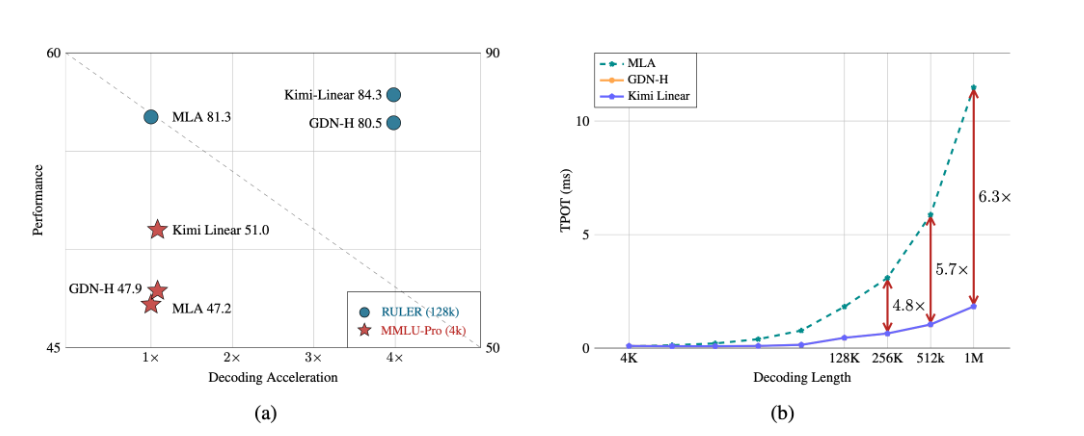
A major breakthrough has been achieved in the core architecture of large-scale models! The release of Kimi Linear marks the first time that linear attention technology has comprehensively surpassed and significantly outperformed the traditional Transformer full-attention model in both performance and efficiency. This "win-win" achievement is expected to significantly reduce the computational barriers and costs for long text processing, complex reasoning, and AI agent applications, potentially changing the competitive landscape of underlying technologies for large-scale models.
Over the past week, the AI community's attention has been drawn to a mysterious model that quietly emerged on the OpenRouter platform—Polaris Alpha. As a direct continuation of yesterday's discussion of the GPT-5.1 leak, this suddenly appearing model brings more technical details and strategic signals worthy of in-depth exploration.

Alibaba open-sources Qwen-Image-2.1: a 7B unified image model with native RGBA transparency and 10-reference editing.