How AI Is Changing the Video Editing Workflow for Creators in 2026
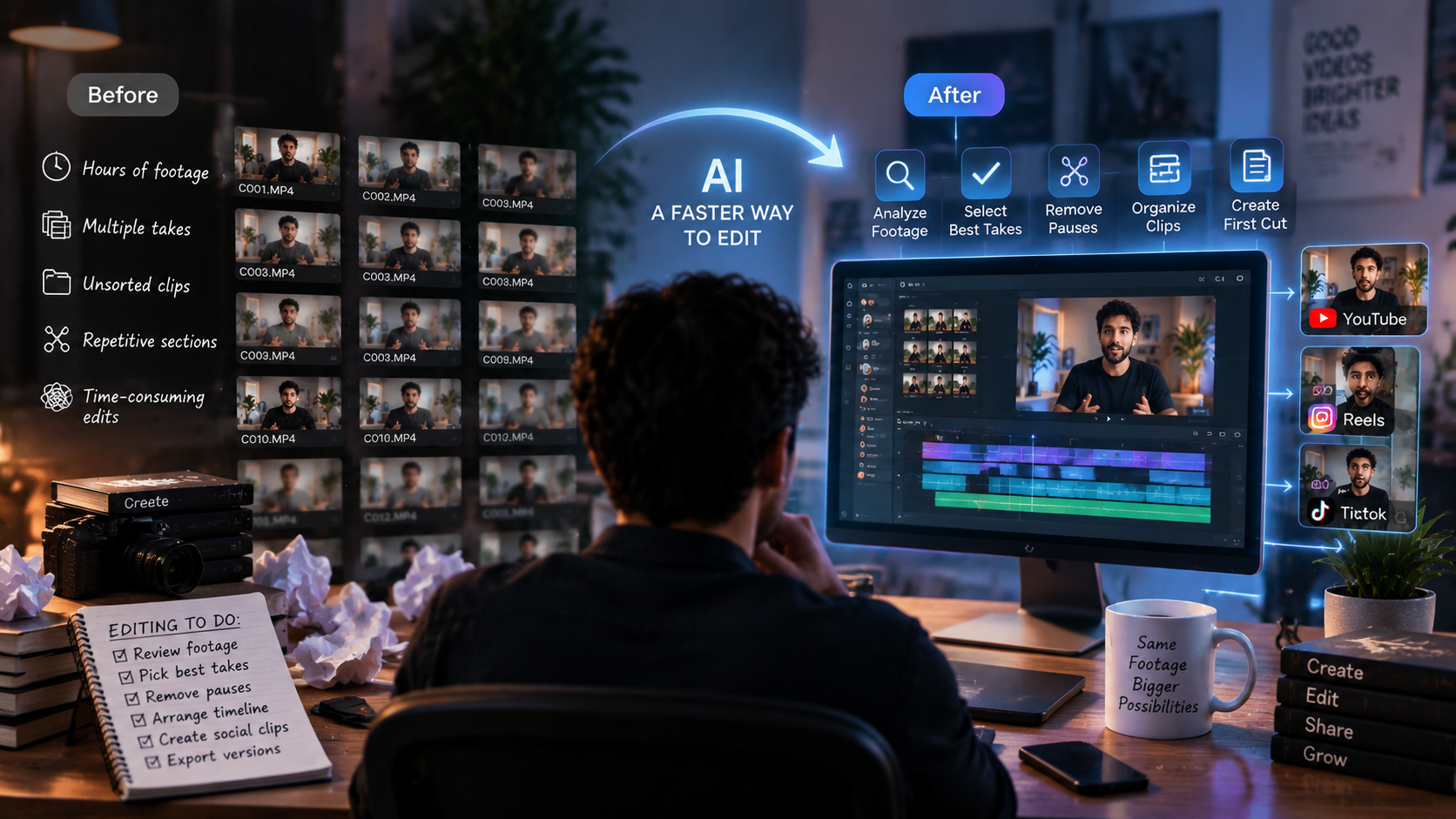
Video creation has never been more accessible. Creators can shoot high-quality footage on a smartphone, generate supporting visuals with AI, and publish across multiple platforms without a full production team. Yet one part of the process still slows everyone down: editing.
For most creators, the hardest part isn't capturing content, it's turning raw footage into something polished. Reviewing clips, finding the strongest moments, cutting dead weight, tightening pacing, and producing separate versions for YouTube, Shorts, Reels, and other platforms can eat up hours for every minute of finished video.
In 2026, AI is reshaping that process. Rather than just generating content from scratch, AI tools are increasingly acting as assistants across the production pipeline, organizing footage, cutting down repetitive work, and giving editors a stronger starting point to build from.
The goal isn't to replace human creativity. It's to remove the time-consuming groundwork so creators can spend more energy on storytelling and creative decisions.
The Shift From Manual Editing to AI-Assisted Workflows
Editing has always blended technical skill with creative judgment: deciding how a story flows, which moments matter, and how a video should land with viewers.
But before any of that creative work happens, editors typically burn through hours of preparation: organizing footage, comparing takes, flagging key sections, and building a rough timeline. For anyone producing content regularly, this prep stage can become the real bottleneck. A single interview, podcast, or tutorial might generate hours of raw footage that all needs review before editing even starts.
AI-assisted workflows are increasingly handling this operational layer, scanning footage, surfacing useful sections, and helping assemble an editable starting point automatically. It reflects a broader shift in creative tools: early AI products mostly generated single outputs (an image, a caption, a clip), while newer systems are built to support entire workflows, from planning through to a finished draft.
Where Do Creators Actually Spend Their Time?
Even experienced editors lose significant time to tasks that matter but don't require much creative judgment.
Reviewing and organizing footage. Long recordings often contain multiple takes, mistakes, pauses, and unused material. Sorting through it to find what's usable is one of the most time-consuming parts of production, especially for interviews, documentaries, or long-form educational content.
Selecting the best takes. When a scene or line is recorded multiple times, choosing the strongest version means weighing delivery, timing, and clarity, tedious work when a project has hundreds of clips.
Removing unnecessary sections. Filler words, long pauses, and repeated explanations all need trimming, which demands close attention and slows the process down.
Creating multiple versions. A single long-form recording often needs to become several different outputs, including social clips, trailers, and platform-specific cuts, multiplying the editing workload.
How AI Agents Are Changing Editing Tasks
The newer generation of AI tools goes beyond simple automation. Rather than executing one instruction at a time, AI agents can chain together several connected actions toward a broader goal: reviewing footage, organizing it, and handling repetitive editing steps with less manual input at each stage.
Common AI-assisted tasks now include:
- Reviewing large volumes of footage
- Locating specific moments within recordings
- Identifying the cleanest takes
- Removing dead air and repeated sections
- Sequencing clips into a logical order
- Building a first-pass timeline for further editing
In practice, this means a creator with hours of interview footage can just upload it, give the AI some direction, and get a rough cut back to refine. Tools like invideo editor make this easy, mixing AI-assisted footage review with a normal timeline you can still edit by hand. If you'd rather edit videos online, browser-based editors like this are becoming the go-to choice. The goal isn't a finished video with zero human input, it's a head start that skips the boring, repetitive part of editing.
AI and the First Draft
The first cut is one of the most important stages of production, it's the foundation everything else builds on: pacing, transitions, sound design, visual polish.
Traditionally, getting there means manually combing through footage and building a timeline by hand, which can take hours before any real creative refinement begins. AI tools are increasingly compressing that stage by analyzing footage, understanding context, and arranging relevant sections based on a creator's stated goals.
For creators publishing frequently, this shift matters: less time spent preparing footage means more time spent on the parts of editing that actually shape how a video feels. It also makes repurposing easier, turning one long tutorial or webinar into several shorter videos without starting each one from zero.
Human Creativity vs. AI Execution
Despite these advances, editing remains a fundamentally human, creative process. It's not just about arranging clips, it's about emotion, storytelling, audience expectations, and brand identity.
Humans still lead on:
- Creative direction
- Emotional impact
- Pacing decisions
- Visual consistency
- Final quality judgment
AI is better suited to execution-heavy work, the repetitive tasks that eat time without requiring much judgment. It can hand creators a stronger starting point, but the decisions that make a video actually good still rest with a person.
Building a Better AI-Assisted Workflow
Creators are weaving AI into every stage of production, not just editing:
- Planning and scripting: brainstorming topics and structuring videos before filming starts.
- Managing footage: analyzing recordings and making large media libraries easier to navigate.
- Editing and refining: speeding up first cuts and organizing raw material into a workable timeline; tools such as invideo editor are built around this stage specifically, handling footage organization and first-cut assembly within a timeline that creators can still fully edit by hand.
- Repurposing content: turning long-form videos into shorter clips for different platforms, extracting more value from existing footage.
For creators producing at scale, combining these AI capabilities with human creative oversight creates a workflow that's both faster and repeatable.
What Comes Next
The near future likely means tighter collaboration between creators and AI systems. As these tools get better at actually understanding video content, not just processing it, editing workflows should become more flexible and intuitive. Creators may increasingly be able to describe the edit they want, review an AI-assembled draft, and jump straight to creative adjustments instead of hours of manual prep.
That said, automation isn't going to replace skilled editors. The videos that stand out will still depend on human storytelling instinct and creative direction, AI is reducing the busywork around that, not the work itself.
Conclusion
AI is changing video editing by shifting where creators spend their effort. Instead of manually completing every step, workflows are moving toward a model where AI handles repetitive execution and humans guide the creative decisions.
From reviewing footage and selecting takes to building first cuts and generating multiple versions, AI tools are giving creators more time and greater production capacity. In 2026, the workflows that work best will be the ones that treat AI as a collaborative partner, not a replacement, freeing creators to focus on the ideas that actually make their videos worth watching.
Leave your comment
- No comments yet.
Recommended AI Tools
Carefully selected AI tools to improve your work, study, and live efficiency.



Related Articles
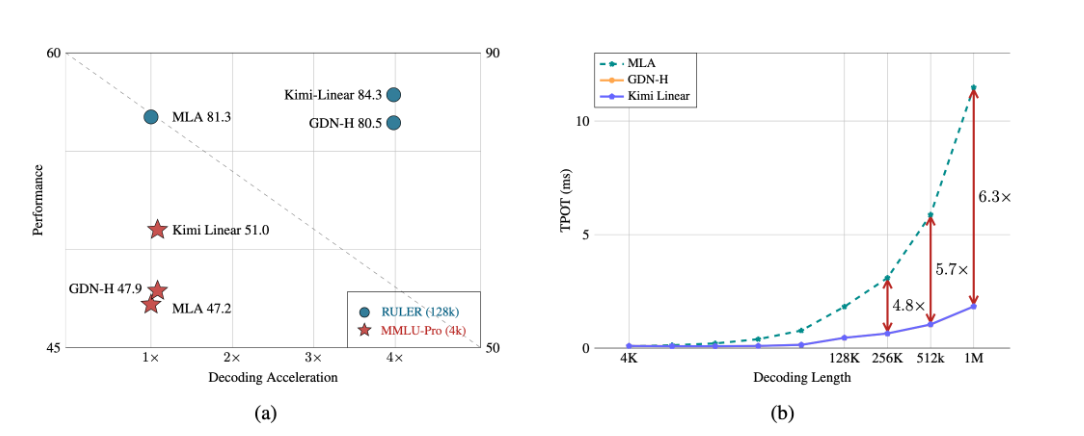
A major breakthrough has been achieved in the core architecture of large-scale models! The release of Kimi Linear marks the first time that linear attention technology has comprehensively surpassed and significantly outperformed the traditional Transformer full-attention model in both performance and efficiency. This "win-win" achievement is expected to significantly reduce the computational barriers and costs for long text processing, complex reasoning, and AI agent applications, potentially changing the competitive landscape of underlying technologies for large-scale models.
Over the past week, the AI community's attention has been drawn to a mysterious model that quietly emerged on the OpenRouter platform—Polaris Alpha. As a direct continuation of yesterday's discussion of the GPT-5.1 leak, this suddenly appearing model brings more technical details and strategic signals worthy of in-depth exploration.
Alibaba open-sources Qwen-Image-2.1: a 7B unified image model with native RGBA transparency and 10-reference editing.