BioGPT-Healthcare, a professional medical AI model developed by Microsoft, achieves accuracy surpassing human performance on PubMedQA.

In the field of medical AI, Microsoft's BioGPT-Healthcare is becoming an undeniable force. This generative pre-trained model, specifically optimized for the biomedical field, is based on the Transformer architecture and trained on massive amounts of biomedical literature, demonstrating strong potential in drug development, clinical decision support, and medical literature analysis.
1. Core Function: Understanding and Generating Professional Medical Text
BioGPT-Healthcare's core capability is built on its deep understanding of biomedical terminology. Unlike general-purpose large models, it is specifically optimized for the biomedical field, pre-trained on professional literature databases such as PubMed and PMC, mastering complex medical terminology, gene symbols, drug names, and professional expressions.
The model performs exceptionally well in medical question answering and text generation. In the PubMedQA (Biomedical Question Answering Benchmark) test, the BioGPT-Large version achieved an accuracy rate of 81%, surpassing the 78% level of human experts. This means it can accurately understand medical questions and generate answers that meet professional standards.
Beyond question answering, BioGPT-Healthcare also excels in medical entity recognition and relation extraction. It accurately identifies entities such as genes, proteins, drugs, and diseases from complex medical texts and clarifies the relationships between them, supporting drug target discovery and disease mechanism research.
2. Technical Highlights: Domain Adaptation and Algorithm Innovation
BioGPT-Healthcare incorporates several innovations in its technical architecture, making it particularly suitable for handling biomedical content:
-
Specialized Terminology Processing: It employs a three-stage hybrid embedding strategy specifically for handling highly complex biochemical nomenclature (such as complex drug molecule names), significantly improving the accuracy of understanding specialized terminology.
-
Locality-Sensitive Attention Mechanism: This mechanism allows the model to prioritize key information segments in medical literature (such as "IC50 = 8.3 μM" or "p < 0.01"), preventing important signals from being overwhelmed by lengthy background descriptions.
-
Long Text Processing Capabilities: Supports context lengths of up to 2048 tokens, capable of processing complete medical paper abstracts and capturing long-distance dependencies.
These technological innovations enable BioGPT-Healthcare to significantly outperform general-purpose models in biomedical tasks, providing a more specialized AI tool for medical research.
3. Medical Value: From Drug Development to Clinical Decision Making
BioGPT-Healthcare's medical value is reflected in several key areas:
- Accelerated Drug Development
BioGPT-Healthcare can quickly analyze massive amounts of medical literature, extract drug-target relationships, predict drug interactions and potential side effects, significantly shortening the time required for early-stage drug research. Microsoft research shows that this model outperforms other models in predicting drug interactions, contributing to improved drug safety.
- Clinical Decision Support
In clinical settings, BioGPT-Healthcare can assist physicians in making diagnostic decisions. By analyzing patient symptoms, laboratory results, and imaging reports, it can generate preliminary diagnostic suggestions or standardized clinical notes. When combined with high-performance hardware (such as the RTX 4090), it can even process CT/MRI image features and output descriptive text.
- Personalized Medicine
BioGPT-Healthcare shows potential in generating personalized medication plans, assisting in developing more individualized treatment strategies based on a patient's genetic characteristics, metabolic status, comorbidities, and medication history.
Table: BioGPT-Healthcare Application Scenarios in the Medical Field
| Application Scenarios | Specific Functions | Value Proposition |
|---|---|---|
| Drug Development | Literature mining, target discovery, side effect prediction | Shorten the R&D cycle and improve the success rate |
| Clinical Decision Making | Diagnostic suggestions, report generation, treatment plan recommendations | Assist doctors in decision-making and reduce human error |
| Medical Research | Literature review, hypothesis generation, data extraction | Accelerate scientific research and promote knowledge discovery |
| Personalized Medicine | Medication plan generation, risk prediction | Achieve more precise individualized treatment |
4. Competitive Analysis: Differentiated Advantages in the Medical AI Field
In the medical AI field, BioGPT-Healthcare faces multiple competitors, but it has differentiated advantages in specific areas:
-
Compared to Google's Med-PaLM: BioGPT-Healthcare focuses more on literature analysis and text generation, while Med-PaLM performs better in medical question answering (achieving 85% accuracy on USMLE exam-related questions). However, BioGPT-Healthcare's specialized training in biomedical literature gives it an advantage in research scenarios.
-
Compared to OpenAI's GPT series: BioGPT-Healthcare is more professional and accurate. While GPT-4 exceeds the passing score by more than 20 points on the USMLE exam, BioGPT-Healthcare performs more professionally on specific biomedical tasks.
-
Compared to Stanford's BioMedLM: BioGPT-Healthcare has stronger generation capabilities. BioMedLM (formerly PubMed GPT) achieved human-like performance on medical QA text, but BioGPT-Healthcare excels in text generation.
Table: BioGPT-Healthcare vs. Major Competitors
| Model Name | Developer | Main Features | Primary Applications |
|---|---|---|---|
| BioGPT-Healthcare | Microsoft | Dedicated to the biomedical field, powerful text generation capabilities | Literature analysis, drug discovery, academic writing |
| Med-PaLM 2 | Strong general medical question-answering capabilities, excellent exam performance | Medical question answering, clinical knowledge testing | |
| GPT-4 | OpenAI | Strong general capabilities, multimodal capabilities | Wide range of medical applications, content generation |
| BioMedLM | Stanford | Focused on biomedical literature understanding | Medical text understanding, knowledge extraction |
5. Challenges and Limitations: Issues to Consider When Using BioGPT-Healthcare
Despite its excellent performance, BioGPT-Healthcare still faces some challenges and limitations:
-
High Data Dependency: The model's performance is highly dependent on the quality and coverage of the training data, potentially leaving blind spots in areas such as rare diseases or the latest research findings.
-
Potential Bias Risk: Like most AI models, BioGPT-Healthcare may reflect biases present in the training data, requiring healthcare professionals to carefully interpret its output.
-
"Illusion" Problem: Occasionally, it may generate inaccurate or fictitious content, especially when dealing with uncommon or fringe medical knowledge.
These limitations mean that BioGPT-Healthcare is currently better suited as an adjunct tool rather than a complete replacement for the judgment of medical professionals.
Summary
BioGPT-Healthcare represents the future direction of AI models in specialized fields—vertical, professional, and precise. Its advantages in biomedical text processing make it a powerful tool for drug development, medical research, and clinical decision support.
With the development of multimodal technologies, future versions of BioGPT-Healthcare may integrate multidimensional information such as images and genomics data to provide more comprehensive healthcare solutions; collaboration between Microsoft and the open-source community will also drive further optimization and wider application of the model.
For researchers and practitioners interested in the field of medical AI, BioGPT-Healthcare is undoubtedly a tool worth paying attention to and exploring, indicating a broad prospect for AI applications in professional fields.
Disclaimer: The content of this article is for reference only. The application of BioGPT-Healthcare should be carried out under the guidance of a professional physician and cannot replace professional medical advice.
Leave your comment
- No comments yet.
Recommended AI Tools
Carefully selected AI tools to improve your work, study, and live efficiency.



Related Articles
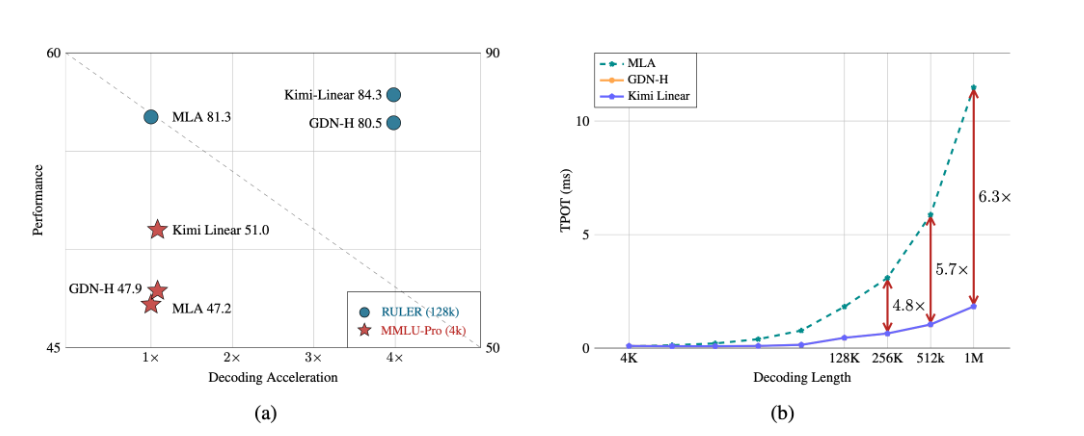
A major breakthrough has been achieved in the core architecture of large-scale models! The release of Kimi Linear marks the first time that linear attention technology has comprehensively surpassed and significantly outperformed the traditional Transformer full-attention model in both performance and efficiency. This "win-win" achievement is expected to significantly reduce the computational barriers and costs for long text processing, complex reasoning, and AI agent applications, potentially changing the competitive landscape of underlying technologies for large-scale models.

Over the past week, the AI community's attention has been drawn to a mysterious model that quietly emerged on the OpenRouter platform—Polaris Alpha. As a direct continuation of yesterday's discussion of the GPT-5.1 leak, this suddenly appearing model brings more technical details and strategic signals worthy of in-depth exploration.
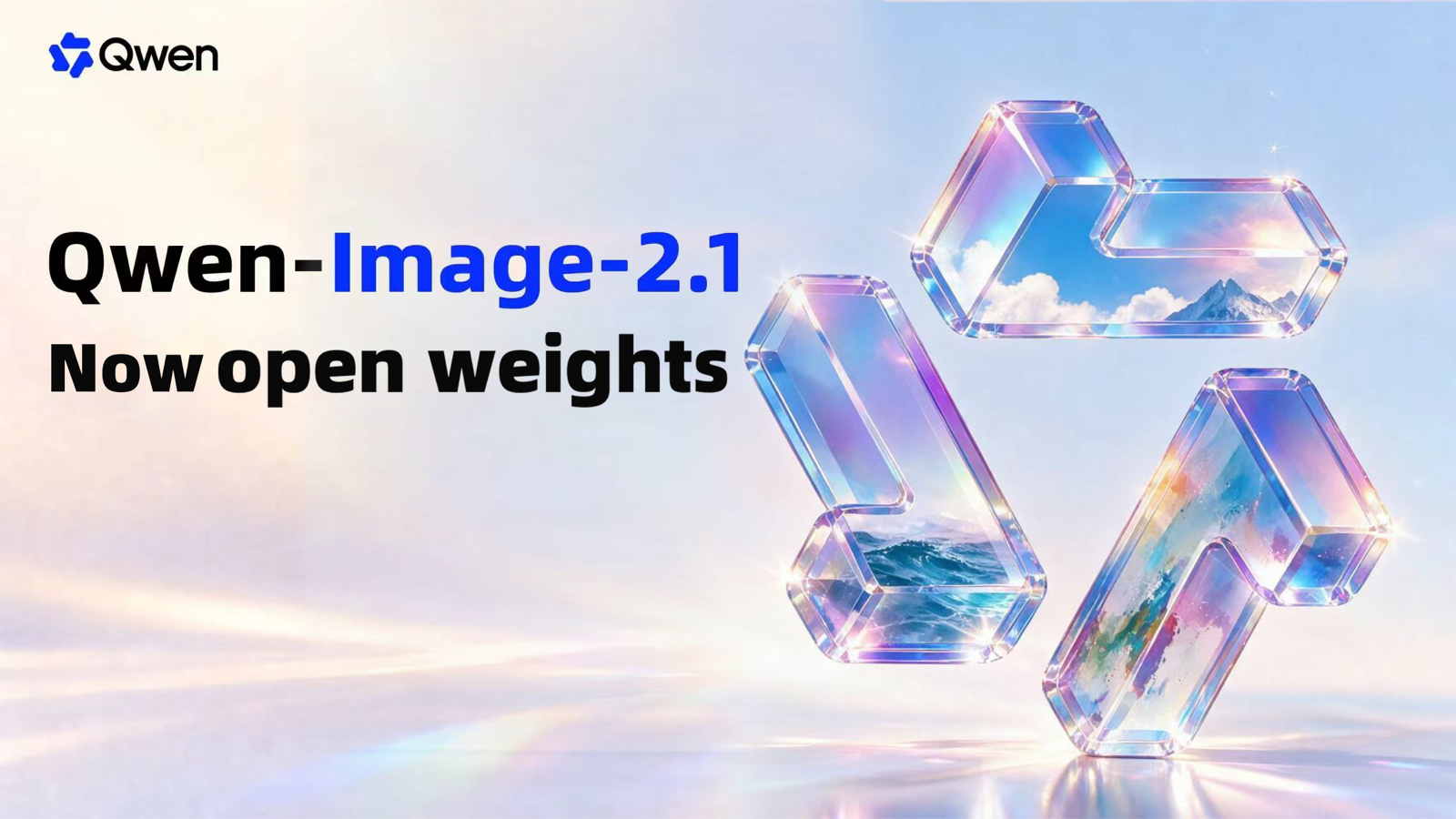
Alibaba open-sources Qwen-Image-2.1: a 7B unified image model with native RGBA transparency and 10-reference editing.