88% of users no longer compare prices! ChatGPT is reshaping shopping decisions. How should merchants respond to the era of AI-powered shopping guides?

How AI Can Become a New Gateway to Global Shopping Decisions
Since its gradual rollout of shopping features in April 2025, ChatGPT has achieved a qualitative leap in its e-commerce capabilities. From initial simple product recommendations to the "instant checkout" feature launched at the end of September, ChatGPT has completed its transformation from a "shopping assistant" to a "transaction platform."
The core of this transformation lies in AI's ability to process complex queries. Unlike traditional search engines, AI can understand highly personalized needs such as "a polo shirt that doesn't attract cat hair" or "skincare products suitable for sensitive skin."
Changes in user behavior are more profound and complex. When AI can accurately understand needs and provide comprehensive product information (including variant attributes, prices, ratings, delivery times, and user reviews), the traditional practice of opening multiple browser tabs to compare prices becomes obsolete. Amazon's AI shopping assistant Rufus already has 250 million active users in 2025. Data shows that customers using Rufus are 60% more likely to complete a purchase than those who don't, and it is projected to bring Amazon over $10 billion in incremental sales annually.
01 Business Transformation: A Comprehensive Restructuring of Traffic Allocation and Operational Logic
The intervention of AI in e-commerce is not merely the addition of a new function, but a complete disruption of the existing e-commerce ecosystem.
The logic of traffic allocation has fundamentally changed. On traditional e-commerce platforms, product ranking often incorporates advertising budget factors; however, AI assistants like ChatGPT claim that their recommendations are entirely based on user demand relevance, without considering advertising. This means that high-quality but budget-constrained small and medium-sized businesses now have a fair chance to compete with large brands.
The operational logic of e-commerce has also changed accordingly. The traditional strategy of "spending money on advertising to buy traffic" is less effective in the era of AI-guided shopping. Merchants now need to focus on the quality of the product itself, user reviews, and the structure of product information, as these factors directly affect whether AI recommends their products. For example, Amazon Rufus's recommendation results have forced merchants to shift from "price competition" to "value presentation," requiring clearer labeling of product scenario suitability, core parameters, and other structured information.
02 Practical Strategies: How to Optimize Products to Adapt to AI Recommendations
Faced with this transformation, how should merchants and marketers adjust their strategies? Generative Engine Optimization (GEO) is replacing traditional SEO as the new optimization direction.
-
Structured Product Information is Fundamental: Using schema tags (such as Product, Offer, AggregateRating) allows AI to accurately understand product attributes, prices, and user reviews. The more complete and standardized the product data, the greater the likelihood of it being recommended by AI.
-
Create AI-Driven Content: Product descriptions should directly answer specific questions users might ask, rather than simply piling up keywords. For example, instead of simply stating "leather backpack," describe it as "a waterproof leather backpack best suited for a 15-inch laptop."
-
Comprehensive FAQ Pages are Extremely Important: Compile frequently asked questions collected by customer service and sales teams into a dedicated Q&A section, providing AI with directly referable answers.
03 Industry Impact: The Battle Between Traditional Platforms and AI Shopping Guides
Faced with the intrusion of AI, traditional e-commerce platforms are not sitting idly by. Amazon has launched its own AI shopping assistant, Rufus, but given the enormous advertising profits, Rufus struggles to recommend products as unbiasedly as ChatGPT.
Google faces an even greater challenge. In 2024, Google's e-commerce advertising revenue reached $58 billion, and AI-powered ad-free recommendations are changing user behavior. As users become accustomed to getting shopping advice from AI rather than searching keywords, Google's business model is directly impacted. In response, Google has leveraged AI and its shopping graph's 45 billion product listings to add personalized recommendations and AI-generated shopping summaries to its shopping tab.
However, AI-driven shopping also presents potential problems. The "black box" nature of algorithms may lead to opaque recommendation results, potentially causing traffic to further concentrate on leading brands. Ensuring the fairness of AI recommendations will be a long-term challenge for platforms.
04 Summary and Outlook
In the coming years, the AI shopping experience will become more intelligent. OpenAI has demonstrated a complete shopping process: a user submits a request: "My friend is moving, please help me choose handmade ceramic tableware, white and brown color scheme, budget under $100"; ChatGPT directly recommends matching products, and the user can complete the purchase within the chat interface; seamless transition from conversation to transaction.
Search boxes are being replaced by dialog boxes, a more fundamental change than the shift to mobile internet. Merchants should act immediately: optimize product data structure and content, pay attention to GEO (Generative Adversarial System), and prepare to integrate AI business protocols.
As industry experts have said, "When users are already accustomed to the efficient way of interacting with AI, who would want to go back to the inefficient scenarios of the past?"
Follow https://aiwith.me/ to explore the world of AI and make our daily lives smarter.
Leave your comment
- No comments yet.
Recommended AI Tools
Carefully selected AI tools to improve your work, study, and live efficiency.





Related Articles
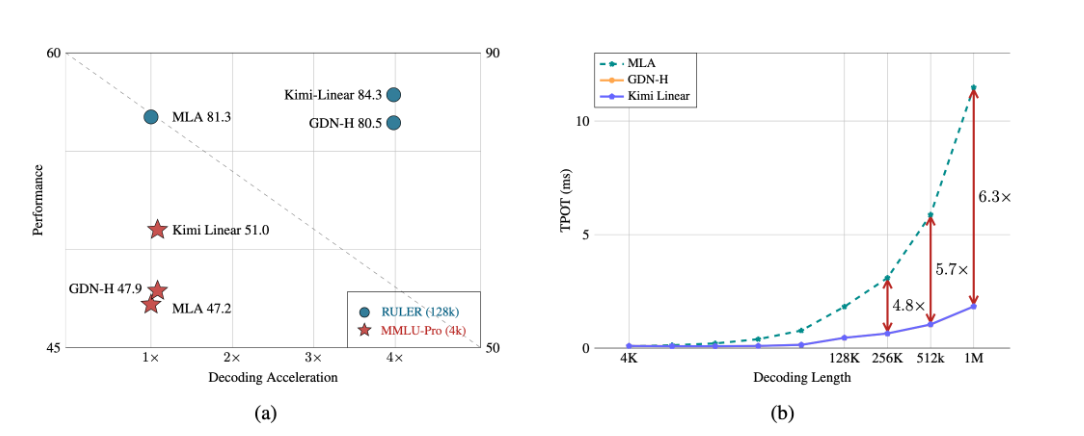
A major breakthrough has been achieved in the core architecture of large-scale models! The release of Kimi Linear marks the first time that linear attention technology has comprehensively surpassed and significantly outperformed the traditional Transformer full-attention model in both performance and efficiency. This "win-win" achievement is expected to significantly reduce the computational barriers and costs for long text processing, complex reasoning, and AI agent applications, potentially changing the competitive landscape of underlying technologies for large-scale models.

Over the past week, the AI community's attention has been drawn to a mysterious model that quietly emerged on the OpenRouter platform—Polaris Alpha. As a direct continuation of yesterday's discussion of the GPT-5.1 leak, this suddenly appearing model brings more technical details and strategic signals worthy of in-depth exploration.

Alibaba open-sources Qwen-Image-2.1: a 7B unified image model with native RGBA transparency and 10-reference editing.