Anthropic launches Claude Code for web
Intelligent coding in the cloud puts development efficiency at your fingertips.
On October 20th, the AI field welcomed a major update: Anthropic officially launched the web version of Claude Code. This groundbreaking feature allows developers to delegate programming tasks directly from their browser, eliminating the need for complex local development environments or command-line tools. It marks a new era of convenience and efficiency for AI-assisted programming.
One-click access: An AI programming partner in your browser.
The web version of Claude Code is now available as a research preview for Claude Pro and Max subscribers. Simply visit the Anthropic official website (claude.ai) and click the "Code" tab to access this innovative programming interface.
The core advantage lies in its minimalist access. Unlike traditional command-line tools, the web version allows developers to connect to a GitHub repository and directly describe their programming requirements in natural language. Claude then executes the tasks on Anthropic's managed cloud infrastructure.
Each programming session runs in an isolated cloud environment and provides real-time progress tracking. Developers can monitor Claude's progress in real time and adjust the direction of the task at any time to ensure the final code meets expectations.
Three Highlights: Reinventing the AI-Assisted Coding Experience
1. Parallel Multitasking
One of the most compelling features of the Claude Code web version is the ability to run multiple programming tasks in parallel. Users can launch multiple coding sessions across different code repositories from the same interface, significantly improving productivity.
This is particularly beneficial for tackling bug backlogs, routine fixes, or parallel development work. The system automatically creates a pull request (PR) for each modification and generates a clear change summary, accelerating the code delivery process.
2. Flexible Adaptation to Various Workflows
The Claude Code web version is designed to be flexible and adaptable to developers' existing workflows. It is particularly suitable for the following scenarios:
• Understanding Project Structure: Quickly grasp the project's working structure and the mapping between repositories
• Bug Fixing: Efficiently locate and fix code errors
• Routine Tasks: Perform well-defined, repetitive development tasks
• Backend Modifications: Verify the correctness of changes through Test-Driven Development (TDD)
3. Security-First Cloud Execution Environment
Security is a core design principle of the Claude Code web version. Each task runs in an isolated sandbox environment with strict network and file system access restrictions.
Git interactions are handled through a secure proxy service, ensuring Claude can only access authorized repositories, effectively protecting code and credentials. Users can also customize network configurations, allowing Claude to connect to specific domains from the sandbox (for example, to download npm packages for test runs), achieving a balance between security and functionality.
Mobile Coding: A Development Experience Anytime, Anywhere
As part of this launch, Anthropic has also opened up the Claude Code feature (early preview) within its iOS app, allowing developers to perform lightweight programming tasks and monitor project progress on their mobile devices, truly realizing the concept of "mobile coding."
While the mobile experience is still being refined, this marks a significant shift away from desktop programming, providing unprecedented flexibility in the development process.
Market Background and Impact
Since its launch, Claude Code has seen significant user growth, reflecting the significant market demand for AI programming tools. Notably, according to relevant information, a significant portion of the code in Claude Code itself is written by the company's AI models. This fact not only demonstrates the power of AI programming but also heralds a fundamental shift in the software engineering workflow—the engineer's role is gradually shifting from code writer to reviewer and architect of AI output.
Future Outlook
The market for AI programming tools is becoming increasingly competitive, but Claude Code has become one of the most popular products thanks to its powerful model capabilities and user experience. The launch of the web version further lowers the barrier to entry, making AI-assisted programming accessible to a wider range of developers.
As AI programming tools mature, we can foresee that software development will become more efficient and accessible. The Claude Code web version is not only a technological advancement but also a significant force driving the entire industry forward.
Official Website link
Developers interested in experiencing the latest AI programming features can apply for access now through the Anthropic official website (https://claude.ai) or the product page (https://claude.com/product/claude-code) to experience the convenience and efficiency of in-browser coding firsthand. More technical details and official documentation are available on the Anthropic official documentation site (https://docs.claude.com/en/docs/claude-code).
This article is compiled by the team behind the tool navigation site https://aiwith.me/, aiming to provide developers with the latest information on AI tools. Please credit the source when reprinting.
Leave your comment
- No comments yet.
Recommended AI Tools
Carefully selected AI tools to improve your work, study, and live efficiency.





Related Articles
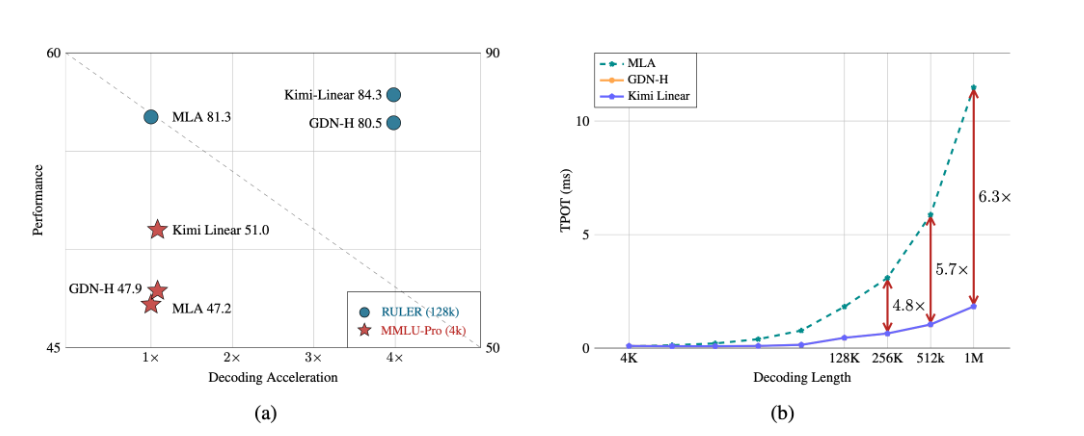
A major breakthrough has been achieved in the core architecture of large-scale models! The release of Kimi Linear marks the first time that linear attention technology has comprehensively surpassed and significantly outperformed the traditional Transformer full-attention model in both performance and efficiency. This "win-win" achievement is expected to significantly reduce the computational barriers and costs for long text processing, complex reasoning, and AI agent applications, potentially changing the competitive landscape of underlying technologies for large-scale models.

Over the past week, the AI community's attention has been drawn to a mysterious model that quietly emerged on the OpenRouter platform—Polaris Alpha. As a direct continuation of yesterday's discussion of the GPT-5.1 leak, this suddenly appearing model brings more technical details and strategic signals worthy of in-depth exploration.

Alibaba open-sources Qwen-Image-2.1: a 7B unified image model with native RGBA transparency and 10-reference editing.