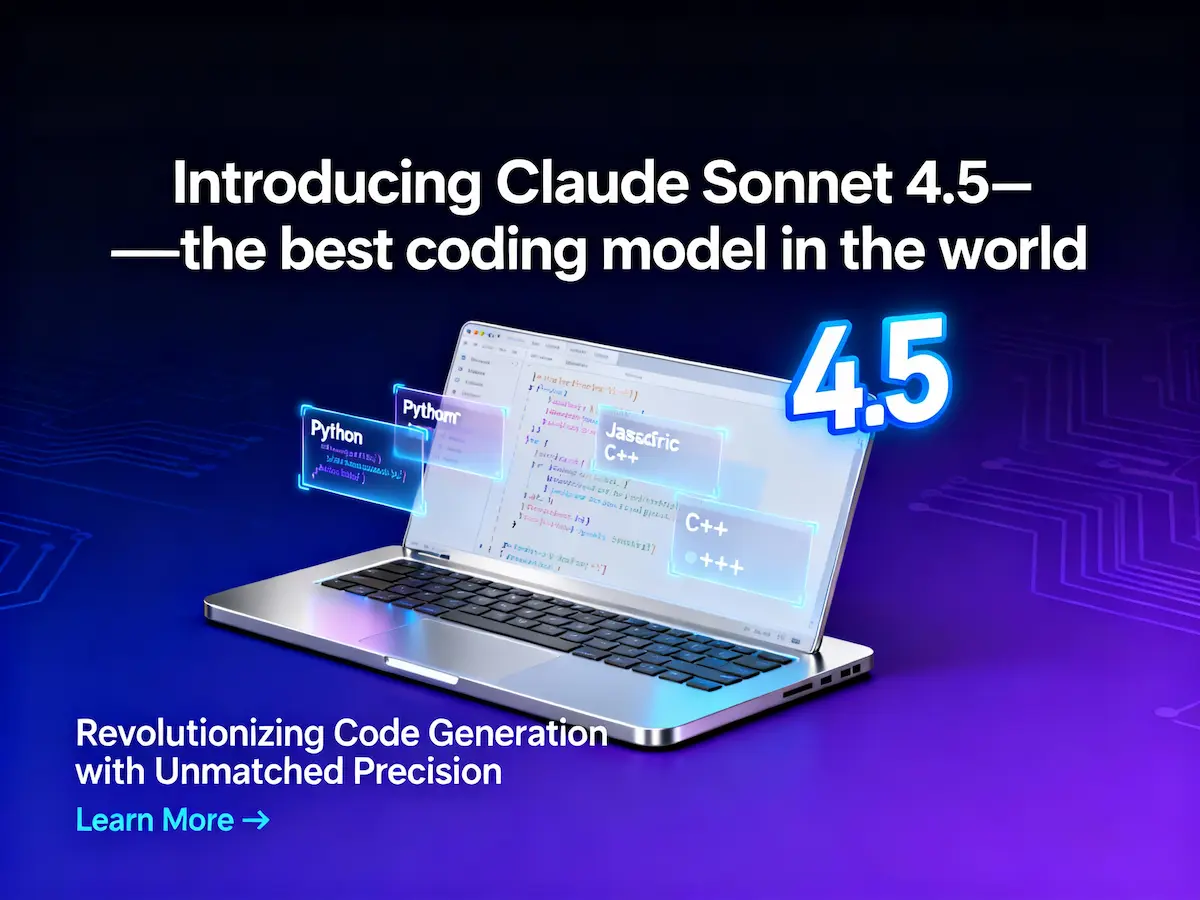
Introducing Claude Sonnet 4.5—the best coding model in the world.
Introduction
The landscape of AI-assisted development is undergoing a seismic shift. For developers, researchers, and tech professionals, the tools we use to write, debug, and reason about code are fundamentally changing. Today, that evolution reaches a new pinnacle with the introduction of Claude Sonnet 4.5, a model that isn't just an incremental update but a monumental leap forward. Positioned as the best coding model in the world, Claude Sonnet 4.5 redefines what's possible in AI-powered software engineering, complex agent construction, and real-world computer interaction. This release represents a convergence of raw capability, practical tooling, and sophisticated safety, setting a new benchmark for frontier AI models.
Main Content Sections
What Makes Claude Sonnet 4.5 the Best Coding Model in the World?
The claim of being the "best coding model in the world" is substantiated by rigorous benchmarking and real-world performance metrics. On the SWE-bench Verified evaluation, a comprehensive test that measures real-world software engineering abilities by resolving actual GitHub issues, Claude Sonnet 4.5 achieves state-of-the-art performance. This isn't just a theoretical advantage; developers will notice a tangible difference in the model's ability to understand complex codebases, generate contextually appropriate solutions, and navigate intricate software dependencies.
Beyond raw coding prowess, Claude Sonnet 4.5 demonstrates unprecedented stamina for complex tasks. Anthropic's observations reveal the model can maintain focus for more than 30 hours on complex, multi-step programming challenges. This endurance is crucial for real-world development scenarios where tasks often span multiple sessions and require consistent contextual understanding.
A Quantum Leap in Computer Use and Tool Integration
One of the most significant advancements in Claude Sonnet 4.5 is its dramatically improved ability to interact with computers and software tools. On the OSWorld benchmark, which tests AI models on real-world computer tasks, Sonnet 4.5 now leads with an impressive 61.4% success rate. This represents a substantial jump from Sonnet 4's 42.2% performance just four months ago, indicating rapid progress in this critical capability area.
This enhanced computer use capability is immediately accessible through the Claude for Chrome extension, which allows Claude to work directly within your browser environment. The model can navigate websites, manipulate spreadsheets, fill forms, and complete tasks with a level of precision and understanding previously unseen in AI systems.
Enhanced Reasoning and Mathematical Capabilities
While coding and computer use represent headline features, Claude Sonnet 4.5 shows substantial gains across a broad spectrum of cognitive capabilities. The model demonstrates improved performance on reasoning tasks and mathematical problem-solving, making it invaluable for professionals in STEM fields, finance, and data science.
Domain experts in finance, law, medicine, and STEM fields have reported dramatically better domain-specific knowledge and reasoning compared to previous models, including the formidable Opus 4.1. This makes Claude Sonnet 4.5 not just a coding specialist but a versatile intelligence capable of tackling complex problems across multiple disciplines.
The Infrastructure Revolution: Claude Agent SDK
Perhaps the most exciting development for the developer community is the release of the Claude Agent SDK. This represents a fundamental shift in how developers can build with AI. The SDK provides the same infrastructure that powers Claude Code, Anthropic's flagship coding product, giving developers the building blocks to create sophisticated AI agents.
The Claude Agent SDK solves some of the most challenging problems in agent design:
- Memory management across long-running tasks
- Permission systems balancing autonomy with user control
- Coordination between subagents working toward shared goals
This infrastructure has been battle-tested through six months of continuous updates to Claude Code, ensuring developers receive a robust, production-ready toolkit.
Unprecedented Alignment and Safety Measures
Claude Sonnet 4.5 isn't just the most capable model Anthropic has released—it's also their most aligned frontier model yet. Extensive safety training has resulted in substantial improvements in the model's behavior, with significant reductions in concerning behaviors like sycophancy, deception, power-seeking, and the tendency to encourage delusional thinking.
For the model's agentic and computer use capabilities, Anthropic has made considerable progress defending against prompt injection attacks, one of the most serious security risks for users of these capabilities. The model is being released under AI Safety Level 3 (ASL-3) protections, with sophisticated classifiers designed to detect potentially dangerous inputs and outputs, particularly those related to CBRN (chemical, biological, radiological, and nuclear) risks.
Key Features/Benefits
- World-Leading Coding Performance: State-of-the-art on SWE-bench Verified, making it the best coding model available
- Extended Task Focus: Maintains concentration on complex problems for over 30 hours
- Superior Computer Interaction: 61.4% success rate on OSWorld benchmark for real-world computer tasks
- Enhanced Reasoning Capabilities: Substantial improvements in mathematical and logical reasoning
- Comprehensive Safety: Most aligned frontier model with reduced concerning behaviors and improved security
- Developer-Focused Tooling: Claude Agent SDK provides production-ready infrastructure for building AI agents
- Cost-Effective Access: Available at the same price as Claude Sonnet 4 ($3/$15 per million tokens)
- Seamless Integration: Drop-in replacement for existing Claude implementations with significantly improved performance
Use Cases/Examples
Enterprise Software Development
Large organizations can leverage Claude Sonnet 4.5 to accelerate their development cycles. The model's ability to understand complex codebases and maintain context over extended periods makes it ideal for enterprise applications where developers often work across multiple modules and services.
Research and Data Science
For researchers tackling complex mathematical models or analyzing large datasets, Claude Sonnet 4.5's enhanced reasoning capabilities provide a powerful assistant. The model can help with statistical analysis, algorithm design, and interpreting research findings across scientific disciplines.
Automated Workflow Automation
With the Claude Agent SDK, businesses can build custom agents to automate complex workflows. For example, an e-commerce company could create an agent that monitors inventory levels, generates purchase orders when stock runs low, and updates product availability across multiple platforms—all without human intervention.
Educational Tool Development
Educational institutions can use Claude Sonnet 4.5 to create intelligent tutoring systems that adapt to individual student needs. The model's improved reasoning and explanation capabilities make it particularly effective for teaching complex subjects like computer science, mathematics, and engineering.
Financial Analysis and Modeling
The model's dramatically improved performance in finance-specific domains enables more sophisticated financial modeling, risk analysis, and investment strategy development. Financial institutions can build agents that process market data, identify trends, and generate insights in real-time.
Conclusion
Claude Sonnet 4.5 represents a watershed moment in AI development, particularly for the coding and software engineering communities. As the best coding model in the world, it combines unprecedented technical capabilities with practical tooling that developers can immediately leverage in their workflows. The release of the Claude Agent SDK democratizes the infrastructure powering Anthropic's most advanced products, enabling developers to build sophisticated AI agents for virtually any domain.
The model's substantial gains in reasoning, mathematics, and computer interaction, combined with its industry-leading safety measures, create a compelling package for both individual developers and enterprise organizations. With pricing remaining unchanged from its predecessor, Claude Sonnet 4.5 offers exceptional value and performance improvements across the board.
For anyone working with code, building AI applications, or solving complex problems with technology, upgrading to Claude Sonnet 4.5 is not just recommended—it's essential. The model is available today through the Claude API, Claude apps, and Claude Code, ready to transform how we approach software development and problem-solving in the AI era.
Leave your comment
- No comments yet.
Recommended AI Tools
Carefully selected AI tools to improve your work, study, and live efficiency.



Related Articles
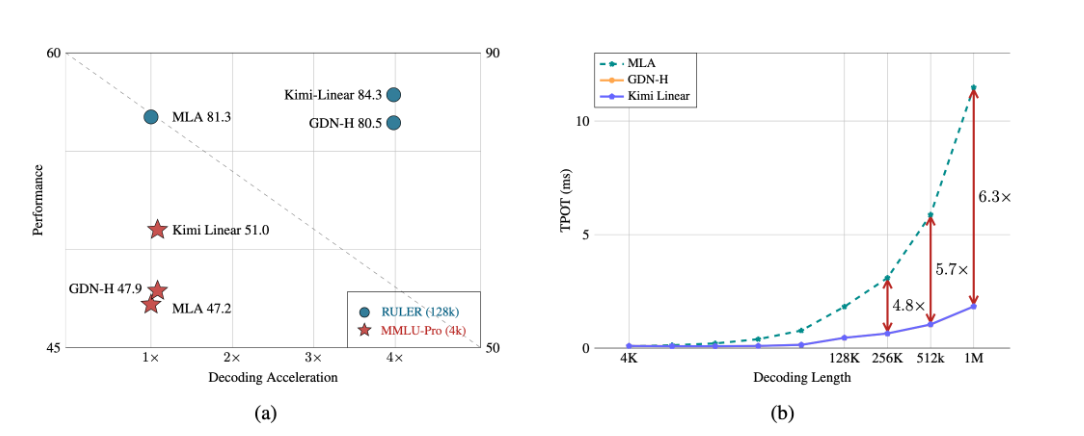
A major breakthrough has been achieved in the core architecture of large-scale models! The release of Kimi Linear marks the first time that linear attention technology has comprehensively surpassed and significantly outperformed the traditional Transformer full-attention model in both performance and efficiency. This "win-win" achievement is expected to significantly reduce the computational barriers and costs for long text processing, complex reasoning, and AI agent applications, potentially changing the competitive landscape of underlying technologies for large-scale models.
Over the past week, the AI community's attention has been drawn to a mysterious model that quietly emerged on the OpenRouter platform—Polaris Alpha. As a direct continuation of yesterday's discussion of the GPT-5.1 leak, this suddenly appearing model brings more technical details and strategic signals worthy of in-depth exploration.
Alibaba open-sources Qwen-Image-2.1: a 7B unified image model with native RGBA transparency and 10-reference editing.