Cursor 2.0: The next-gen AI code editor finally arrives
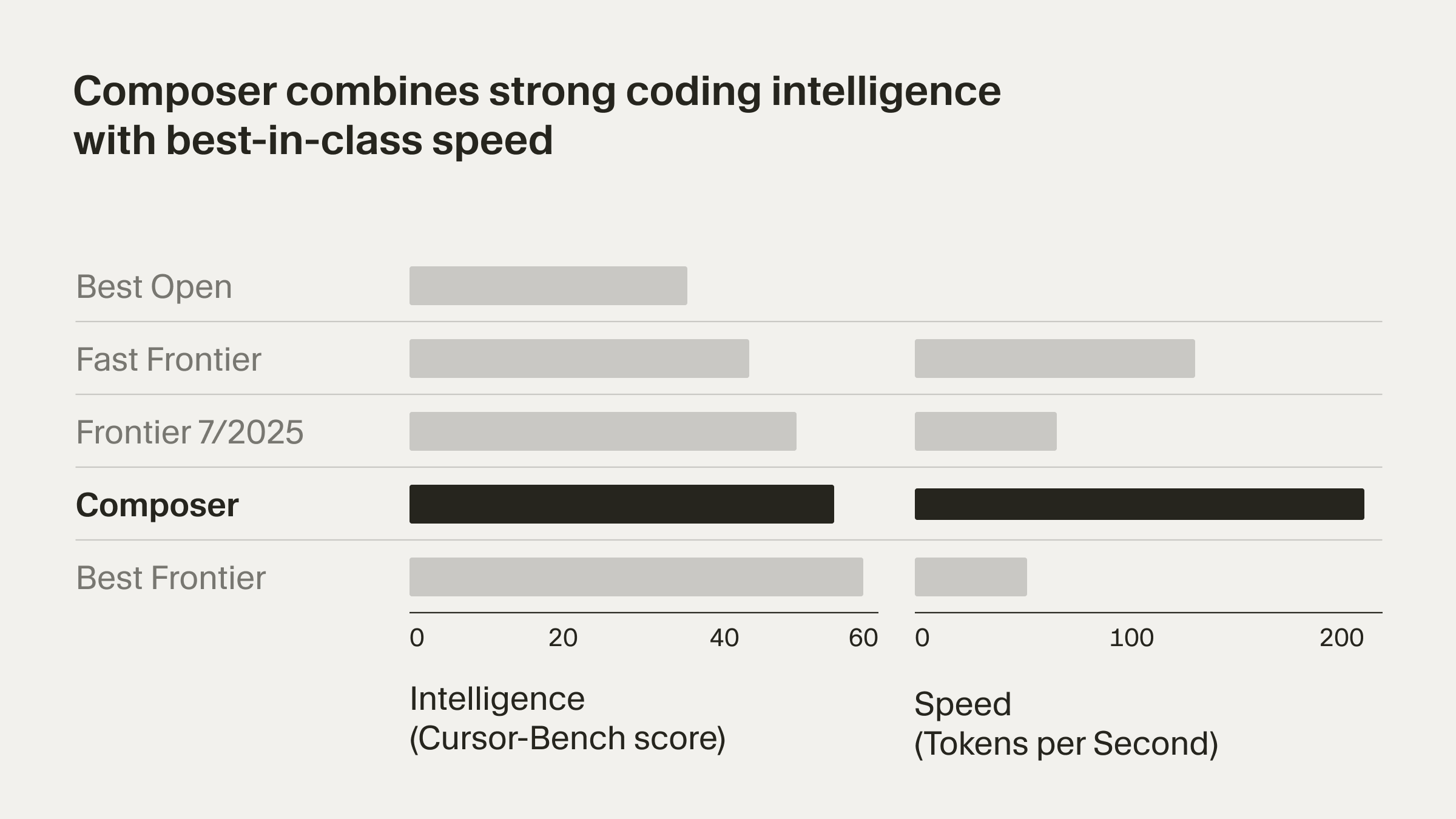
Today marks a milestone for the AI-coding space: Cursor 2.0 has landed, bringing in its own in-house large model Composer and a multi-agent collaboration interface—pushing the tool from a “smart editor” to a full blown AI-native coding platform.
Core Breakthrough: In-house Model Composer, Speed ×4
The biggest headline here is the debut of Composer, the first self-developed programming large model by the Cursor team. Up until now, many code-editor-AI tools relied on third-party models (e.g., from OpenAI, Anthropic) pulled into the editor. Cursor 2.0 flips that: Composer is designed for ultra-low latency, interactive coding workflows.
According to the announcement, Composer can reach up to ≈250 tokens per second, and many common coding tasks now complete in under 30 seconds. That’s about 4× the response speed of the older “call a remote model” architecture. This accelerates the developer “think → execute → verify” loop significantly, meaning you can iterate faster, catch mistakes quicker, and test ideas without losing momentum.
Technically, Composer uses a Mixture-of-Experts (MoE) architecture plus reinforcement learning training (RL). It also embeds a code-library-level semantic search engine so the model understands large project context, addressing one of the chronic issues of big models: getting “lost” in a large codebase. (See references about multi-file editing in Cursor using Composer. (Prototypr)) In short: faster, deeply integrated, project-aware.
Revolutionary Feature: Multi-Agent Parallel Collaboration
Cursor 2.0 also rethinks the UI/UX: shifting from a file-centric view to an agent-centric paradigm. Developers can launch up to 8 independent AI agents, each working in its own workspace, in parallel, without interference. The metaphor: each agent is like a separate engineer working on a distinct branch (via git worktrees), and their results get merged at the end. This parallelism means you can have multiple “brains” exploring different solution paths, then pick the best one.
The architecture reportedly uses the git worktree mechanism under the hood so each agent’s workspace stays isolated, yet final merging is supported. This is especially useful for complex tasks (large features, refactors, multi-file changes) where one monolithic model may struggle or require heavy prompting. Early user commentary (on Reddit) indicates the Composer + agent approach is under active development but promising. (Reddit)
Full-Workflow Automation: From Write to Test in One Flow
Beyond just coding assistance, Cursor 2.0 claims to support end-to-end automation across the dev process:
- Native browser tools: An agent can generate code, run it, test it in real time, then auto-modify when issues arise.
- AI code review: A dedicated interface visualises diffs and change history, making it easier to audit agent-produced code.
- Sandbox terminal (macOS version): Agents can execute shell commands in an isolated environment, reducing risk of destructive operations.
- Voice control: Developers can issue voice commands to agents (“generate a CRUD endpoint”, “refactor this module”), enabling “talk to your code” workflows.
If true, this marks a step from “AI suggestion in editor” to “AI-enabled coding platform”—the type of tool where human + agents collaborate across the full stack of development.
Strategic Significance: From “AI Wrapper” to “AI Native Platform”
This release signals a strategic shift for Cursor. Previously it was a very strong AI-powered editor (effectively an “AI shell” around the existing third-party models). With version 2.0 and the launch of Composer + multi-agent workflows, Cursor is positioning itself as an AI-native platform, owning both the model and the environment.
For developers this means less dependence on external model providers (and fewer latency/usage-cost issues), more tightly integrated workflows, and presumably tighter optimisation of the entire stack. For the company it means moving up the value chain: from integrating external models to owning the model + tooling + ecosystem.
How to Experience & Get It
Cursor 2.0 is out now. Users can visit https://cursor.com to download the latest version. Because of the UI shift (agent-centric, multi-workspace), there may be short adaptation overhead—especially if you’re used to file-centric editors. But early feedback shows the speed gains of Composer and flexibility of multiple agents are already winning favour.
Leave your comment
- No comments yet.
Recommended AI Tools
Carefully selected AI tools to improve your work, study, and live efficiency.




Related Articles
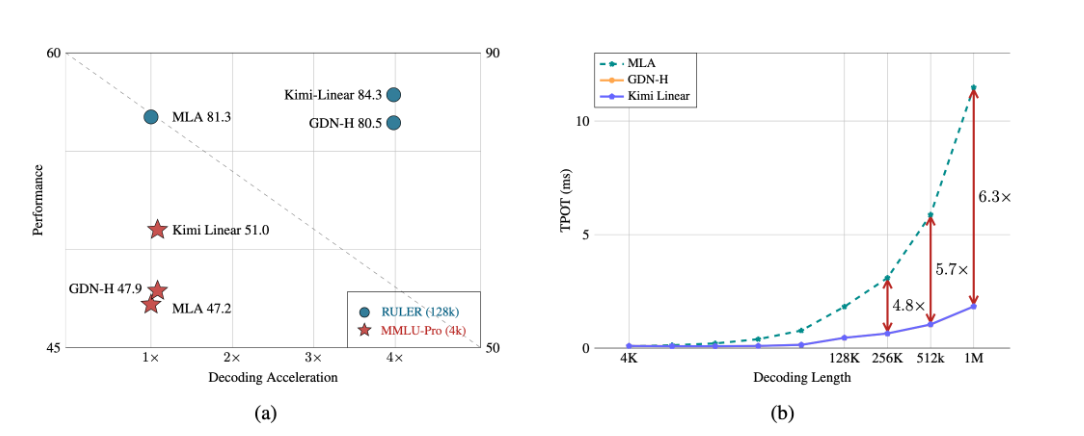
A major breakthrough has been achieved in the core architecture of large-scale models! The release of Kimi Linear marks the first time that linear attention technology has comprehensively surpassed and significantly outperformed the traditional Transformer full-attention model in both performance and efficiency. This "win-win" achievement is expected to significantly reduce the computational barriers and costs for long text processing, complex reasoning, and AI agent applications, potentially changing the competitive landscape of underlying technologies for large-scale models.
Over the past week, the AI community's attention has been drawn to a mysterious model that quietly emerged on the OpenRouter platform—Polaris Alpha. As a direct continuation of yesterday's discussion of the GPT-5.1 leak, this suddenly appearing model brings more technical details and strategic signals worthy of in-depth exploration.
Alibaba open-sources Qwen-Image-2.1: a 7B unified image model with native RGBA transparency and 10-reference editing.