Meta's $2.5 Billion Acquisition of Manus AI: From Chatbot to Task Performer
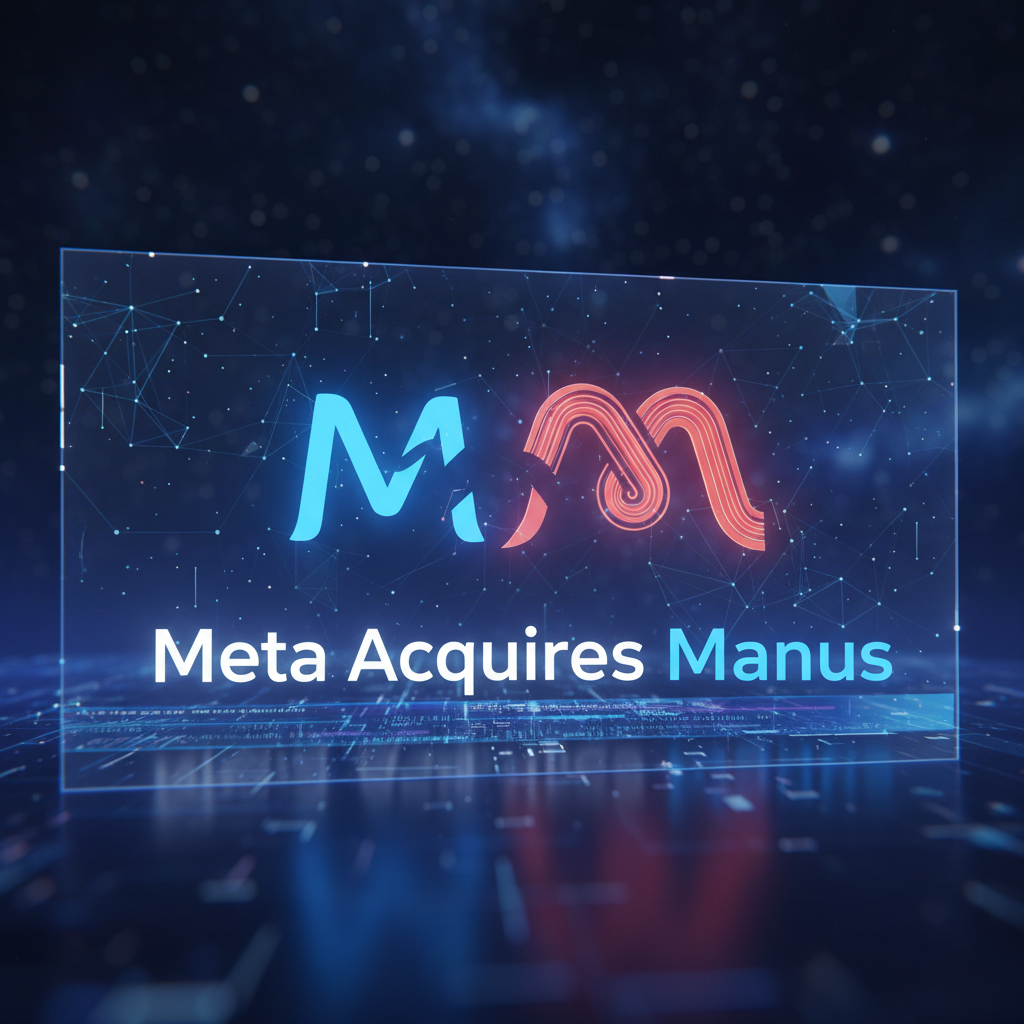
In late 2025, Meta reportedly acquired Singaporean AI startup Manus AI for approximately $2.5 billion. At first glance, this deal appears to be just another major merger, but a deeper understanding of Manus AI's technological characteristics and Meta's strategic positioning reveals it's far more than a simple talent acquisition. This transaction reflects a shift in the entire AI industry: the evolution from purely conversational models to autonomous agents capable of performing complex tasks. For those interested in the AI tool ecosystem, understanding this shift is key to grasping industry trends.
What is Manus AI?
Manus AI is a startup developing autonomous AI agent technology, headquartered in Singapore. In short, its products enable AI, with human authorization, to independently complete a series of tasks on a computer, much like a real employee.
Core Product: Autonomous Execution Capability
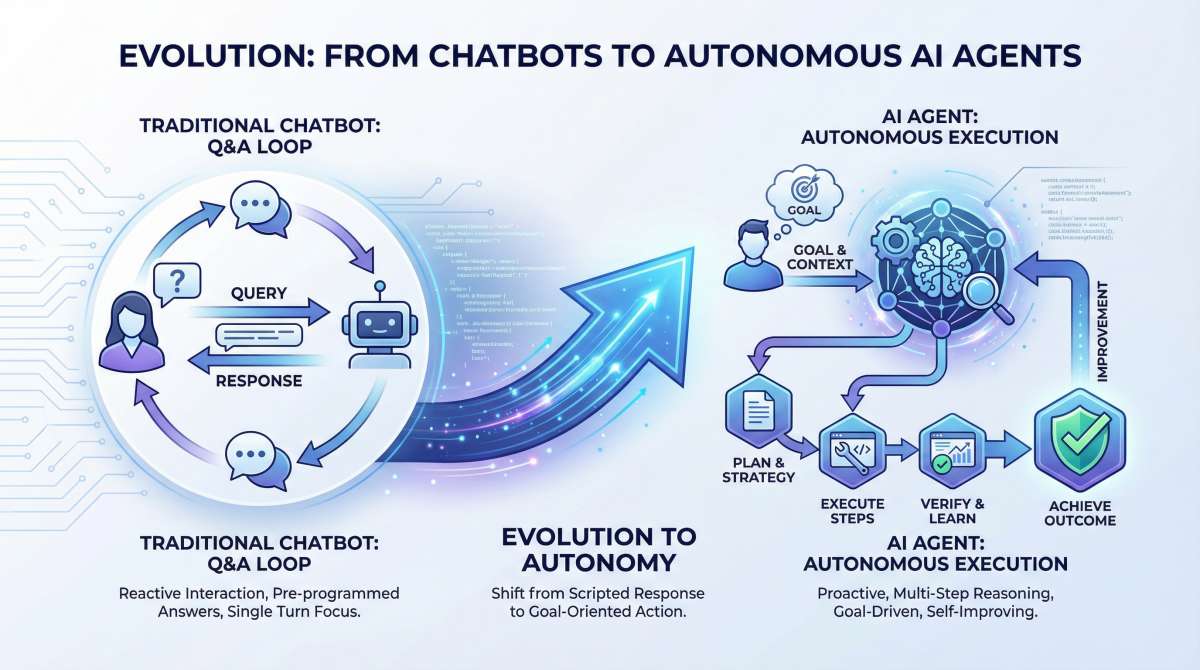
Most current AI assistants (including ChatGPT, Claude, etc.) operate passively. Users input questions, and the AI generates answers. Manus AI, however, takes a completely different approach. It has developed a system that can operate autonomously under user commands. For example, if you tell it to "help me compile a market research report," it can search for information online, organize data, generate documents, and present them to you, requiring almost no human intervention.
This "Agent" design concept has become a hot topic in the AI industry in the past two years. The traditional chatbot model involves users asking questions and AI answering—simple but passive, requiring multiple rounds of dialogue guidance. AI agents, on the other hand, involve users setting goals, and the AI autonomously planning, executing multi-step tasks, and returning results. This high degree of autonomy makes it much more efficient when performing complex tasks.
Technical Implementation
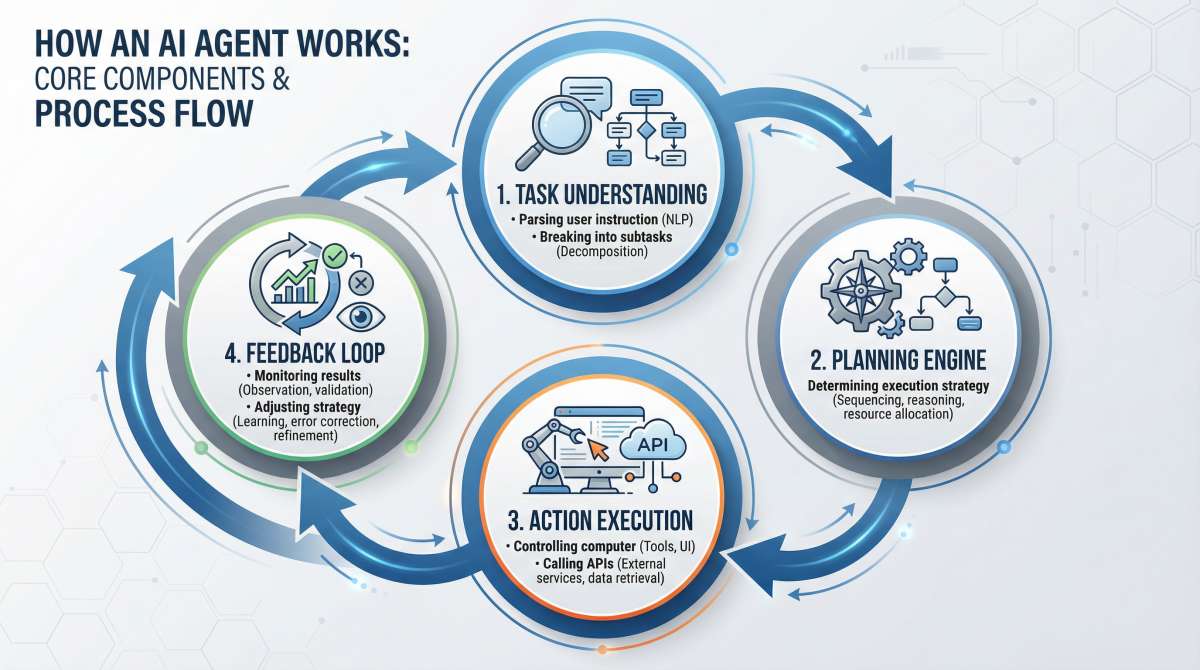
Manus AI's system typically includes several core modules. The task understanding module parses user instructions and breaks them down into sub-tasks; the planning engine formulates execution plans based on available tools (APIs, software interfaces, etc.); action execution controls the computer's mouse and keyboard, or directly calls the backend API; the feedback loop monitors results and adjusts strategies based on feedback.
This process looks like an upgraded version of modern workflow automation tools, but the key difference is that Manus uses a large language model as its "brain," giving the system greater flexibility and adaptability. Traditional automation scripts require precise programming, while the Manus system can understand more complex and natural instructions.
Real-world Applications
Manus AI's technology demonstrates usability in several areas. Market research can automatically collect information and industry reports, generating analytical documents; administrative tasks can include booking travel, managing schedules, and compiling expense reports; code generation can understand requirements, generate frameworks, and run tests; financial analysis can extract data, calculate indicators, and generate charts.
These application scenarios share a common characteristic: the tasks are clear but the steps are cumbersome, currently relying mainly on manual labor or simple scripts. The intervention of AI agents can significantly reduce costs.
Why Meta Acquired Manus AI
Meta's AI strategy didn't begin in recent years. From the open-sourcing of Llama in 2023 to its continued iterations in 2024, Meta has been building its own AI infrastructure. However, Meta's AI product awareness in the industry is far less than that of OpenAI or Google. The reasons behind this are worth considering.
The Root of the Problem: The Dilemma of "Productization"
MetaAI has a certain user base in the US, but faces a key problem in global competition: its product form is relatively passive. When users open Meta's AI assistant, they are essentially still engaging in multi-round question-and-answer sessions. In contrast, OpenAI is already exploring what GPT can "do" in the real world (such as browsing web pages, running code, and calling APIs), while Google's Agent AI demonstrates greater automation potential in enterprise collaboration.
Meta needs a breakthrough to elevate its AI products from the conversational level to the "task execution" level. Such an upgrade enhances product differentiation, but more importantly, it deepens user engagement—once AI starts automating your daily tasks, it's hard to leave the ecosystem.
Why Agent and Not Other Directions
Currently, there are several main product upgrade paths in the AI field. Multimodal enhancement involves the fusion of vision, audio, and text (Apple and Google are both working on this); improved reasoning capabilities allow models to handle more complex logic (OpenAI's o1 series); autonomous execution capabilities make AI a true work partner, not just a consultant (this is the Agent direction).
Meta has already invested heavily in multimodal technologies (Meta Quest's visual interaction), and its reasoning capabilities are also improving. However, the Agent direction is a relative weakness. The acquisition of Manus AI fills precisely this gap.
Moreover, from a business perspective, agents are easier to monetize than the previous two approaches. Enterprises are willing to pay for an AI assistant that can automatically handle company administrative tasks; however, they may be unsure whether upgrading a "smarter" conversational model is worth the investment.
Deeper Strategic Layout
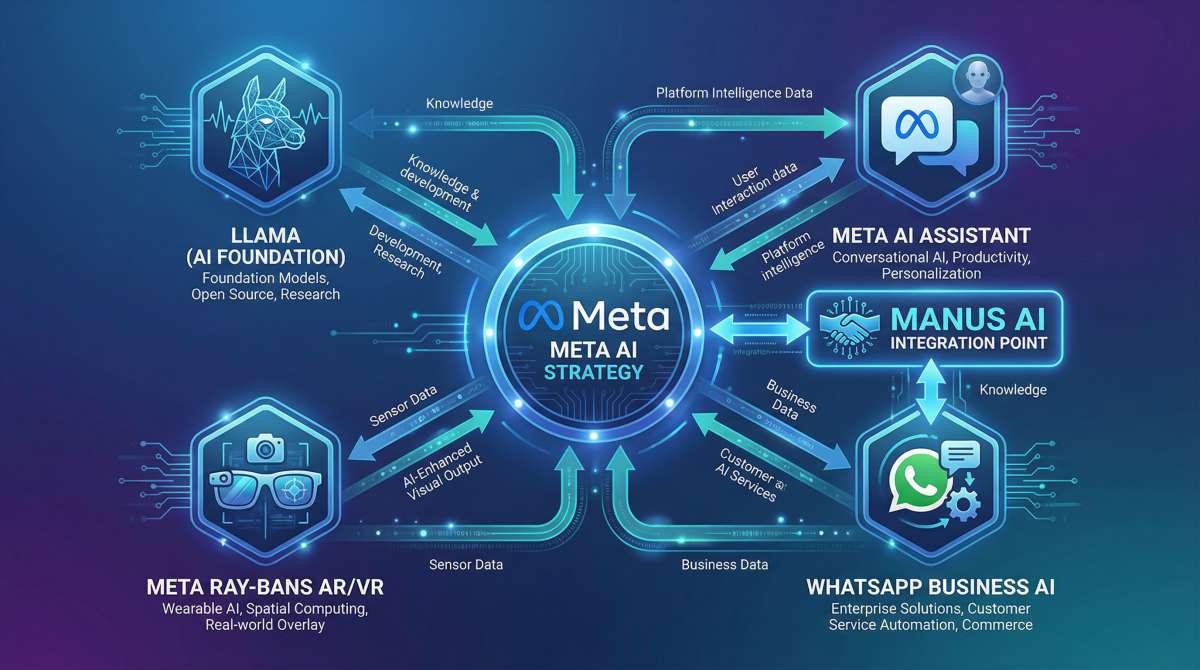
Meta's ambitions extend far beyond the AI assistant itself. Through the built-in AI assistant in WhatsApp and Instagram, Meta is capturing users' daily interaction scenarios; through hardware devices like Meta Ray-Bans, it is expanding AI interaction in AR/VR; and through the open-source nature of Llama, it is attracting a developer ecosystem and forming alliance advantages.
Acquiring Manus AI's technology and team allows Meta to more quickly integrate this "autonomous execution" capability into its own products. In other words, this is not just about launching a new feature, but about gaining a competitive edge in the AI era.
From a talent perspective, Manus's founders and team have deep expertise in agent technology. Acquiring core talent quickly is often more economical than developing it from scratch.
The Actual Impact of this Deal
Direct Impact on Meta AI Products
Meta is likely to integrate Manus's technology in several areas. Meta AI Assistant Upgrades—Meta AI, currently integrated into Instagram and WhatsApp, will gradually gain autonomous execution capabilities. For example, if a user says "Help me book a meeting room" in a group chat, the AI will not only understand the intent but also directly check schedules and send invitations. WhatsApp's business functions will also be enhanced, allowing merchants to have AI automatically answer frequently asked questions, process orders, and track logistics. Meta may also launch a Workspace tool for remote collaboration. While not directly competing with Microsoft 365, this possibility arises after integrating Manus technology.
These upgrades will not happen overnight. Typically, it takes 6-12 months from acquisition completion to the actual integration of the technology into the main product. However, once integration is complete, Meta's competitive position will significantly improve.
Implications for the Industry
Agent AI is moving from the laboratory stage to the productization stage. Google has Gemini Agent, OpenAI is gradually advancing the execution capabilities of GPT, and Anthropic is researching Claude's autonomous mode. Now, with Meta joining, it indicates that this is no longer an option but a necessity. We may see more AI startups acquired in the Agent field, because while technological barriers exist in this area, they are not as absolute as those of the LLM basic model. For large companies, acquiring a professional team is often faster than developing it in-house. Agent technology is not limited to consumer applications; in areas such as enterprise SaaS, HR systems, and financial management, AI intelligence will become a standard feature.
What Can Users Expect?
For users of AI tool navigation, several changes are worth noting. Complex automation that was previously only available in enterprise-level tools will gradually be offered in consumer-level products. AI assistants are shifting from "responders" to "executors." You're no longer in a one-way "ask AI, AI answers" model, but rather a two-way collaboration where you "give AI a goal, AI executes it." Privacy and security are becoming new focal points—as AI begins to independently operate your computer, accounts, and data, access control, audit trails, and error prevention mechanisms will become far more important than ever before.
Real-world Scenario Example
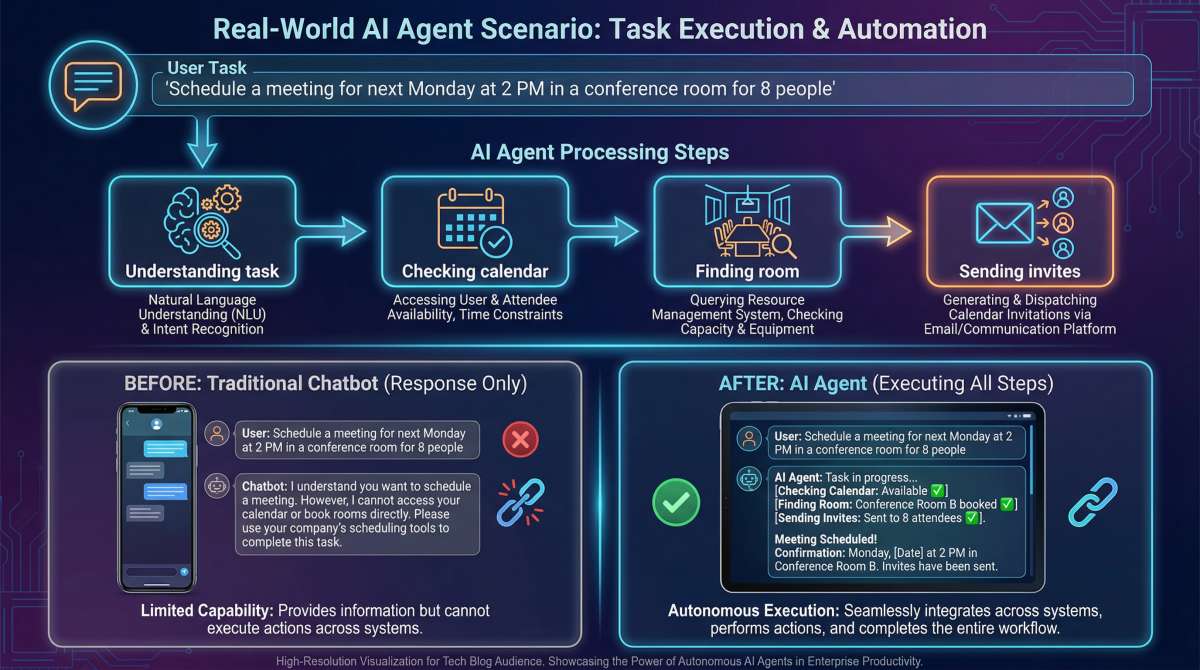
Imagine a specific scenario: Six months later, the new version of Meta AI in WhatsApp might look like this—
You tell Meta AI: "Next Monday at 2 PM, I need to have a meeting with the sales department. Please choose a meeting room that can accommodate 8 people, and then send calendar invitations to the attendees."
The current ChatGPT would reply, "Okay, here's a meeting scheduling suggestion." The new version of Meta AI will automatically query your company's meeting room booking system, check next Monday's schedule, find a suitable meeting room, send invitations to the eight people listed, and add the meeting to your calendar. This transformation may not sound revolutionary, but its impact on daily work efficiency is real. Isn't this much more convenient than manually checking the calendar and sending emails?
Summary
This acquisition represents a strategic acceleration for Meta. In an era of rapid AI evolution, large companies not only need strong foundational models (Meta has Llama), but also need to keep pace in productization capabilities. The rise of Agent AI marks a shift in AI applications from "providing information" to "performing tasks." For users, this means future AI assistants will be more practical and convenient. However, it also means we need to be more cautious about AI permissions and data security. Meta, Google, and OpenAI are all investing resources in this direction. Ultimately, the winners will be those companies that can ensure the agent's execution capabilities while properly handling security and privacy. From this perspective, Manus's technology and experience are indeed valuable to Meta—a team that has considered these issues since its inception. The real significance of this deal is not in changing anything, but in ensuring that Meta doesn't fall behind.
Leave your comment
- No comments yet.
Recommended AI Tools
Carefully selected AI tools to improve your work, study, and live efficiency.

Related Articles
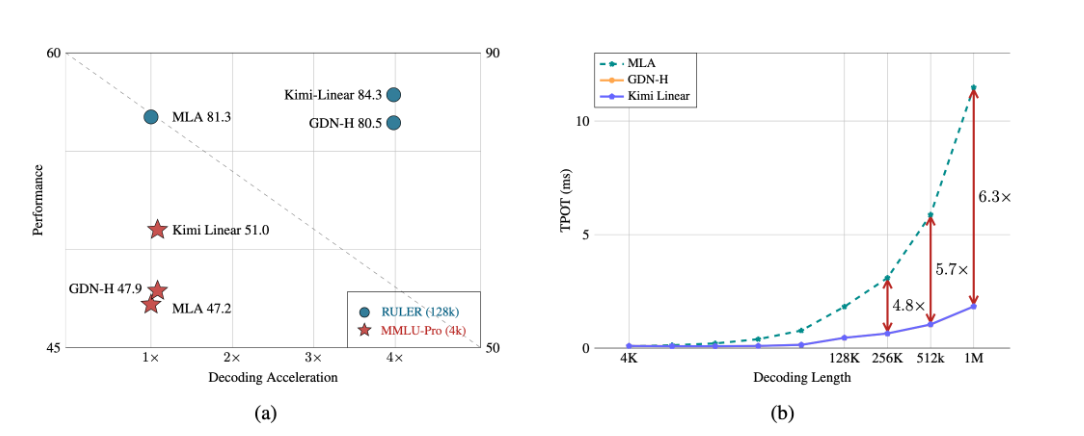
A major breakthrough has been achieved in the core architecture of large-scale models! The release of Kimi Linear marks the first time that linear attention technology has comprehensively surpassed and significantly outperformed the traditional Transformer full-attention model in both performance and efficiency. This "win-win" achievement is expected to significantly reduce the computational barriers and costs for long text processing, complex reasoning, and AI agent applications, potentially changing the competitive landscape of underlying technologies for large-scale models.
Over the past week, the AI community's attention has been drawn to a mysterious model that quietly emerged on the OpenRouter platform—Polaris Alpha. As a direct continuation of yesterday's discussion of the GPT-5.1 leak, this suddenly appearing model brings more technical details and strategic signals worthy of in-depth exploration.
Alibaba open-sources Qwen-Image-2.1: a 7B unified image model with native RGBA transparency and 10-reference editing.