Models Are Getting Dumber on Purpose — And That's the Business Model

There's a conversation that keeps resurfacing on Hacker News this month, and it goes by a deliberately provocative title: "Models Are Getting Dumber on Purpose." The claim isn't that labs failed to make models smarter. It's that they succeeded — and then made a second, deliberate choice to ship models that think less, because dumber is cheaper, faster, and better for margins.
It sounds like a conspiracy theory until you line up what the labs themselves published this week.
The Week's Receipts
OpenAI announced it hit its "automated research intern" goal. Its researchers now run 3.1 agent-workdays per human workday, and the heaviest users burn through $7,000+ per day on tokens. That's what frontier intelligence costs in 2026: a mid-tier salary, paid daily, in compute.
OpenAI's chief scientist Jakub Pachocki said no lab has solved alignment well enough to keep scaling at maximum speed — and that he hopes voluntary slowdowns become commonplace. The smartest models are, by the lab's own admission, being throttled.
Anthropic, meanwhile, signed agreements for at least 14.8 GW of compute capacity since October, with a projected spend of up to $517B over the next decade. Somebody is buying power plants to feed the smart track.
Read those three together and the "dumber on purpose" thesis stops being paranoid. The labs are running a barbell:
- One end: frontier reasoning models, priced like employees, sold to research teams and agent-heavy workloads that genuinely need 3.1x research-days.
- Other end: everyday models quietly tuned down — shorter reasoning chains, less test-time compute, more caching and canned behavior — so they can serve a billion chat messages at a price that still clears a margin.
The middle, the "pretty smart, pretty cheap, pretty general" model everyone actually wanted, is being hollowed out. Not by accident. By unit economics.
What "Dumber" Actually Means
It helps to be precise, because "dumber" is doing a lot of work here. The everyday models aren't losing knowledge. They're losing effort:
- Shorter reasoning budgets. Test-time compute is the expensive part. Cut the chain-of-thought length in half and you cut inference cost nearly in half — users mostly don't notice until the question is hard.
- More aggressive retrieval shortcuts. Answering from cache or search instead of reasoning is fast and cheap, and fails exactly on the multi-step problems you thought you were buying.
- Distillation from a bigger sibling, then distilled again. Each generation of compression saves money and shaves off the tail of hard problems.
Spend-tracking data from earlier this year told the same story from the demand side: enterprises fleeing the flagship models for cheaper ones, while the flagship's share stalled. Users noticed the quality drift and moved down anyway. The market is collaborating with the enshittification.
Why This Is Rational (And Why That's Worse)
The uncomfortable part is that no villain is required. If your costs are dominated by inference, and 95% of your traffic is simple queries, then optimizing the 95% is just good engineering. The frontier model exists to win benchmarks and justify the enterprise contract; the everyday model exists to carry the traffic. Two products, one brand.
The problem is what this does to trust. When a model's intelligence is a dial the provider turns for margin reasons — silently, without a version bump — benchmark scores become marketing and your evals become the only source of truth. "Which model is best?" is no longer a question with a stable answer. "Which model is best this month, for my task, at my volume" is the real question, and it now has to be re-answered continuously.
What Developers Should Actually Do
- Pin your models and version your prompts. If your provider can quietly detune a model under the same name, treat every redeploy as a model change. Keep a frozen eval set and run it on a schedule, not on vibes.
- Route, don't marry. A two-tier routing setup — cheap model first, escalate to the frontier model on failure signals or task complexity — is the only architecture that survives the barbell. The teams burning $7k/day are doing this in reverse: frontier for the hard 5%, everything else on the cheap track.
- Watch price-per-solved-task, not price-per-token. Token prices are falling across the board; solved-task cost is diverging wildly between the two ends of the barbell. A model 10x cheaper per token that needs 3 retries is not cheaper.
- Distrust the middle. The general-purpose mid-tier is exactly where silent detuning hits hardest. Either buy the frontier model for hard work or buy the cheap model for volume — and benchmark the middle tier every month if you must use it.
The Endgame
There's a version of this story that ends fine: the frontier keeps compounding, distillation keeps improving, and next year's "dumbed-down" everyday model is still smarter than this year's flagship. That has been the pattern so far, and it's why the labs can get away with it.
But there's another version, the one the HN thread is really about: the everyday models plateau at "good enough for chat," the frontier retreats behind enterprise pricing, and the gap between what AI can do and what your AI does grows quietly — visible only to the people running evals.
The models aren't getting dumber because the field stalled. They're getting dumber because dumber sells. The only defense is to measure.
What's your experience — noticed your daily driver model getting subtly worse over the past few months? The evals people share in the comments of that HN thread suggest it's not just you.
Leave your comment
- No comments yet.
Recommended AI Tools
Carefully selected AI tools to improve your work, study, and live efficiency.







Related Articles
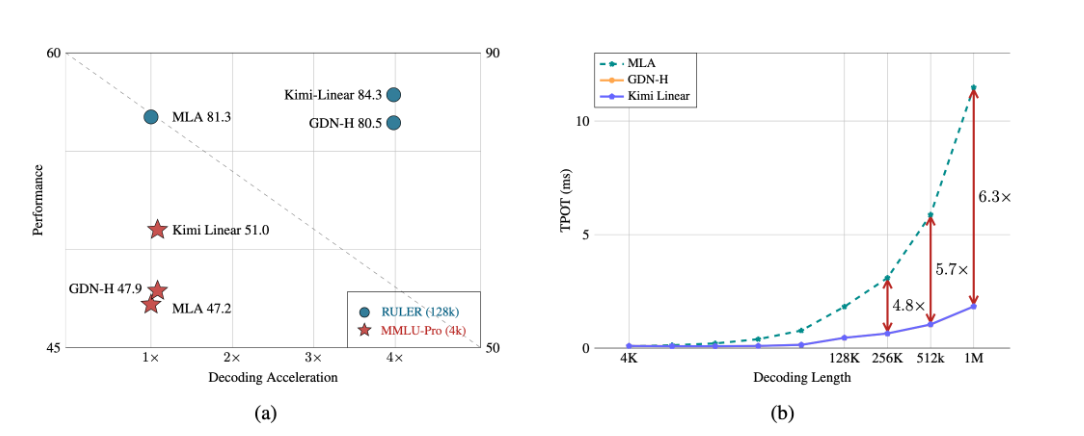
A major breakthrough has been achieved in the core architecture of large-scale models! The release of Kimi Linear marks the first time that linear attention technology has comprehensively surpassed and significantly outperformed the traditional Transformer full-attention model in both performance and efficiency. This "win-win" achievement is expected to significantly reduce the computational barriers and costs for long text processing, complex reasoning, and AI agent applications, potentially changing the competitive landscape of underlying technologies for large-scale models.

Over the past week, the AI community's attention has been drawn to a mysterious model that quietly emerged on the OpenRouter platform—Polaris Alpha. As a direct continuation of yesterday's discussion of the GPT-5.1 leak, this suddenly appearing model brings more technical details and strategic signals worthy of in-depth exploration.

Alibaba open-sources Qwen-Image-2.1: a 7B unified image model with native RGBA transparency and 10-reference editing.