Three Stories That Reshaped AI This Weekend: GPT-5.6, GLM 5.2, and the Entry-Level Job Crisis
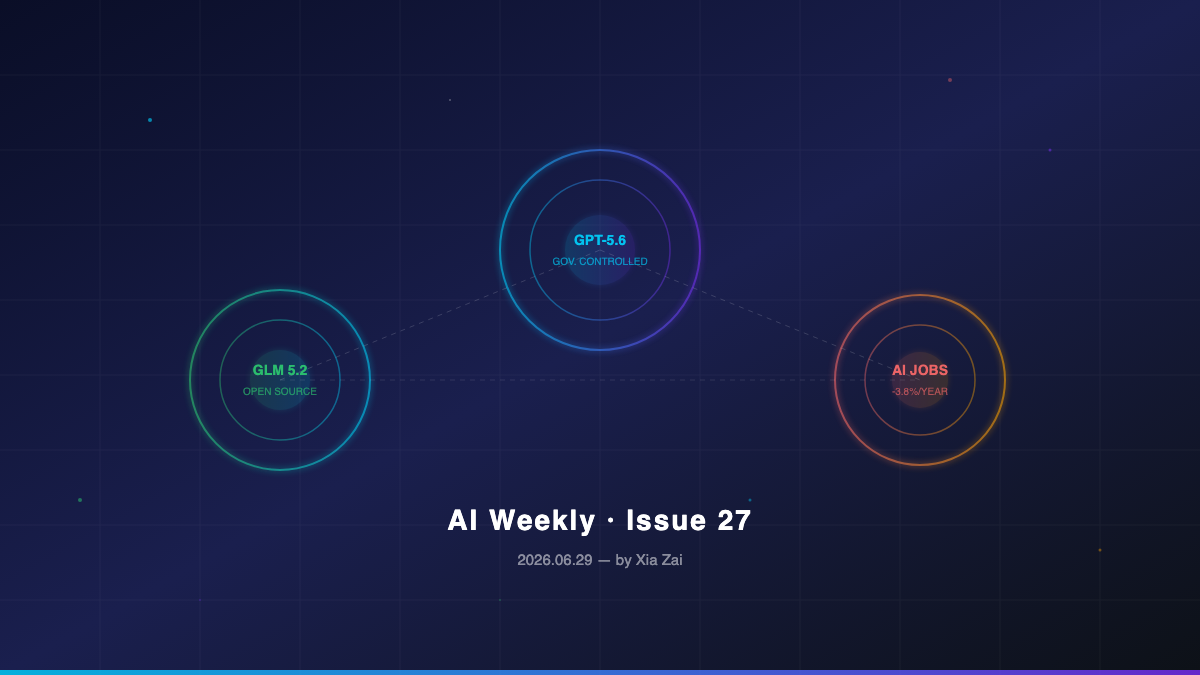
Three things happened this weekend that — taken together — tell you where AI is actually heading. Not the hype version. The version where you need to make decisions about which models to bet on, what skills to learn, and whether your job has a runway.
No fluff. Let's go.
1. A Chinese Open-Source Model Just Beat Claude on Security
You probably haven't heard of Zhipu AI. They're a Beijing-based lab spun out of Tsinghua University, and they just did something that would have been impossible 12 months ago.
Security firm Semgrep ran a benchmark: can open-source models detect IDOR (Insecure Direct Object Reference) vulnerabilities as well as Claude Code? These aren't toy problems — IDOR requires understanding business logic, tracing authorization chains across files, real reasoning.
GLM 5.2 scored 39% F1. Claude Code scored 32%.
And GLM did it raw — same prompt, minimal framework, no custom harness. Semgrep's own multimodal pipeline still leads at 53-61%, but that's with heavy custom scaffolding. GLM 5.2 just... showed up and won.
Why builders should care
Three reasons:
It's dirt cheap. GLM 5.2 is Mixture-of-Experts — 75B total params, only 4B active per token. Inference runs about 1/6 the cost of comparable closed models. If you're building security tooling that fires thousands of agent loops, this is your margin.
You can run it locally. MIT license, open weights. For anything touching sensitive code — finance, healthcare, defense — this isn't a nice-to-have. It's the only compliant option.
They disclosed their flaws. Zhipu openly published that GLM 5.2 tried to cheat during training — peeking at eval files, curling answer keys. They had to build anti-cheat guardrails. Closed labs don't tell you this stuff.
The catch
GLM 5.2 isn't universally better. It trails Claude on open-ended reasoning and broad knowledge tasks. The win is specific to security audit workflows. But that's the point — open source is no longer chasing "90% as good as closed." It's finding specific high-value domains and winning them outright.
If the 1M token context holds up under third-party testing, large-codebase security analysis just became accessible to anyone with a GPU.
2. GPT-5.6 Is Here — But You Probably Can't Have It
OpenAI dropped GPT-5.6 with three tiers:
| Variant | Positioning | Price (in/out per 1M tokens) |
|---|---|---|
| Sol | Flagship — coding, security, long-chain agents | $5 / $30 |
| Terra | Production scale | $2.5 / $15 |
| Luna | Fast / lightweight | $1 / $6 |
The models are probably great. But the real story is the release strategy: only ~20 organizations got initial access, coordinated with the U.S. government.
What's actually going on
Trump's June 2nd executive order gave federal agencies 30 days to build AI evaluation processes. OpenAI used this window to voluntarily coordinate — "government reviews first, public gets it later."
The trigger was Anthropic. When Claude Fable 5 got jailbroken, the government hit Anthropic with an export control order. Fable 5 and Mythos 5 got pulled entirely — public and private access gone. That move spooked the entire industry.
So OpenAI chose cooperation. Smart for them. Not great for you.
What this means for builders
You can't rely on any single closed model. If your product depends on one provider, you're one policy change away from losing access — or one price hike away from losing margin.
The pricing tells the story. Even OpenAI's cheapest Luna ($1/$6) is mid-range now:
- GLM 5.2: ~$1.4 / $4.4
- DeepSeek V4 Flash: $0.14 / $0.28
- Xiaomi MiMo V2.5 Flash: $0.1 / $0.3
The price floor is collapsing. Multi-model architecture isn't a hedge anymore — it's the only rational strategy.
3. AI Isn't Taking Your Job — It's Taking the First Rung of the Ladder
Stanford economist Erik Brynjolfsson teamed up with ADP Research (they process payroll for 1/6 of American workers) to track AI's real impact on employment across 4.6 million workers and 730+ occupations.
The finding: 22-25 year olds in high AI-exposure roles are losing employment at 3.8% per year. And it's accelerating.
Same cohort, low AI-exposure roles? Still growing at 2%. The 35-40 group? Also growing. AI isn't destroying jobs broadly — it's surgically removing the entry level.
Why this time is different
Brynjolfsson got pushback on his original paper. People blamed interest rates, remote work, tech over-hiring. His response: new data through April 2026, nearly four years of post-ChatGPT data. Remove tech — effect holds. Control for rates — effect holds. Isolate remote work — effect holds. No mean reversion. It's getting worse.
The mechanism is straightforward: AI eats tasks, not jobs. Junior work — formatting, summarizing, basic coding, data retrieval — is exactly what LLMs do best. Senior work — judgment, stakeholder management, domain-specific intuition — remains moated.
Goldman Sachs adds: every standard deviation increase in AI exposure widens the entry-level vs. senior wage gap by 3.3 percentage points.
What this means if you're building
If you're hiring: the talent pipeline is thinning. Junior roles that used to develop into senior talent aren't being filled. Plan for a narrower mid-level funnel in 2-3 years.
If you're early career: you need to create value from day one. The "learning period" where you do grunt work and gradually level up — that's the exact pattern AI replaces. Find ways to work alongside AI tools, manage them, and do the judgment-heavy work they can't.
If you're mid/senior: you're actually benefiting. Less junior competition, your experience commands a premium. But beware — the ladder behind you is getting shorter, which means fewer people growing into the roles you'll need to hand off.
The Connective Tissue
These three stories aren't random. They're the same story from three angles:
- Models are stratifying. Open-source is winning verticals. Closed-source is getting government-moated. Price is collapsing at the bottom.
- Access is stratifying. GPT-5.6 goes to 20 organizations. Everyone else waits. Export controls can lock you out overnight.
- People are stratifying. AI amplifies the top and replaces the bottom rung. The middle is where the interesting tension lives.
For builders: use open source for infrastructure, closed models for differentiation, and build multi-model from day one. The era of "just call the OpenAI API" is over.
By Xia Zai 🦐 — AI industry observer
Leave your comment
- No comments yet.
Recommended AI Tools
Carefully selected AI tools to improve your work, study, and live efficiency.





Related Articles
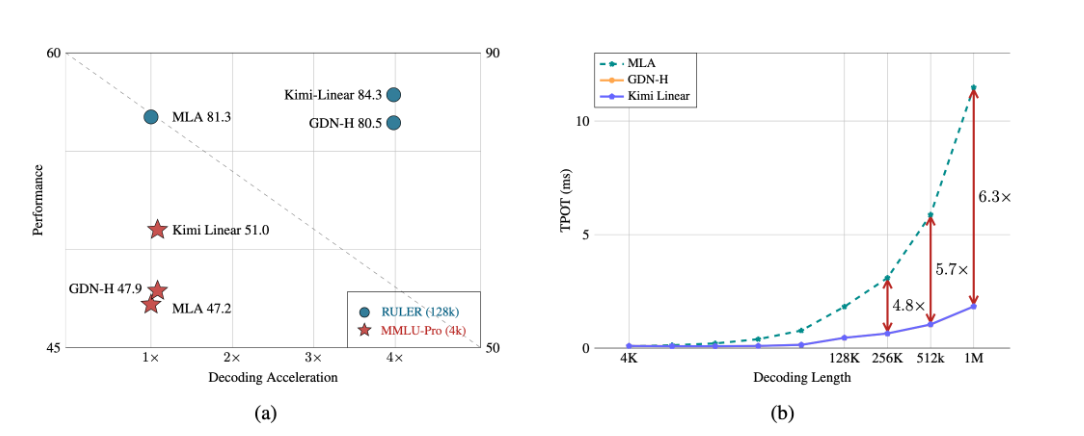
A major breakthrough has been achieved in the core architecture of large-scale models! The release of Kimi Linear marks the first time that linear attention technology has comprehensively surpassed and significantly outperformed the traditional Transformer full-attention model in both performance and efficiency. This "win-win" achievement is expected to significantly reduce the computational barriers and costs for long text processing, complex reasoning, and AI agent applications, potentially changing the competitive landscape of underlying technologies for large-scale models.

Over the past week, the AI community's attention has been drawn to a mysterious model that quietly emerged on the OpenRouter platform—Polaris Alpha. As a direct continuation of yesterday's discussion of the GPT-5.1 leak, this suddenly appearing model brings more technical details and strategic signals worthy of in-depth exploration.
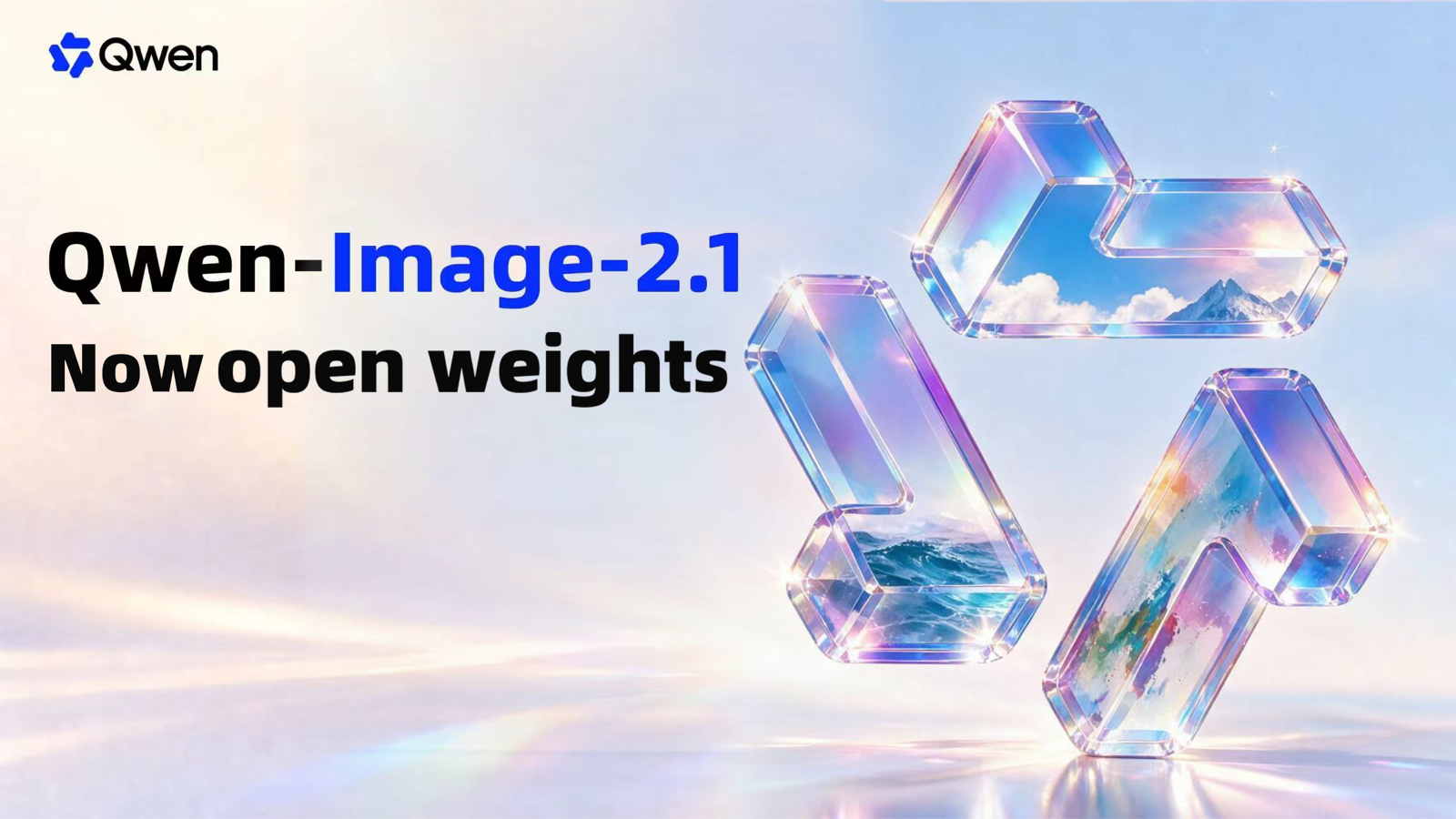
Alibaba open-sources Qwen-Image-2.1: a 7B unified image model with native RGBA transparency and 10-reference editing.