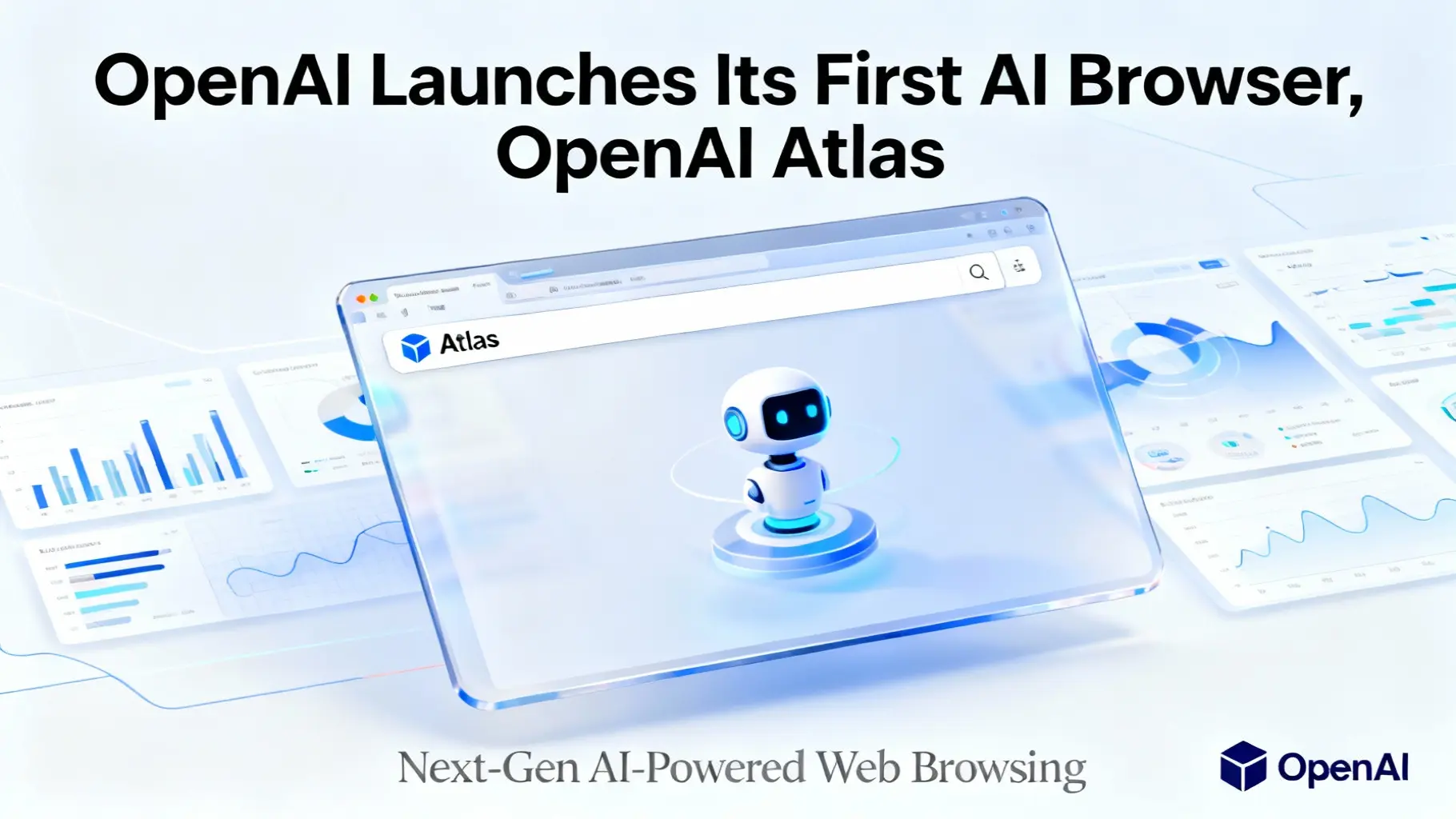
OpenAI Launches Its First AI Browser, Atlas — Reshaping the Portal to Human-Computer Interaction
The Browser Battlefield Reignites, This Time with AI as the Protagonist
On October 21st local time, OpenAI officially launched its first AI-driven web browser, ChatGPT Atlas, via an online livestream. This product marks OpenAI’s first deep foray into internet terminal tools, aiming to challenge Google Chrome’s decade-long dominance. Atlas is not merely a traditional browser but a significant step for OpenAI in translating large model capabilities into practical applications. OpenAI CEO Sam Altman stated at the launch: "The browser is a core scene of modern work and life, and AI gives us a once-in-a-decade opportunity to redefine what it means to 'use a browser.'"
Product Positioning: Not a Browser "With" AI, But AI "Becoming" the Browser
ChatGPT Atlas is an AI-first browser built around ChatGPT. Unlike traditional browsers that serve as "content display windows," Atlas deeply integrates AI into the entire browsing process, shifting users from "manually operating web pages" to "telling AI what to do."
Currently, Atlas is available for download to macOS users worldwide, with Windows, iOS, and Android versions "coming soon." The browser’s core features are free for all ChatGPT users, while the more advanced "Agent Mode" is currently in preview for ChatGPT Plus, Pro, and Business subscribers.
Core Features: A Paradigm Shift from "Manual Browsing" to "Voice-Controlled Operations"
-
Smart Sidebar Chat
While browsing any webpage, users can instantly summon the ChatGPT sidebar on the right to ask questions directly about the page’s content, such as "Summarize this article" or "Explain this technical term." -
Cursor Collaboration
When typing in web-based emails or documents, selecting text triggers a ChatGPT icon. Clicking it allows AI-assisted polishing, translation, or summarization, enabling precise and efficient text processing. -
Browser Memory
An optional feature, when enabled, allows Atlas to learn user habits and preferences across websites. Later, it can provide personalized services, such as "Help me find last week’s job postings." -
Agent Mode
Atlas’s breakthrough feature lets users issue complex task commands in natural language. The AI attempts to automate multi-step operations, e.g., "Compare drones on Amazon and add the top three to my cart." -
Smart Search
Enter natural language queries directly in the address bar or new tab page. Atlas delivers integrated answers with text, images, and videos, reshaping the traditional search experience.
Getting Started
-
Download & Installation
Currently available exclusively for macOS. Download directly from the official site: https://chatgpt.com/atlas/. Windows, iOS, and Android versions are in development. -
Account Setup
Log in with an existing OpenAI account (including free tier). Paid subscribers (Plus/Pro) unlock enhanced Agent Mode. -
Seamless Migration
On first launch, Atlas supports one-click import of bookmarks, history, and saved passwords from browsers like Chrome, enabling near-seamless transition.
Security & Privacy: Strictly Controlled AI "Operation Rights"
To address safety concerns around AI directly operating web pages, OpenAI implemented strict technical boundaries for Agent Mode:
• AI cannot run code, download files, or install extensions.
• No access to local apps or file systems.
• Sensitive sites (e.g., banking/payment) trigger user confirmation pauses.
Users retain full control via pause/interrupt buttons. For added privacy, "Logged-out Mode" prevents AI from using account cookies or auto-logins.
Market Positioning: Challenging Chrome, Leading the AI Browser Wave
Atlas’s launch directly challenges Google Chrome’s dominance. Following the news, Alphabet’s (Google’s parent company) stock fell over 4% intraday. Statcounter data shows Chrome holds 71.77% of the global browser market (as of September 2025), while Edge trails at 11.8%. OpenAI’s advantage lies in its 800M+ weekly active users, already familiar with AI interaction patterns.
OpenAI’s Ecosystem Vision: The Browser as an AI OS Foundation
Atlas signifies OpenAI’s strategic move into the "AI Internet layer." Industry analysts note that if users increasingly rely on AI agents for web operations, core internet models (ads, e-commerce, services) could be reshaped.
Ben Goodger, former Firefox and Chrome core developer and current Atlas Engineering Lead, joined OpenAI with one goal: "Placing the best AI assistant at the heart of browsing will redefine how we work online."
Beyond a browser, Atlas integrates ChatGPT’s full capabilities, file systems, memory, and plugins into a self-contained ecosystem—effectively forming the prototype of an AI-driven operating system.
In the coming years, human-AI interfaces will continue merging. Language is the bridge, and browsers like Atlas are the vessels carrying it forward. When AI evolves from understanding content to acting on our behalf, the next chapter of the internet truly begins.
Leave your comment
- No comments yet.
Recommended AI Tools
Carefully selected AI tools to improve your work, study, and live efficiency.


Related Articles
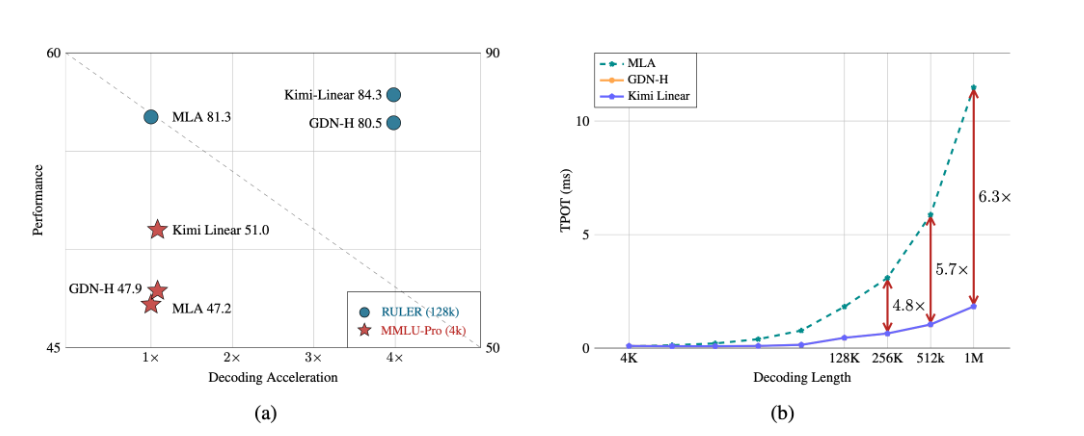
A major breakthrough has been achieved in the core architecture of large-scale models! The release of Kimi Linear marks the first time that linear attention technology has comprehensively surpassed and significantly outperformed the traditional Transformer full-attention model in both performance and efficiency. This "win-win" achievement is expected to significantly reduce the computational barriers and costs for long text processing, complex reasoning, and AI agent applications, potentially changing the competitive landscape of underlying technologies for large-scale models.
Over the past week, the AI community's attention has been drawn to a mysterious model that quietly emerged on the OpenRouter platform—Polaris Alpha. As a direct continuation of yesterday's discussion of the GPT-5.1 leak, this suddenly appearing model brings more technical details and strategic signals worthy of in-depth exploration.
Alibaba open-sources Qwen-Image-2.1: a 7B unified image model with native RGBA transparency and 10-reference editing.