OpenAI GPT-5.1 series models leaked: Three versions revealed, AI competition enters a new phase.
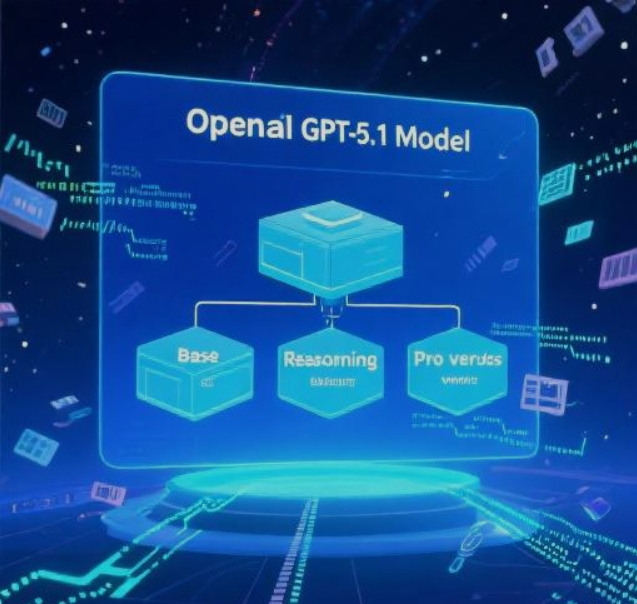
Recently, the CDN code repository on the OpenRouter website accidentally leaked release information about the GPT-5.1 series models, showing that the series includes three versions and is scheduled to officially launch on November 24, 2025.
This leak not only reveals OpenAI's product roadmap ahead of time but also demonstrates its strategic intent to cope with the increasingly fierce competition in large-scale models.
01 Full Leak: GPT-5.1 Three-Version Architecture Analysis
The leaked information is quite specific, revealing that the GPT-5.1 series will include three models with different focuses.
GPT-5.1: Positioned as the "latest generation ChatGPT flagship model," it is expected to serve as the main dialogue model, achieving a balanced improvement in general performance.
GPT-5.1 Reasoning: Emphasizes "longer thinking, better answers"; this version does not pursue instant response but improves the quality and logical coherence of answers through a longer reasoning process, specifically targeting complex problems.
GPT-5.1 Pro: Focusing on "research-grade intelligence," it targets enterprise and high-level research needs, and is expected to significantly enhance performance in handling specialized tasks and complex calculations.
This clear version division signifies that OpenAI is shifting from providing "general-purpose" models to building a matrix of specialized models tailored to different application scenarios and computational requirements.
02 Mysterious Test Model Polaris Alpha: A Leak Within a Leak
Around the time of the GPT-5.1 information leak, a mysterious model called Polaris Alpha was launched on the OpenRouter platform and was available for free trial.
The community widely speculates that Polaris Alpha is likely an early prototype or test version of the basic GPT-5.1 version, designed to gather user feedback to optimize the official version.
This model has already demonstrated remarkable features: support for ultra-long context windows of 256K, excellent performance in code generation, tool calls, and instruction understanding, especially its "near-illusion" and precise tone control, which impressed testers. When directly asked about its identity, Polaris Alpha responded, "Yes, I'm based on the GPT-4 family of models," further reinforcing its connection to OpenAI.
03 Technical Focus: Reasoning Ability and Thinking Budget Mechanism
The most attention-grabbing technical highlight of this leak lies in the specific optimization of its "thinking" ability. The GPT-5.1 Reasoning version doesn't simply improve response speed; it introduces deeper multi-step reasoning and continuous thinking capabilities.
The leaked information suggests that the model may have introduced an innovative "thinking budget mechanism." This means that when processing a single task, the model can dynamically allocate different computing resources based on the complexity of the problem, including longer context windows, more computation time, and deeper reasoning chains.
If this mechanism is true, it will make AI's thinking mode closer to that of human experts—responding quickly to simple problems and investing more "brainpower" in in-depth analysis of complex problems, thus achieving a balance between quality and efficiency.
Some analysts believe that Polaris Alpha (possibly based on GPT-5.1) may employ MoE (Hybrid Experts) optimization techniques in its architecture, improving efficiency and performance in handling complex tasks through the dynamic collaboration of multiple expert sub-networks.
04 Strategic Background: The Intensifying Competition Among AI Giants
The timing of this leak is intriguing. Google is expected to release Gemini 3 Pro soon, and OpenAI's "leak" occurs precisely on the eve of this release.
This is hard not to see as a strategic pre-launch maneuver, aimed at seizing the initiative in public opinion and suppressing competitors' momentum.
From an industry perspective, the focus of competition in large models has shifted from simple parameter size to context length, inference chain accuracy, and the ability to handle complex tasks. OpenAI's version planning is a direct response to this trend.
Meanwhile, some analysts point out that recent user feedback regarding existing models (such as GPT-5-Codex) exhibiting "intelligence degradation" on certain tasks may be related to OpenAI allocating computing resources to testing new models. This indicates that the company is making final preparations for the launch of GPT-5.1.
05 Potential Impact and Challenges
If the leak is true, the GPT-5.1 series will bring new opportunities to developers and enterprises, but also presents challenges.
On the opportunity side, expected upgrades include a further expanded context window, stronger support for complex chained logic, and potentially more cost-effective API pricing. For developers, this means they can leverage more powerful inference capabilities to build more reliable AI applications; for enterprise users, it means more accurate data analysis, code generation, and decision support capabilities. A specialized version matrix also allows users with different budgets and needs to find more suitable tools.
On the challenge side, the model needs to address memory scheduling and output stability issues under a massive 256K context. Current tests show that its stability may decrease with increasing generation length. Simultaneously, how to improve capabilities while ensuring age verification and privacy protection, balancing "usefulness" and "security," is also a key area that needs improvement.
Regardless of the outcome, this leak has successfully focused the industry's attention on November 24th. We may be standing at the threshold of a new era: AI will evolve from a "dialogue partner" providing instant answers into an "intelligent collaborator" capable of deep thinking and assisting us in solving complex problems.
For developers and businesses, paying attention to the technological directions revealed in this leak will help them plan and prepare for the upcoming new capabilities of AI.
Leave your comment
- No comments yet.
Recommended AI Tools
Carefully selected AI tools to improve your work, study, and live efficiency.





Related Articles
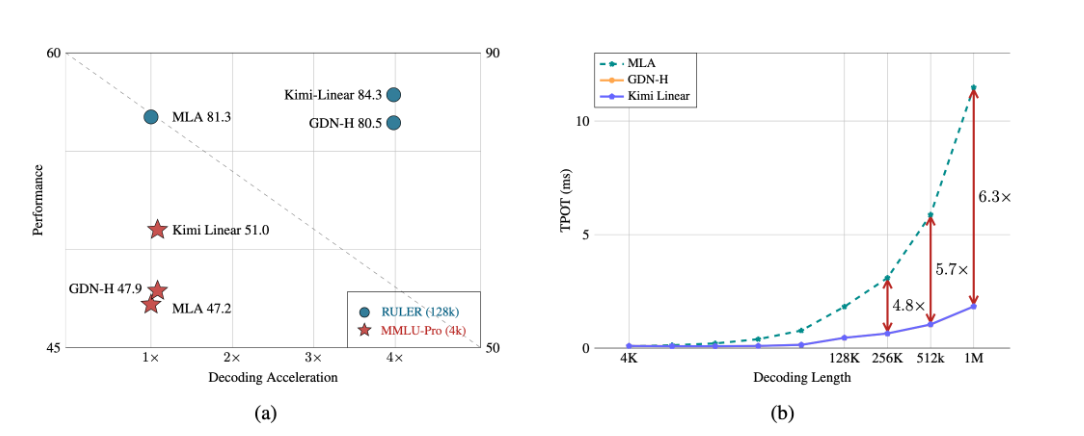
A major breakthrough has been achieved in the core architecture of large-scale models! The release of Kimi Linear marks the first time that linear attention technology has comprehensively surpassed and significantly outperformed the traditional Transformer full-attention model in both performance and efficiency. This "win-win" achievement is expected to significantly reduce the computational barriers and costs for long text processing, complex reasoning, and AI agent applications, potentially changing the competitive landscape of underlying technologies for large-scale models.
Over the past week, the AI community's attention has been drawn to a mysterious model that quietly emerged on the OpenRouter platform—Polaris Alpha. As a direct continuation of yesterday's discussion of the GPT-5.1 leak, this suddenly appearing model brings more technical details and strategic signals worthy of in-depth exploration.

Alibaba open-sources Qwen-Image-2.1: a 7B unified image model with native RGBA transparency and 10-reference editing.