OpenAI's dual killer features arrive: GPT-5.1 Pro and GPT-5.1-Codex-Max pioneer a compression mechanism, making 24-hour continuous programming a reality.
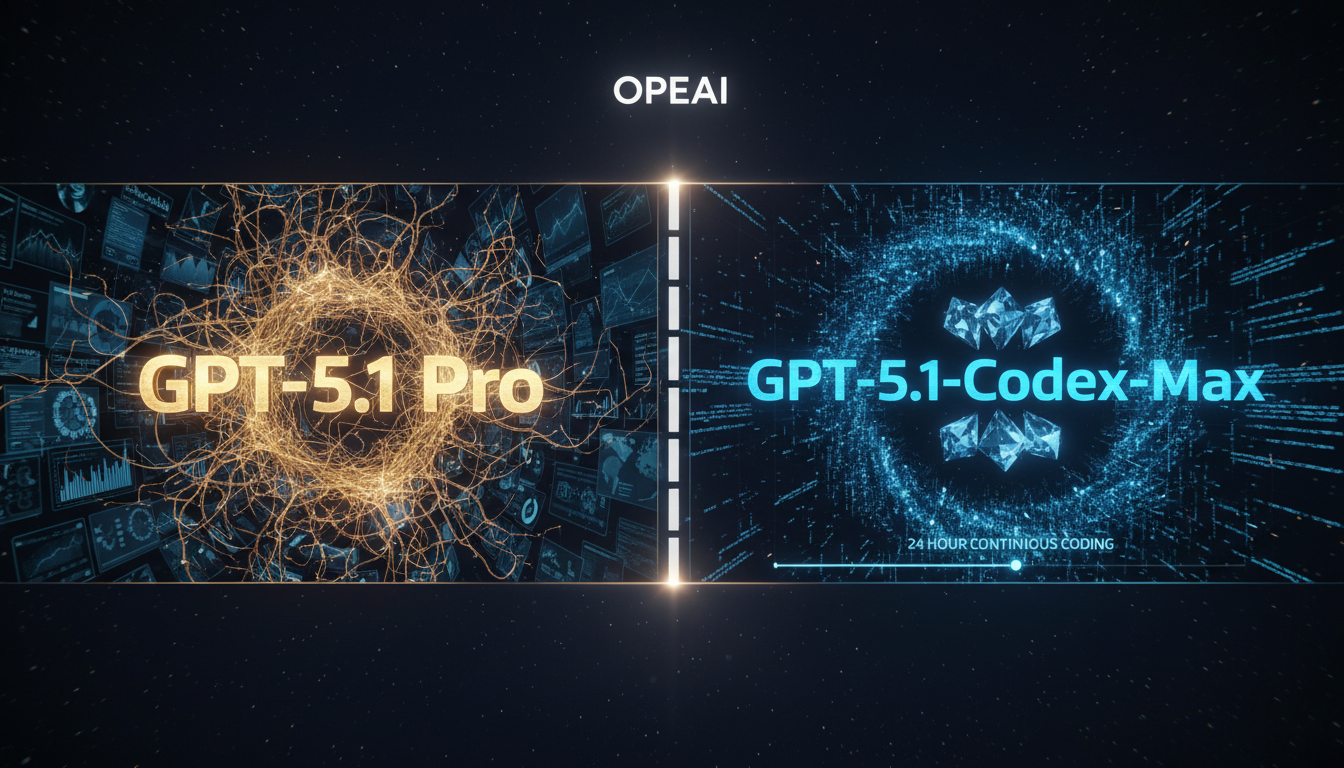
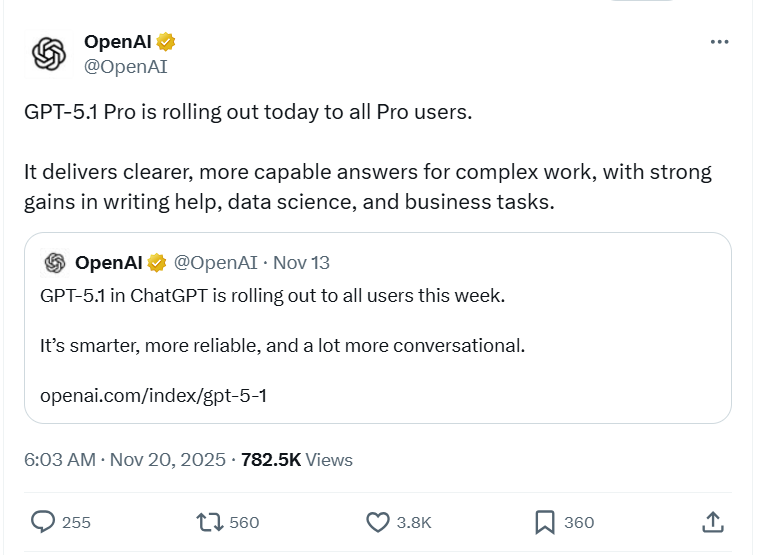
On November 20th, OpenAI opted not to hold a press conference or prepare a flashy promotional video, but instead dropped two bombshells with a simple two-sentence announcement: GPT-5.1 Pro and GPT-5.1-Codex-Max.
The former pushes GPT-5.1's intelligence and emotional intelligence to new heights, while the latter directly targets developers' most troublesome problem—long-running, large-scale code projects. The biggest highlight of this release is that GPT-5.1-Codex-Max introduces a compression mechanism for the first time, allowing AI to work continuously for over 24 hours in the context of millions of tokens, handling previously unimaginable tasks such as project refactoring and deep debugging.
77.9% SWE-bench Verified score, 30% token efficiency improvement, and native Windows support. What do these numbers mean? Compared to competitors like Claude Sonnet 4.5 and Gemini 3 Pro, how strong are OpenAI's trump cards this time? Let's look at the data.

Figure 1: OpenAI releases GPT-5.1 Pro and GPT-5.1-Codex-Max on the same day, ushering in a new era of AI coding
Two Swords Drawn: GPT-5.1 Pro and Codex-Max Each Have Their Strengths
OpenAI launched two models simultaneously, with clear positioning and complementarity.
GPT-5.1 Pro: An All-Round Intelligent Upgrade
GPT-5.1 Pro is an "enhanced version" based on GPT-5.1, focusing on stronger reasoning capabilities and higher emotional intelligence performance. Although the official announcement is only two sentences long, the performance of GPT-5.1 Pro in multiple benchmark tests has already proven its strength. In the AIME 2025 math competition, it achieved a perfect score of 100% with code execution enabled and approximately 71% in pure reasoning mode. In coding, it scored a high 94.1% on the HumanEval benchmark, demonstrating near-human code generation capabilities.
This model is available to all Pro subscribers and primarily serves scenarios requiring advanced reasoning, complex problem-solving, and multimodal understanding. While it lags behind the Gemini 3 Pro in some benchmarks, it still holds advantages in developer experience, responsiveness, and ecosystem maturity.
GPT-5.1-Codex-Max: A Coding Tool Built for Developers
The real star is GPT-5.1-Codex-Max. This model is an agent specifically trained by OpenAI on the GPT-5.1 architecture for software engineering, mathematics, and research tasks. Compared to general-purpose models, its features can be summarized in three keywords:
-
Native Compression Mechanism: This is OpenAI's first built-in "context management" capability at the model level, capable of handling millions of tokens and supporting continuous operation for over 24 hours. 2. Extra High Inference Mode: The new xhigh mode allows the model to think longer, trading longer inference time for higher accuracy.
-
Native Windows Support: For the first time in OpenAI's history, it supports running on Windows. This opens doors for a large number of .NET and Windows developers.
This model is already integrated into the Codex CLI, IDE plugins (such as VS Code), cloud interfaces, and code review tools. Starting November 20th, ChatGPT Plus, Pro, Business, Edu, and Enterprise users can use it through the Codex platform, and the API will be released soon.
Technological Breakthrough: What Exactly is the Compression Mechanism?
The "compression mechanism" may sound like a marketing concept, but it actually solves a core pain point in the field of AI coding.
Problem: The Curse of the Context Window
Traditional AI models face a deadlock when handling long tasks: a limited context window. When you ask AI to refactor a large project or perform deep debugging, it needs to constantly read the code, run tests, fix bugs, and run the tests again—a cycle that can take hours or even tens of hours. However, as the number of dialogue rounds increases, the context becomes increasingly cumbersome, and the model quickly "forgets" what it did before, or crashes when it reaches the token limit.
Solution: Automatic Context Management
GPT-5.1-Codex-Max's compression mechanism (or "tightening") aims to overcome this limitation. Its working principle can be compared to human "working memory management":
-
Automatic Filtering: In long-running tasks, the model automatically organizes historical content, filtering out redundant information and retaining only key context. For example, intermediate states and irrelevant logs during debugging are omitted, while error messages and fixes are retained.
-
Cross-Context Coherence: Even when processing millions of tokens, the model maintains task coherence, without losing context or progress.
-
Autonomous Iteration: OpenAI internal tests show that Codex-Max can autonomously iterate code and fix test failures in tasks lasting up to 24 hours, ultimately delivering usable results.
Practical Value: From Assistant to Engineer
The significance of this technological breakthrough lies in its transformation of AI from a "code completion assistant" to a true "autonomous engineer." You can assign it a large task (such as "migrating this legacy system to a new framework") and let it work autonomously for hours or even a whole day without human intervention. This represents a true efficiency revolution for scenarios such as large-scale project refactoring, legacy system migration, and deep bug fixing.
Another important optimization is token efficiency. In some tasks, Codex-Max can achieve higher accuracy using as little as 30% of tokens, which translates to lower API costs and faster response times.
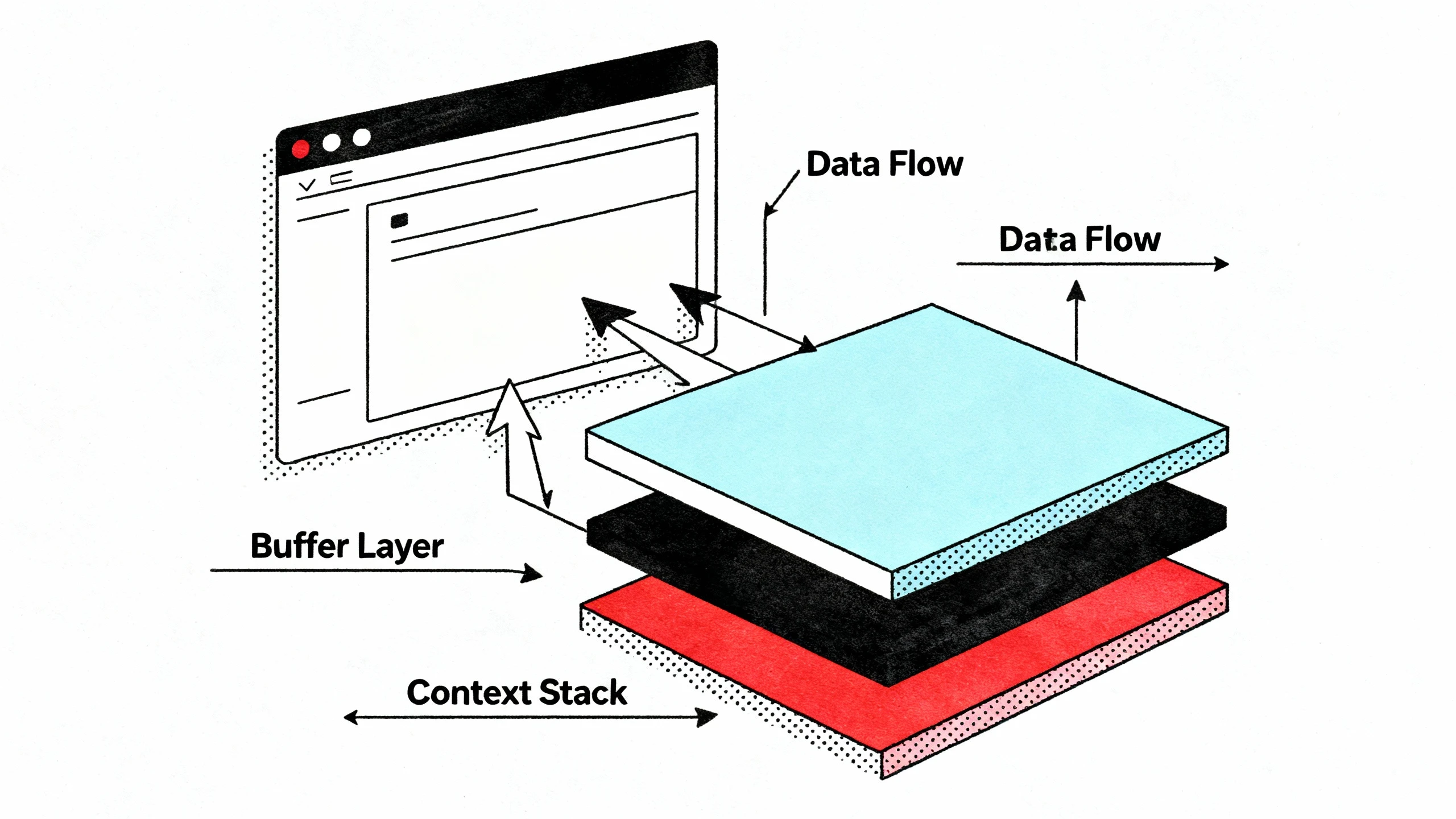
Figure 2: GPT-5.1-Codex-Max's compression mechanism achieves continuous processing capability for millions of tokens through automatic context management.
Performance Testing: Data Doesn't Lie
Let's look at the specific benchmark data. In the field of AI coding, there are two generally recognized gold standards: SWE-bench and HumanEval.
SWE-bench Verified: Real-world Engineering Capability Test
SWE-bench measures the ability of AI to solve real GitHub issues and is the test closest to actual software engineering scenarios. The competition here is fierce: Claude Sonnet 4.5 leads with a score of 77.2%, GPT-5.1-Codex-Max achieves 77.9%, GPT-5.1 Pro is 76.3%, and Gemini 3 Pro is 76.2%. The open-source models DeepSeek R1 scored 51.7%, and Llama 4 (405B) scored 46.9%.
GPT-5.1-Codex-Max achieved a score of 77.9% in this test, on par with its predecessor GPT-5.1-Codex, but with a significant improvement in token efficiency. This score indicates that it has reached the industry's top level in handling complex codebases, understanding context, and generating bug-fixing patches.
Claude Sonnet 4.5 performed exceptionally well in bug-fixing scenarios, demonstrating its particular advantage in fine-grained fixes for existing codebases. In contrast, OpenAI's advantage lies in its wider applicability and ecosystem maturity.
HumanEval: Code Generation Capability
HumanEval tests the model's ability to generate functionally correct code based on descriptions, consisting of 164 programming questions. This test emphasizes algorithms and problem-solving abilities: GPT-5.1 Pro leads with a score of 94.1%, Gemini 3 Pro at 89.7%, and Llama 4 (405B) at 82.6%.
GPT-5.1 Pro holds a dominant position in this test, achieving a score of 94.1%, which is very close to human-level performance. This demonstrates that the GPT series remains the strongest choice for generating algorithmic code from scratch.
Other Key Metrics
In the LiveCodeBench Pro algorithmic code generation test, Gemini 3 Pro leads, achieving an Elo score of 2439, approximately 200 points higher than GPT-5.1. In the AIME 2025 math competition, both GPT-5.1 Pro and Gemini 3 Pro achieved perfect scores with code execution enabled; in pure inference mode, Gemini scored 95% and GPT 71%. Furthermore, in the challenging math tests of MathArena Apex, Gemini 3 Pro significantly outperformed GPT-5.1 (1.0%) and Claude (1.6%) with a 23.4% score.
How to Interpret These Data? ** ** In bug-fixing scenarios, Claude Sonnet 4.5 and GPT-5.1-Codex-Max are neck and neck, both top choices. In zero-coding scenarios, GPT-5.1 Pro's performance on HumanEval demonstrates its suitability for algorithmic problems and new feature development. For mathematical reasoning, Gemini 3 Pro excels in challenging mathematical problems, but GPT-5.1 offers more comprehensive engineering capabilities. In terms of cost-effectiveness, GPT-5.1-Codex-Max's improved token efficiency means lower costs for the same performance, which is crucial for frequently used APIs.
Overall, OpenAI's latest release maintains its top position in the coding field. While it lags behind Gemini in some niche areas (such as challenging mathematics), it remains the best choice in terms of engineering implementation, ecosystem completeness, and developer experience.
Practical Scenarios: What do these capabilities mean for developers?
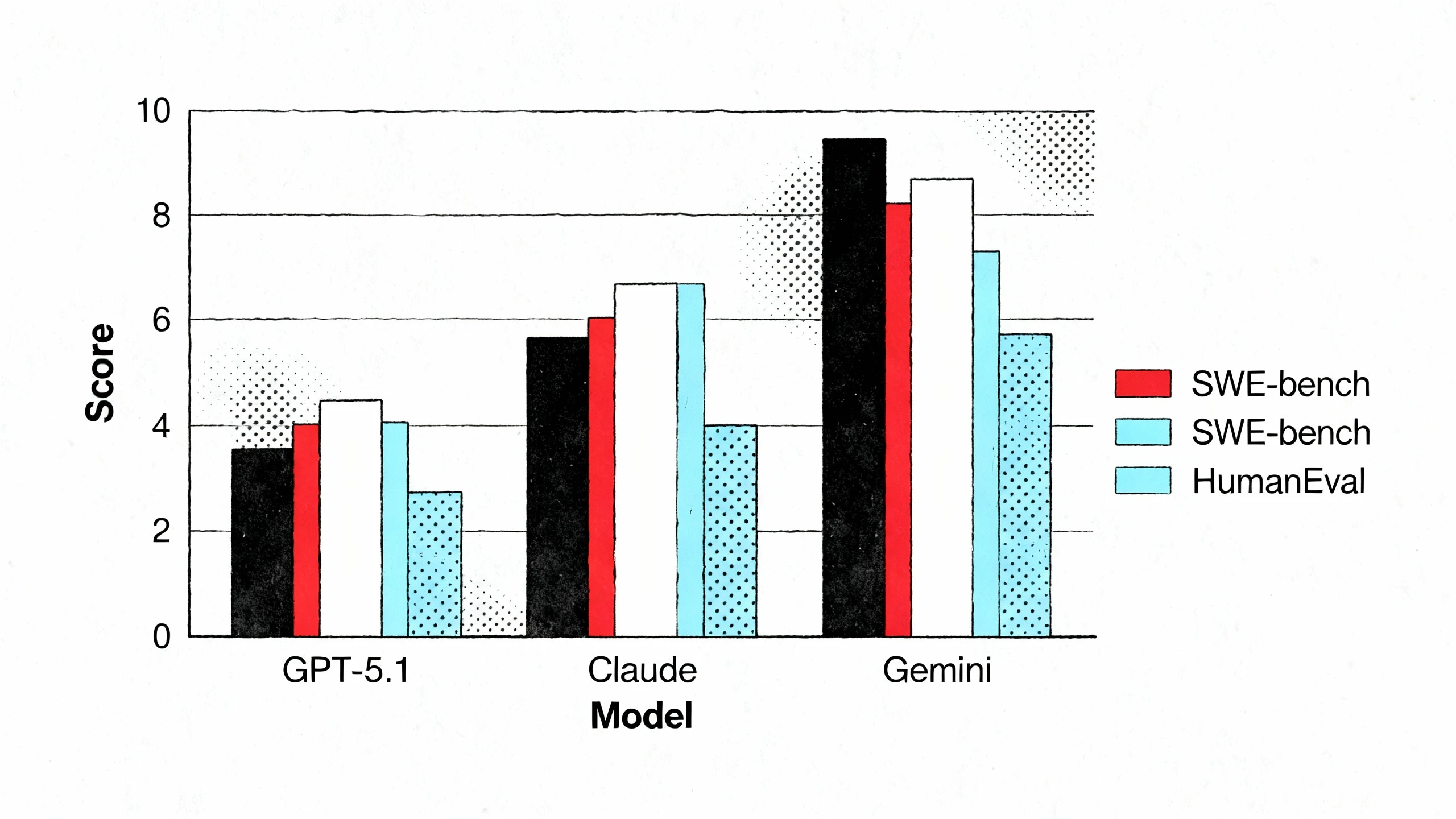
Figure 3: Performance comparison data of mainstream AI coding models in SWE-bench Verified and HumanEval benchmark tests
The release of the GPT-5.1 series is not a simple parameter upgrade, but brings concrete value to actual workflows. Here are a few typical scenarios:
1. Large-scale project refactoring
In the past, migrating a legacy system to a new framework was a project that took weeks or even months. Now, with GPT-5.1-Codex-Max, you can have AI analyze the entire codebase structure, develop a migration plan and execute it automatically, maintaining contextual coherence throughout a 24-hour task, then automatically running tests, fixing issues, and re-verifying.
This can compress a task that would take a team weeks to complete into a few days.
2. Deep Debugging and Performance Optimization
Traditionally, troubleshooting complex bugs or performance bottlenecks requires developers to spend hours or even days. Codex-Max can read the entire project's logs and call chains, conduct multiple rounds of experiments and hypothesis testing, generate detailed performance analysis reports, provide various optimization solutions, and automate testing.
This transforms developers from "manual troubleshooting" to "reviewing solutions."
3. Multi-Repository Collaborative Development
Modern software projects often involve multiple code repositories (frontend, backend, mobile, etc.). Compression mechanisms allow AI to understand the context of multiple repositories simultaneously, coordinate API changes across different technology stacks, and ensure end-to-end consistency.
For full-stack developers or small teams, this represents a true liberation of productivity.
4. Technical Documentation Generation
GPT-5.1 Pro's high emotional intelligence and high IQ make it excel in documentation generation. It can read code repositories and generate API documentation, understand business logic and write architecture documentation, and automatically update documentation based on change history.
This frees developers from the pain of "not wanting to write documentation."
5. Windows Ecosystem Support
Native Windows support means that .NET, C#, and Azure developers can now seamlessly integrate Visual Studio, use Azure DevOps workflows, and develop Windows desktop applications.
This fills a significant gap for OpenAI in the enterprise market.
Summary: The AI Coding Tool Market Enters a New Phase

Figure 4: Compression mechanisms enable developers to delegate large-scale refactoring tasks to AI autonomously, achieving true productivity liberation
OpenAI's simultaneous release of GPT-5.1 Pro and GPT-5.1-Codex-Max may seem low-key, but it represents a key breakthrough in both technology and product.
Key Highlights Summary:
-
The compression mechanism is a true game-changer. It transforms AI from a "conversational assistant" into an "autonomous engineer," capable of handling complex tasks lasting up to 24 hours without losing context.
-
Performance Data Demonstrates Strength: A 77.9% SWE-bench Verified score and a 94.1% HumanEval score demonstrate that OpenAI remains a top-tier player in the coding field.
-
Native Windows Support: Opens up new opportunities in the enterprise market, providing .NET and Azure developers with better tool options.
-
Improved Token Efficiency: Reduces costs and increases speed, crucial for high-frequency API call scenarios.
Competitive Landscape Assessment:
Currently, the AI coding field is dominated by three major players:
-
OpenAI: Mature ecosystem, With excellent engineering implementation and developer experience, it's suitable for most general scenarios.
-
Anthropic (Claude): Outstanding bug fixing and long-term task capabilities, suitable for complex project refactoring.
-
Google (Gemini): Leading in mathematical reasoning and multimodal understanding, but still lagging behind in engineering experience.
Recommendations for Developers:
-
Existing ChatGPT subscribers: Upgrade directly to the Pro version; Codex-Max will be available from November 20th.
-
Teams requiring long-running tasks: Codex-Max's compression mechanism is designed for you, suitable for project refactoring and system migration.
-
Windows/.NET developers: Native support means you're now a first-class citizen; worth trying.
-
Developers concerned about API costs: A 30% increase in token efficiency translates to lower direct costs, suitable for high-frequency call scenarios.
The competition in AI coding tools is far from over, but OpenAI's latest release proves that genuine technological breakthroughs are more convincing than marketing rhetoric. From conversational assistants to autonomous engineers, this leap may be the qualitative change we've been waiting for.
Leave your comment
- No comments yet.
Recommended AI Tools
Carefully selected AI tools to improve your work, study, and live efficiency.





Related Articles
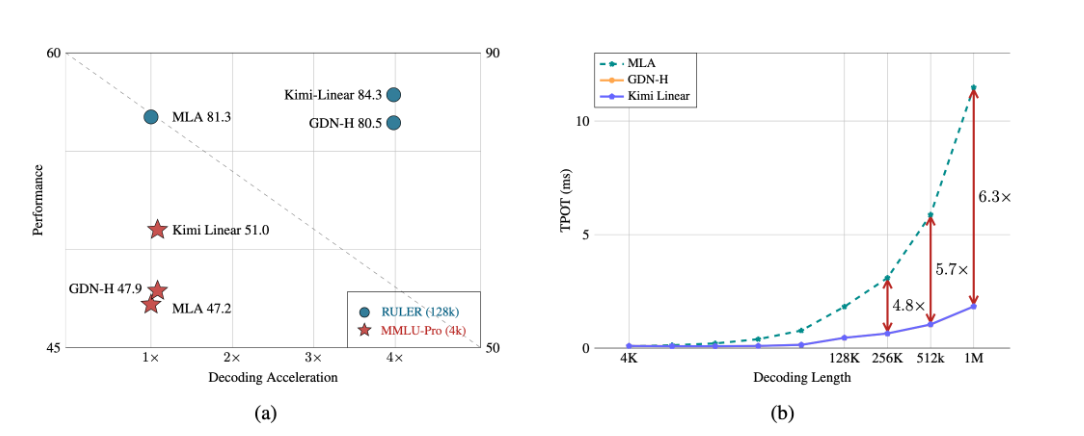
A major breakthrough has been achieved in the core architecture of large-scale models! The release of Kimi Linear marks the first time that linear attention technology has comprehensively surpassed and significantly outperformed the traditional Transformer full-attention model in both performance and efficiency. This "win-win" achievement is expected to significantly reduce the computational barriers and costs for long text processing, complex reasoning, and AI agent applications, potentially changing the competitive landscape of underlying technologies for large-scale models.
Over the past week, the AI community's attention has been drawn to a mysterious model that quietly emerged on the OpenRouter platform—Polaris Alpha. As a direct continuation of yesterday's discussion of the GPT-5.1 leak, this suddenly appearing model brings more technical details and strategic signals worthy of in-depth exploration.

Alibaba open-sources Qwen-Image-2.1: a 7B unified image model with native RGBA transparency and 10-reference editing.