OpenAI makes a major breakthrough! Sora 2 is now available to users in multiple countries, ushering in an era of zero barriers to video creation.

Key Updates: Invitation Codes Removed, Four Countries Open to the Market
According to official OpenAI news, starting October 30, 2025, its AI video generation application, Sora 2, has officially removed the invitation code restriction. The first batch of regions to be opened includes the United States, Canada, Japan, and South Korea.
This means that users in these countries can now directly search for and download the "Sora by OpenAI" application through the Apple App Store and log in using their existing ChatGPT accounts to start experiencing it, without having to wait or search for hard-to-obtain invitation codes.
However, OpenAI clearly stated that this opening is "time-limited." Its main purpose is to test the server's load capacity under high concurrency access and to collect broader user feedback. The official statement does not rule out the possibility of restoring some form of access restriction in the future, depending on the situation. This is the first large-scale expansion of the Sora application since its release, and the first time that the Asian markets (Japan and South Korea) have been included in the opening scope, which has significant strategic market importance.
New Features: More Than Just Video Generation, Enhancing Social Interaction and Creative Cycle
With this launch, Sora 2 has also received a series of significant feature updates, transforming it from a simple video generation tool into a vibrant creative social platform.
-
Character Cameo: Users can upload their own images or select preset characters to make the same "protagonist" appear in multiple different AI-generated videos. This significantly lowers the barrier to creating video series or personalized stories, aptly described as a "pocket IP factory."
-
Video Stitching: Users can stitch together multiple short video clips generated in Sora 2 into longer narratives, alleviating the previous limitation of short individual video lengths.
-
Community Leaderboards: The app introduces community leaderboards for popular cameo characters and most frequently remixed videos, enhancing user interaction and content dissemination.
-
Remix Function: This revolutionary feature allows users to create secondary or even multiple versions of videos based on others' posts. For example, an original video of an old man chasing away a crocodile can be modified by other users to include elements like hippos and dinosaurs, greatly enriching the content's derivative potential and enhancing community engagement.
Underlying Motivation: A Strategic Choice Under Pressure from High Computing Costs
OpenAI's decision to open up access is not simply a market expansion; it stems from severe economic realities and strategic considerations.
- Immense Computing Cost Pressure:
Bill Peebles, head of the Sora 2 division, publicly acknowledged that providing users with 30 free video generation slots per day is "completely unsustainable." This is because AI video generation is an extremely computationally intensive task. Generating a 10-second video consumes GPU resources equivalent to thousands of ChatGPT dialogue queries, with an estimated computational cost of between $0.50 and $2 per video. With surging user demand, providing free services long-term is extremely stressful.
- Paving the Way for Commercialization:
It is precisely due to cost pressures that OpenAI is accelerating the commercialization process of Sora. Currently, the platform has launched a paid "points package," where users can pay $4 for an additional 10 video generation credits. This is seen as a clear signal of a move towards a fully paid model. Peebles also revealed that they may reduce the number of free daily generation attempts in the future to control costs.
- Building a "Sora Economy" Ecosystem:
A grander vision is to build the so-called "Sora Economy." OpenAI plans to introduce a revenue-sharing model, allowing copyright owners (such as holders of well-known IPs and characters) to receive compensation for the use of their intellectual property in AI-generated videos. This will attempt to solve the copyright issues that have long plagued the AIGC field and build a sustainable content ecosystem for the platform.
Impact and Outlook: A New Era for AI Video Creation
The opening of Sora 2 signifies new opportunities for ordinary creators and the entire industry.
-
Significantly Lowered Creation Barriers: Any creative user can now quickly generate high-quality, creative short videos based on text descriptions. This completely breaks down the high barriers to professional video production in terms of equipment, technology, and time.
-
The "One-Man Production Studio" Becomes a Reality: Combining cameo appearances, video splicing, and remix features, individual creators can efficiently produce consistent series of content, offering immense potential.
-
Increased Platform Competition: Sora 2 is attempting to integrate "tool attributes" and "social platform attributes." Its remix feature and encouragement of UGC (user-generated content) directly compete with traditional short video platforms like TikTok. Future competition will revolve around user attention, the creative ecosystem, and monetization capabilities.
Summary and Recommendations
OpenAI Sora 2's removal of the invitation code restriction is one of the most noteworthy events in the AIGC field by the end of 2025. It's not just a simple open registration; it's a key milestone in AI video technology's transition from the laboratory to the mass market.
For video creators and AI tool enthusiasts in the open zone, now is the perfect time to experience this cutting-edge technology. We recommend:
Experience it as soon as possible: Take advantage of the limited-time open window, download the application, and familiarize yourself with its core functions.
Focus on Costs: Understand free quotas and paid options to plan your usage wisely.
Explore New Ways to Play: Boldly experiment with cameo roles and remix features to discover your unique creative path.
The wave of democratizing AI video creation has arrived. Are you ready to be a trendsetter?
Information in this article is current as of November 3, 2025. Please refer to the latest official announcements from OpenAI for policy changes.
Leave your comment
- No comments yet.
Recommended AI Tools
Carefully selected AI tools to improve your work, study, and live efficiency.



Related Articles
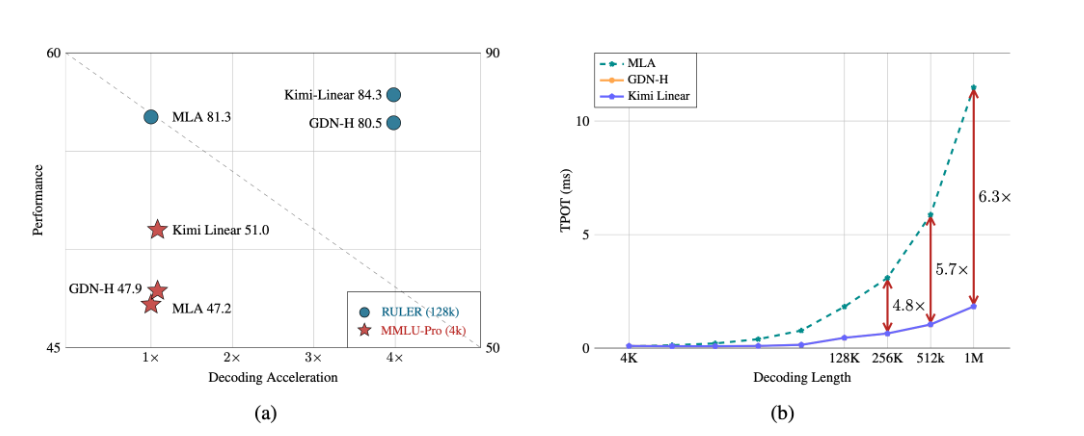
A major breakthrough has been achieved in the core architecture of large-scale models! The release of Kimi Linear marks the first time that linear attention technology has comprehensively surpassed and significantly outperformed the traditional Transformer full-attention model in both performance and efficiency. This "win-win" achievement is expected to significantly reduce the computational barriers and costs for long text processing, complex reasoning, and AI agent applications, potentially changing the competitive landscape of underlying technologies for large-scale models.

Over the past week, the AI community's attention has been drawn to a mysterious model that quietly emerged on the OpenRouter platform—Polaris Alpha. As a direct continuation of yesterday's discussion of the GPT-5.1 leak, this suddenly appearing model brings more technical details and strategic signals worthy of in-depth exploration.
Alibaba open-sources Qwen-Image-2.1: a 7B unified image model with native RGBA transparency and 10-reference editing.