Alibaba's entry into the fray: Why now? What makes them dare to challenge global giants?
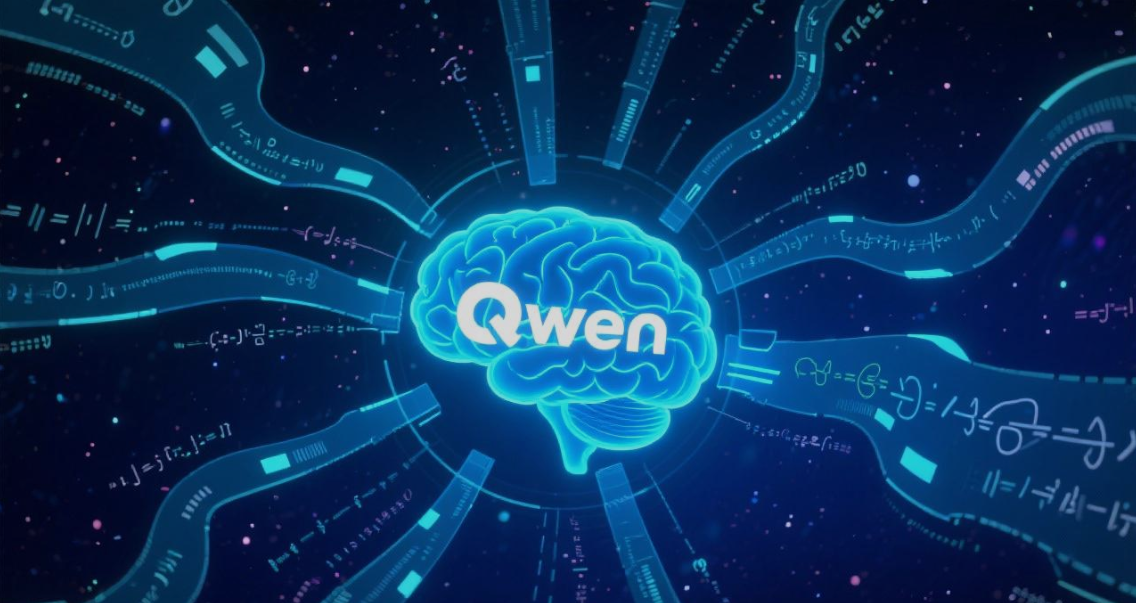
Alibaba's Qianwen represents a strategic move by Chinese tech giants to create the next-generation super gateway in the AI era, integrating technological strength and ecosystem advantages.
On November 17, 2025, Alibaba announced a major event: the public beta launch of the "Qianwen" app, marking its full-fledged entry into the AI consumer market.
[https://cdn.aiwith.me/media/20251118/1763452210068-afe1qcv.webp]
This is an intriguing timing. Nearly three years have passed since ChatGPT ignited the AI craze. Domestic platforms like Doubao and Wenxin Yiyan have already captured a large user base, while international giants like Claude and GPT-5 have continued their technological iterations. Why did Alibaba choose this moment to enter this seemingly saturated market?
Furthermore, Alibaba positions Qianwen as a "comprehensive benchmark against ChatGPT," even planning an international version to directly compete with global giants like ChatGPT and Claude. Where does this confidence come from? ## Why November 2025? Three Key Signals
In my view, Alibaba's choice to enter the market at this time is not a sudden impulse, but rather a carefully considered strategy based on three key signals.
Signal 1: A Technological Inflection Point from Chatting to Getting Things Done
Alibaba's management stated in a public announcement that its large-scale model capabilities have entered the era of "Agentic AI," which "assists humans." This is not empty rhetoric. Looking back at 2023, most AI applications were still at the conversational level, answering users' questions like chatbots. But by 2025, the technology has undergone a qualitative change—models can understand complex intentions, invoke external tools, and complete multi-step tasks.
What is the key to this shift? Users are no longer satisfied with "chatting"; they need AI to truly help them handle things. For example, the complex need of "booking me a high-speed train to Hangzhou tomorrow, and also a hotel near West Lake" has moved from "imagination" to "reality."
Alibaba has been waiting for this moment. Entering the market now isn't about competing with Doubao and Wenxin on "chat experience," but rather a direct move into the next stage: "delivery capability."
Signal 2: Global Influence of the Open Source Ecosystem Has Been Established
Behind the Qianwen app is Alibaba's Qwen series of large-scale models. This detail is crucial: since its full open-source release in 2023, Qwen has been downloaded over 600 million times globally, becoming one of the most widely used open-source models worldwide. The latest Qwen3-Max has achieved top-three performance globally, surpassing GPT-5 and Claude Opus 4.
What does this mean? Alibaba has established a strong technical reputation and developer community within the global open-source ecosystem. Many Silicon Valley companies are using the Qwen model for secondary development, and this influence paves the way for the Qianwen app to enter the international market.
More importantly, the open-source strategy has allowed Alibaba to receive feedback and contributions from developers worldwide, accelerating model iteration. By the end of 2025, Alibaba will no longer be a "follower" of international rules, but a "co-builder" of the global open-source ecosystem, even achieving leadership in some areas.
Signal 3: A Window of Opportunity in the Competitive Landscape
Let's look at the current market landscape: Doubao has approximately 160 million monthly active users in China, and DeepSeek is approaching 150 million, occupying the top spots in user numbers. However, these two are not invincible. Doubao relies on ByteDance's traffic portal, DeepSeek targets the tech geek market, and while Wenxin Yiyan has strong technical capabilities, there is still room for improvement in product experience and ecosystem integration.
More importantly, new changes have emerged in the international market. Claude announced in September 2025 that it would cease providing services to some entities in China, and ChatGPT's compliance risks in the Chinese market remain. This leaves a huge market space for domestic AI applications.
Alibaba's entry at this moment coincides perfectly with this window of opportunity: domestic competitors have not yet formed an absolute monopoly, international giants have left gaps in the Chinese market, and technologically, Alibaba already possesses the strength to directly compete with top global players.
The window is open! Alibaba has entered!
Where does its confidence come from? Alibaba's three trump cards
Timing is one aspect, but more importantly, Alibaba truly has the confidence to "fully benchmark against ChatGPT," and this confidence comes from three trump cards.
Trump Card 1: World-Class Model Performance
Qianwen is built on the Qwen3 model, and the latest flagship version, Qwen3-Max, has likely jumped into the top three globally in performance across multiple benchmarks, surpassing GPT-5 and Claude Opus 4. If I remember correctly, this has been verified in several public benchmark tests.
More importantly, Alibaba has adopted advanced architectures such as MoE (Hybrid Expert), effectively reducing the inference cost of the model. This means that Qianwen can maintain top-tier performance while offering it free to all users, a significant advantage compared to paid models like ChatGPT.
Trump Card 2: Vast Ecosystem Integration Capabilities
This is Alibaba's biggest advantage over pure technology companies. Alibaba plans to fully integrate a wealth of lifestyle services, including maps, food delivery, ticketing, office work, learning, shopping, and health, into the Qianwen app. What does this mean? In the future, users will be able to complete a series of complex operations in one step using natural language: route planning (Amap), shopping comparison and ordering (Taobao, Tmall), restaurant reservations (Ele.me), document collaboration (DingTalk), health management (AliHealth), and more. Qianwen has the potential to become the central hub for managing Alibaba's vast business ecosystem.
This is the core differentiating advantage compared to purely technical platforms like ChatGPT and Claude. While these platforms offer a better conversational experience, they struggle to directly assist users with tasks. Alibaba, on the other hand, has existing business infrastructure; it simply needs to connect it through AI.
Ace 3: Massive Resource Investment
Reports indicate that Alibaba has secretly deployed hundreds of engineers to develop Qianwen and plans to invest over 380 billion yuan in AI infrastructure construction over the next three years—a top-tier investment in China.
More importantly, Alibaba's core management views the Qianwen project as "the future battle of the AI era," demonstrating strategic importance. This determination implies continuous resource investment, rapid iteration, and a high tolerance for errors.
The AI race has proven that this is not a short-term sprint, but a long-term, protracted war. Sufficient resources and determination are essential to gaining a foothold in global competition.
From "Chatting" to "Getting Things Done": A Differentiated Competitive Strategy
Alibaba's strategic positioning for Qianwen is clear: it's not just a chat tool, but a "personal AI assistant that can chat and get things done," creating the future "AI lifestyle gateway."
This positioning directly targets the competition for the next generation of super gateways. Recall the internet era: whoever controls the gateway controls the traffic. Baidu was the search gateway, WeChat was the social gateway, and Taobao was the e-commerce gateway. In the AI era, what will the new gateway be?
Alibaba's answer is: an AI assistant that can truly help users "get things done." Users don't need to switch between multiple apps; they only need to tell Qianwen their needs, and the AI will coordinate and execute the rest. This is the true value of "Agentic AI."
The brilliance of this strategy lies in the fact that while Doubao and Wenxin Yiyan were still vying for dominance in chat experience, Alibaba jumped directly to the next battlefield. Moreover, Alibaba has a natural advantage in this battlefield—a complete business ecosystem and service capabilities. For ChatGPT and Claude to enter this field, they must collaborate with numerous third-party service providers, significantly increasing complexity and uncertainty.
What does this mean for the industry?
Alibaba's entry into the Qianwen platform will have several important impacts on the entire industry.
First, the focus of competition is shifting from model performance to application capabilities. For the past two years, AI companies have been competing on who has the largest model parameters and the strongest performance. However, Alibaba's entry clearly sends a signal: simple technological leadership is no longer enough; users need AI to solve real-world problems. This will force pure technology companies like OpenAI and Anthropic to accelerate their application-layer development.
Second, ecosystem advantages are becoming key to competition. Alibaba's case demonstrates that companies with complete business ecosystems have a unique advantage in the AI era. This will stimulate other platforms such as Fudao, Meituan, and Pinduoduo to accelerate their AI deployments, forming a new competitive landscape of ecosystem + AI.
Third, the globalization of domestic AI is accelerating. Alibaba has explicitly stated its intention to launch an international version of Qianwen to compete with ChatGPT in the global market. Leveraging the global influence already established by the Qwen open-source model, Qianwen has the potential to become the first domestically developed AI application to truly establish itself in the global market. This represents a significant boost to confidence for the entire Chinese AI industry.
Conclusion: The Battle for the Super Gateway Has Only Just Begun
The public beta launch of Alibaba's Qianwen on November 17, 2025, marks the beginning of a new phase. This is not simply the birth of "yet another AI chat tool," but a direct challenge to the next generation of super gateways.
Alibaba's timing is precise: the technology has reached an inflection point from "chatting" to "getting things done," the open-source ecosystem has established global influence, and the competitive landscape has created a window of opportunity. Its confidence stems from: top-tier model performance, massive ecosystem integration capabilities, and substantial resource investment.
However, this is just the beginning. The AI field is characterized by rapid change and high uncertainty. Whether Qianwen can truly become an "AI life gateway" depends on several key questions: How deep and smooth is the ecosystem integration? Can user retention and usage frequency surpass Doubao and Wenxin Yiyan? Can the international version establish a foothold in overseas markets?
However, Alibaba's entry into the fray has undeniably changed the game. It tells all players that the ultimate outcome of the AI competition isn't model performance, but rather who can truly become an indispensable entry point into users' lives.
This battle for the super entry point has only just begun.
(Quote: https://tongyi.aliyun.com/qianwen)
Leave your comment
- No comments yet.
Recommended AI Tools
Carefully selected AI tools to improve your work, study, and live efficiency.


Related Articles
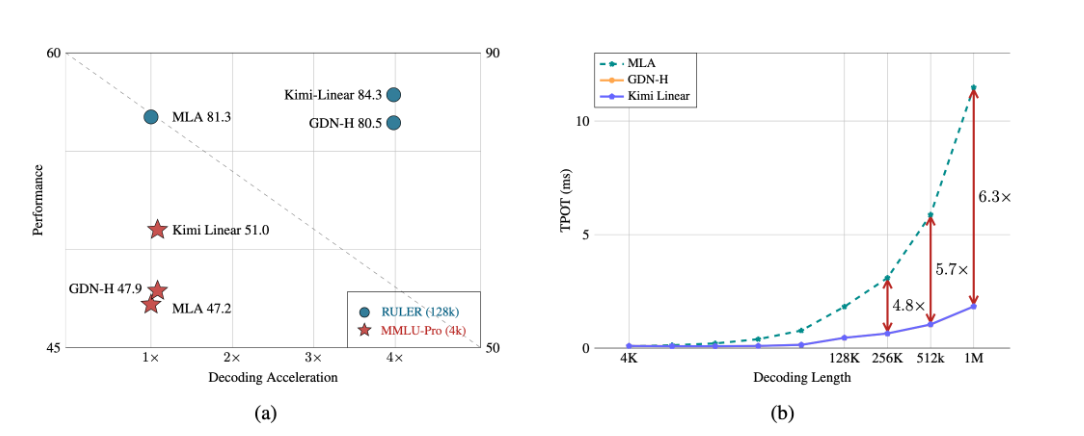
A major breakthrough has been achieved in the core architecture of large-scale models! The release of Kimi Linear marks the first time that linear attention technology has comprehensively surpassed and significantly outperformed the traditional Transformer full-attention model in both performance and efficiency. This "win-win" achievement is expected to significantly reduce the computational barriers and costs for long text processing, complex reasoning, and AI agent applications, potentially changing the competitive landscape of underlying technologies for large-scale models.
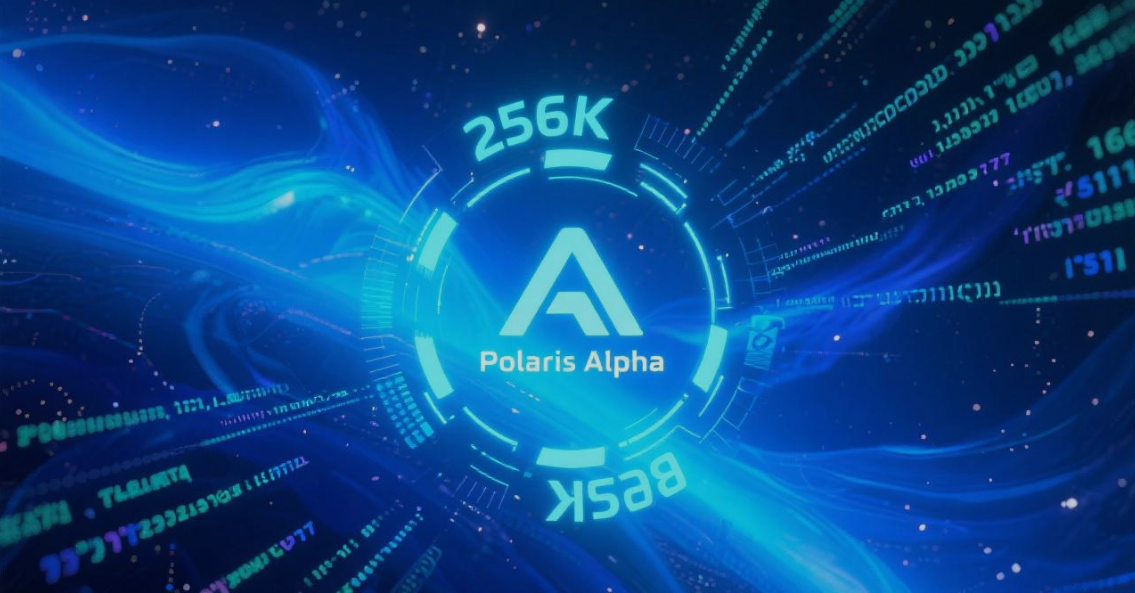
Over the past week, the AI community's attention has been drawn to a mysterious model that quietly emerged on the OpenRouter platform—Polaris Alpha. As a direct continuation of yesterday's discussion of the GPT-5.1 leak, this suddenly appearing model brings more technical details and strategic signals worthy of in-depth exploration.
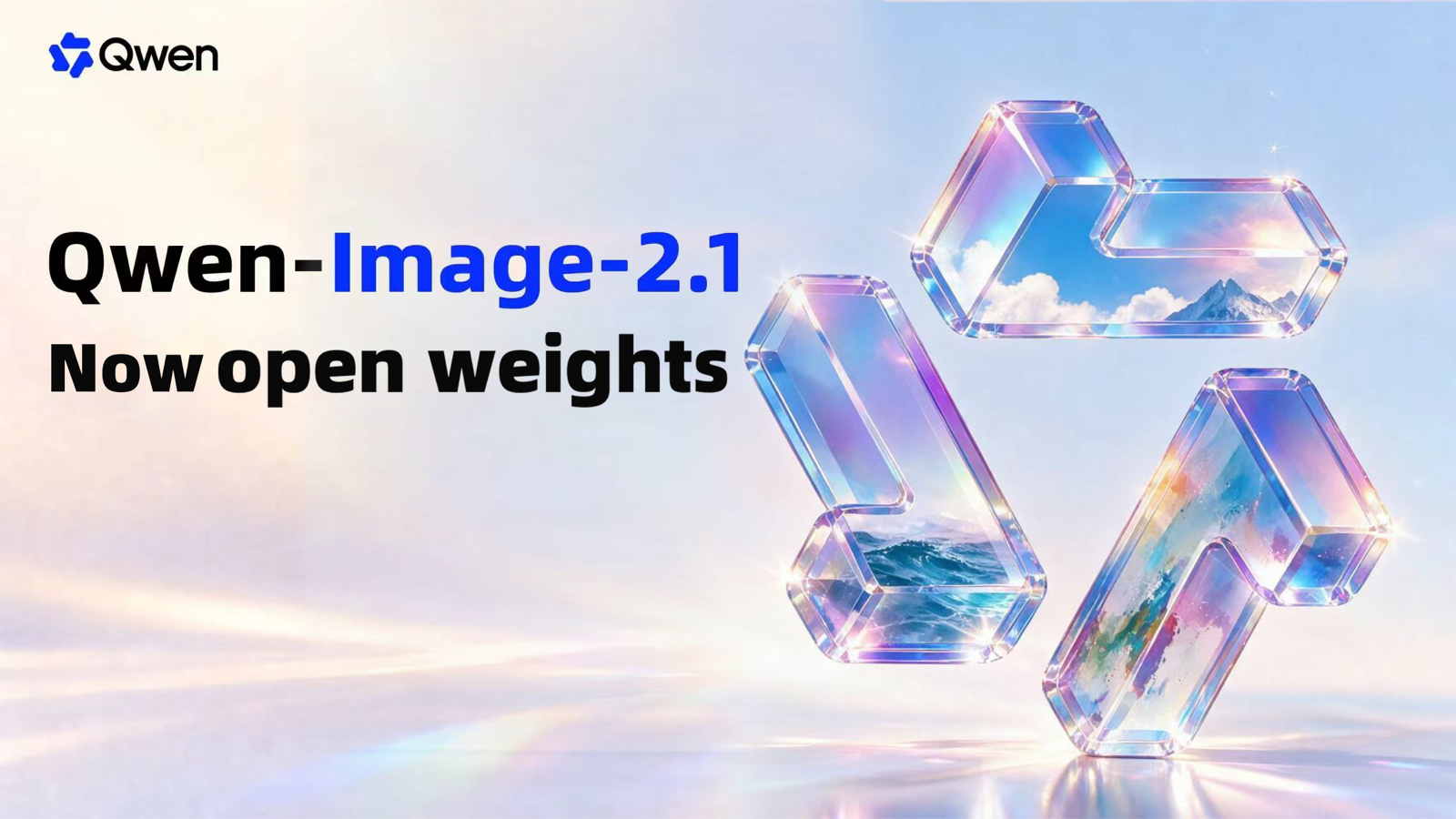
Alibaba open-sources Qwen-Image-2.1: a 7B unified image model with native RGBA transparency and 10-reference editing.