Sora 2
Introduction
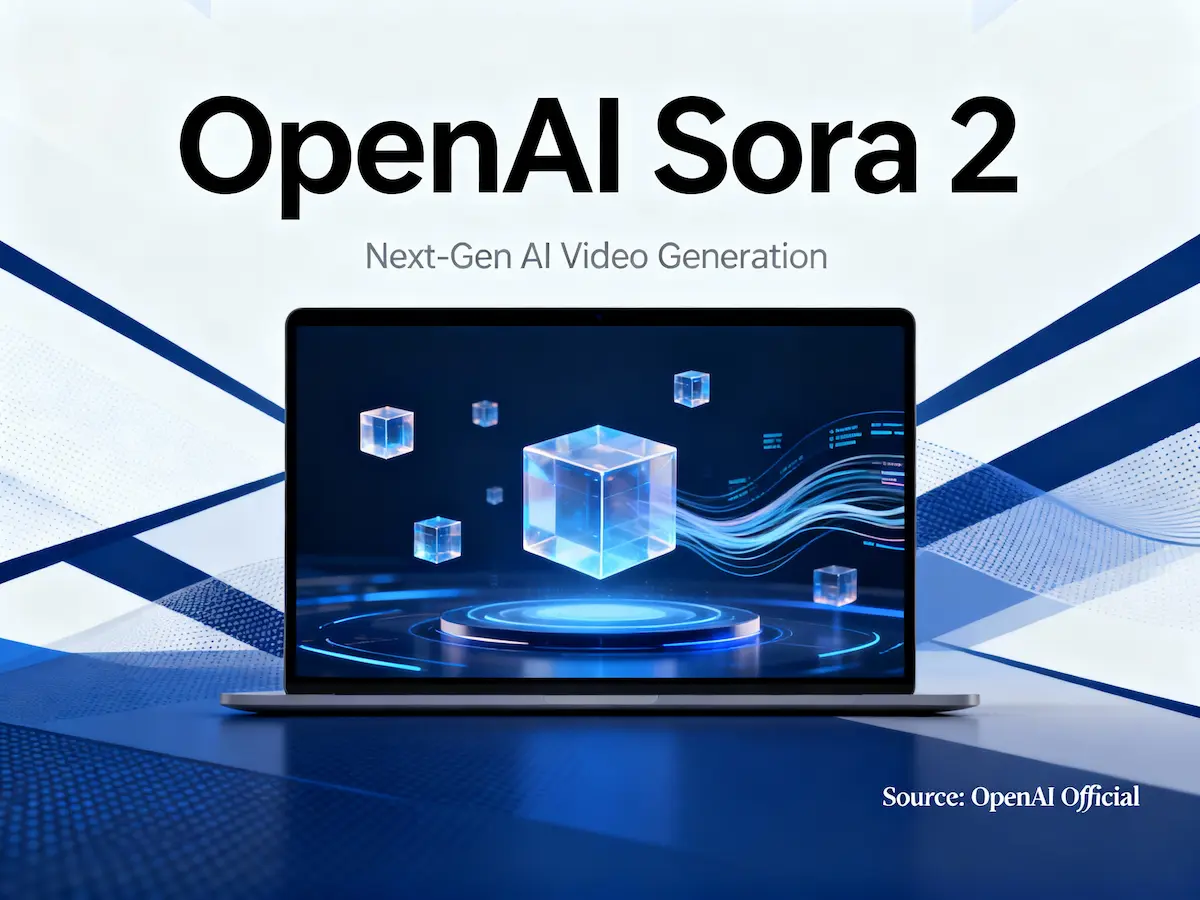
The landscape of artificial intelligence continues to evolve at a breathtaking pace, and OpenAI has just raised the bar significantly with the release of Sora 2. Announced on September 30, 2025, this groundbreaking video and audio generation model represents what OpenAI describes as the "GPT-3.5 moment for video" - a pivotal advancement that transforms how we think about AI's creative potential. Building upon the foundation of the original Sora model from February 2024, Sora 2 introduces capabilities that were previously thought to be years away from realization. This isn't just an incremental update; it's a fundamental leap forward in AI's ability to understand and simulate our physical world through video generation.
What Makes Sora 2 Different?
The Evolution from Sora to Sora 2
The original Sora model was revolutionary in its own right, serving as what OpenAI calls the "GPT-1 moment for video." It demonstrated that simple behaviors like object permanence could emerge from scaling up pre-training compute. However, Sora 2 represents a quantum leap forward, addressing fundamental limitations that plagued earlier video generation systems.
While previous models often resorted to "cheating" physics to fulfill text prompts - making basketballs teleport to hoops when shots were missed or morphing objects to maintain continuity - Sora 2 demonstrates a more sophisticated understanding of physical dynamics. If a basketball player misses a shot in Sora 2, the ball realistically rebounds off the backboard. This attention to realistic failure states represents a crucial advancement toward creating genuine world simulators.
Advanced Physics and Realism
Sora 2's most striking improvement lies in its enhanced physical accuracy. The model can now handle complex physical interactions that were previously impossible for AI systems. Examples provided by OpenAI include Olympic gymnastics routines, backflips on paddleboards that accurately model buoyancy and rigidity dynamics, and even a figure skater performing a triple axel with a cat on her head - all rendered with remarkable physical fidelity.
This improved physics modeling means that Sora 2 doesn't just create visually appealing content; it creates content that behaves according to the rules of our physical universe. The "mistakes" the model makes now appear to be errors of the implicit agent it's modeling rather than fundamental violations of physics, suggesting a deeper understanding of cause and effect relationships.
Key Technological Breakthroughs
Enhanced Controllability and Direction Following
One of Sora 2's most significant advancements is its improved controllability. The model can follow intricate instructions spanning multiple shots while accurately maintaining world state consistency. This means creators can guide the AI through complex narratives without losing track of characters, objects, or environmental details across different scenes.
The system excels across multiple visual styles, including realistic cinematic footage and anime, demonstrating its versatility as a creative tool. This stylistic range opens up new possibilities for filmmakers, animators, and content creators who can now maintain consistent visual language throughout their projects.
Synchronized Audio Generation
Sora 2 introduces sophisticated audio capabilities that go beyond simple background music. As a general-purpose video-audio generation system, it can create complex background soundscapes, realistic speech, and context-appropriate sound effects. The synchronization between visual and auditory elements represents a major step toward truly immersive AI-generated content.
The audio generation isn't merely decorative; it's context-aware. For instance, when generating content featuring "two mountain explorers in bright technical shells shouting in the snow," the model produces audio that matches the visual intensity and environmental context of the scene.
Revolutionary "Cameos" Feature
Perhaps the most personally engaging feature of Sora 2 is its "cameos" capability. Users can inject elements of the real world into Sora-generated content with remarkable fidelity. After a short one-time video-and-audio recording to verify identity and capture likeness, the model can insert real people into any Sora-generated environment, complete with accurate portrayal of appearance and voice.
This feature extends beyond humans to animals and objects, creating unprecedented opportunities for personalized content creation. OpenAI reports that during internal testing, this feature became so popular that colleagues were making new friends through the shared experience of inserting themselves into creative scenarios.
Deployment and Accessibility
The New Sora iOS App
OpenAI is launching Sora 2 through a dedicated social iOS app simply called "Sora." This represents a strategic shift from treating Sora as purely a creative tool to positioning it as a social platform. The app enables users to create content, remix each other's generations, discover new videos in a customizable feed, and utilize the cameos feature.
The social dimension is intentional. OpenAI envisions this as a natural evolution of digital communication - progressing from text messages to emojis to voice notes, and now to personalized video content. The company reports that early internal usage has shown the app facilitating new connections and creative collaborations.
Responsible Deployment Strategy
OpenAI has approached Sora 2's release with careful consideration of potential societal impacts. Concerns about doomscrolling, addiction, isolation, and algorithmically optimized feeds have been addressed through several key design decisions:
- Users are given tools and optionality to control their feed content
- Natural language-based recommender algorithms allow for more transparent content curation
- Built-in mechanisms periodically poll users on their wellbeing and offer feed adjustment options
- The default feed prioritizes content from people users follow and videos likely to inspire their own creations
- The app is explicitly designed to maximize creation rather than consumption
This thoughtful approach to user experience reflects lessons learned from previous social platforms and represents OpenAI's commitment to responsible AI deployment.
Safety and Ethical Considerations
Addressing New Risk Categories
Sora 2's advanced capabilities introduce new potential risks that OpenAI has proactively addressed. The system card for Sora 2 highlights concerns around nonconsensual use of likeness and misleading generations as primary areas of focus.
To mitigate these risks, OpenAI has implemented several safeguards:
- Initial access is being rolled out via limited invitations
- Restrictions on using image uploads featuring photorealistic people
- Prohibition of all video uploads initially
- Stringent safeguards and moderation thresholds for content involving minors
Iterative Safety Approach
OpenAI describes its safety strategy as iterative, focusing on areas where context is especially important or where risks are still emerging and not fully understood. This approach acknowledges that the full implications of such powerful technology may not be immediately apparent, requiring ongoing assessment and adjustment.
The company has worked with internal red teamers to identify potential challenges and develop corresponding mitigations, balancing safety concerns with the goal of maximizing creative potential.
Key Features and Benefits
- Advanced Physics Simulation: More accurate modeling of real-world physics including gravity, buoyancy, and object permanence
- Enhanced Controllability: Better adherence to complex multi-shot instructions with consistent world state maintenance
- Synchronized Audio: Context-aware sound effects, speech, and background soundscapes
- Cameos Feature: Ability to insert real people, animals, or objects into generated content with high fidelity
- Multi-Style Mastery: Excellence across realistic, cinematic, and anime visual styles
- Social Integration: Native sharing and remixing capabilities through the dedicated Sora app
- Responsible Design: User-controlled feeds and wellbeing-focused platform design
Practical Applications and Use Cases
Creative Industries
Filmmakers and animators can use Sora 2 for pre-visualization, storyboarding, and even final content creation. The ability to maintain consistent characters and environments across multiple shots makes it valuable for professional production pipelines.
Personalized Content
The cameos feature enables entirely new forms of personalized media. Imagine inserting yourself into your favorite movie scenes, creating custom birthday messages with friends appearing in fantastical settings, or generating personalized educational content with the learner as part of the narrative.
Education and Training
Sora 2's improved physics simulation makes it suitable for educational content where accurate representation of physical phenomena is crucial. From scientific demonstrations to historical recreations, the model can create engaging visual explanations.
Social Connection
The social app approach suggests new ways for people to connect and collaborate creatively. The internal OpenAI experience of colleagues forming new relationships through the platform hints at its potential as a tool for community building.
The Future of AI Video Generation
Sora 2 represents a significant milestone in AI's journey toward understanding and simulating our physical world. While the model is "far from perfect" and still makes mistakes, as OpenAI acknowledges, it validates the hypothesis that further scaling of neural networks on video data will continue to improve reality simulation.
The progression from Sora to Sora 2 in just over a year suggests an accelerating pace of development in AI video generation. If Sora was the GPT-1 moment and Sora 2 the GPT-3.5 moment, we can anticipate even more sophisticated capabilities in the near future.
Conclusion
Sora 2 marks a transformative moment in AI-generated media. By combining enhanced physical accuracy, sophisticated audio synchronization, revolutionary personalization features, and a thoughtful approach to social integration, OpenAI has created a platform that transcends traditional video generation tools. The cameos feature alone represents a breakthrough in how we might interact with AI-generated content, blurring the lines between consumers and creators.
While the technology raises important questions about authenticity and digital identity that will require ongoing attention, Sora 2's responsible deployment strategy provides a model for how advanced AI capabilities can be introduced thoughtfully. As the platform becomes more widely available, we can expect to see entirely new forms of creative expression and communication emerge, fundamentally changing how we create and experience digital video content.
The era of AI video generation has truly arrived, and Sora 2 is leading the charge toward a future where our imagination is the only limit to what we can create.
Leave your comment
- No comments yet.
Recommended AI Tools
Carefully selected AI tools to improve your work, study, and live efficiency.




Related Articles
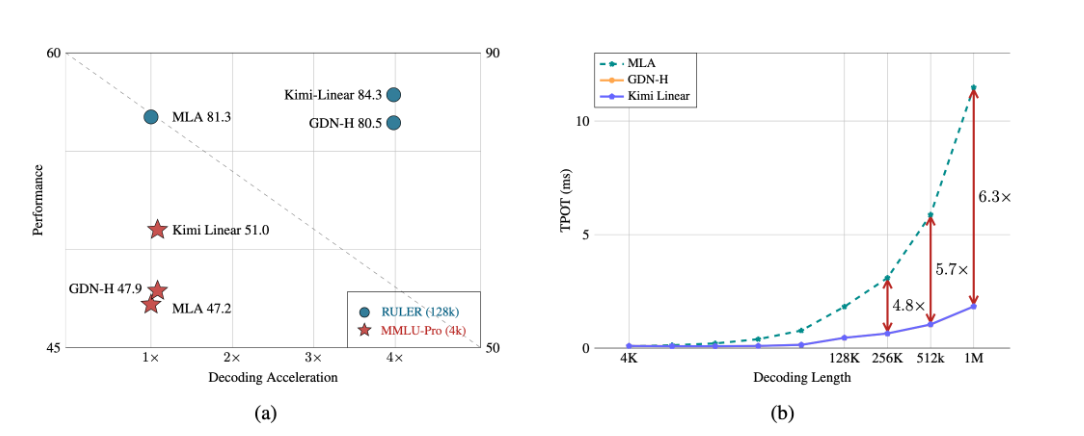
A major breakthrough has been achieved in the core architecture of large-scale models! The release of Kimi Linear marks the first time that linear attention technology has comprehensively surpassed and significantly outperformed the traditional Transformer full-attention model in both performance and efficiency. This "win-win" achievement is expected to significantly reduce the computational barriers and costs for long text processing, complex reasoning, and AI agent applications, potentially changing the competitive landscape of underlying technologies for large-scale models.
Over the past week, the AI community's attention has been drawn to a mysterious model that quietly emerged on the OpenRouter platform—Polaris Alpha. As a direct continuation of yesterday's discussion of the GPT-5.1 leak, this suddenly appearing model brings more technical details and strategic signals worthy of in-depth exploration.
Alibaba open-sources Qwen-Image-2.1: a 7B unified image model with native RGBA transparency and 10-reference editing.