Ask AI before you shop: Walmart and Google team up to create a new conversational shopping experience

This collaboration between technology and retail is quietly changing the way we add items to our shopping carts.
At the heart of this partnership is integrating Google's generative AI chatbot, Gemini, into Walmart's shopping process, allowing consumers to discover products, compare prices, and complete purchases faster through an AI assistant.
I. Background of the Partnership: When Consumers No Longer Directly Open Shopping Apps
Consumer behavior is subtly changing. More and more consumers, when considering shopping, no longer open shopping apps or e-commerce websites first, but instead ask AI which brands they should buy and which stores offer the best value, before being directed to the purchase page by the AI.
David Gugina, Chief E-commerce Officer of Walmart U.S., stated that this shift in habits is reshaping its digital strategy. Agent-based AI "allows us to meet customers earlier in the shopping journey and in more scenarios."
In fact, this is not Walmart's first foray into AI shopping. Last October, Walmart partnered with OpenAI to launch an "instant checkout" feature within ChatGPT, allowing users to complete single-item purchases without leaving the chat window. Walmart also has its own AI chatbot, Sparky, the assistant with the yellow smiley face in its official app.
II. How it Works: A Seamless Experience from Conversation to Order
Through this partnership, customers who link their Walmart and Gemini accounts will receive personalized recommendations based on their past purchase history. Any product a customer decides to buy through Gemini can be combined with their online shopping cart at Walmart or Sam's Club.
Google's Instant Checkout feature will allow customers to purchase items from partner merchants without leaving the Gemini chat window. Users can pay with Google Pay and directly use their address stored in Google Wallet, simplifying the shopping process.
The two companies stated that this experience will first launch in the US and then expand to international markets. However, neither party disclosed a specific launch date for the new feature.
III. Industry Trends: The Emerging Competitive Landscape of AI Shopping Assistants
The partnership between Google and Walmart is a microcosm of the competition in the AI shopping field. Currently, Google, OpenAI, and Amazon are all racing to develop tools to achieve a seamless AI shopping experience, allowing users to complete the entire browsing-to-purchase process via chatbots without being redirected to retailer websites.
In October of last year, OpenAI announced a similar agreement with Walmart, allowing ChatGPT members to use instant checkout to purchase all items on Walmart's website except for fresh produce. In addition, OpenAI has also reached instant checkout partnerships with merchants on the Shopify platform, including Etsy, Skims, Vuori, and Spanx.
Shopify CEO Tobi Lutke pointed out, "This is the most exciting part of AI agents; they are very good at finding people interested in specific products and precisely matching their needs." Shopify also announced a partnership with Microsoft's Copilot on the same day, allowing Microsoft users to easily checkout within a conversation.
IV. Technological Foundation: The Role of the Universal Business Protocol
In this collaboration, Google launched a technical standard called "Universal Business Protocol" (UCP). This is an open technical standard developed jointly by Google and several retailers, including Walmart and Target.
The essence of this protocol is to establish a common language and interaction standard for an "AI-driven shopping process," enabling generative AI shopping agents to directly connect with retailers and payment systems, thereby streamlining the entire shopping journey from product discovery, order placement and payment, to after-sales support.
Similarly, OpenAI and payment company Stripe collaborated to develop the "Intelligent Agent Commerce Protocol," also an open-source solution. Analysts believe it may compete with UCP in the future.
V. Potential Impact: The Next Step in Retail Digital Transformation
In a press release, Verner stated, "The shift from traditional web or app search to agent-driven commerce marks the next major evolution in retail. We are not just observing this transformation, but actively driving it."
Verner, who will officially take the helm at Walmart on February 1st, mentioned in his stage speech that Walmart is "rewriting the rulebook for retail," leveraging artificial intelligence to "shorten the distance between consumers 'want' and 'own'."
A McKinsey report indicates that the global retail market has the potential to reach $3 trillion to $5 trillion by 2030, driven by AI tools and "smart agent commerce."
Salesforce estimates that during last year's holiday shopping season, artificial intelligence somehow impacted global retail sales by as much as $272 billion, accounting for 20% of total sales.
Currently, traffic to retail websites from generative AI platforms still accounts for only a small fraction of total traffic. However, it's worth noting that consumers who find links to e-commerce platforms through intelligent agents tend to have a stronger purchase intention when they visit.
As more consumers become accustomed to consulting AI before shopping, the retail industry is undergoing a shift from "people finding goods" to "goods finding people." This change is not only affecting consumer shopping habits but also reshaping retailers' digital strategies.
Official Citation
Leave your comment
- No comments yet.
Recommended AI Tools
Carefully selected AI tools to improve your work, study, and live efficiency.



Related Articles
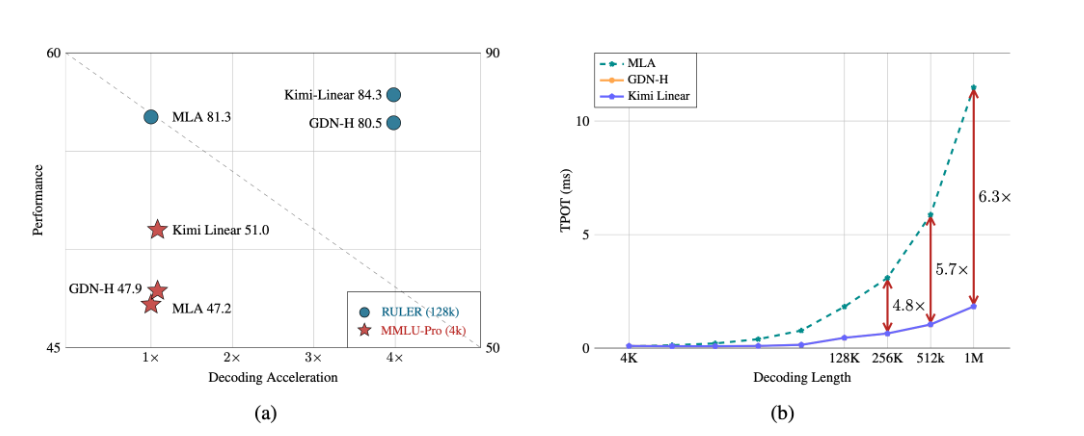
A major breakthrough has been achieved in the core architecture of large-scale models! The release of Kimi Linear marks the first time that linear attention technology has comprehensively surpassed and significantly outperformed the traditional Transformer full-attention model in both performance and efficiency. This "win-win" achievement is expected to significantly reduce the computational barriers and costs for long text processing, complex reasoning, and AI agent applications, potentially changing the competitive landscape of underlying technologies for large-scale models.
Over the past week, the AI community's attention has been drawn to a mysterious model that quietly emerged on the OpenRouter platform—Polaris Alpha. As a direct continuation of yesterday's discussion of the GPT-5.1 leak, this suddenly appearing model brings more technical details and strategic signals worthy of in-depth exploration.
Alibaba open-sources Qwen-Image-2.1: a 7B unified image model with native RGBA transparency and 10-reference editing.