Waymo launches driverless highway Robotaxi service: The "holy grail" of autonomous driving technology – challenges and breakthroughs.
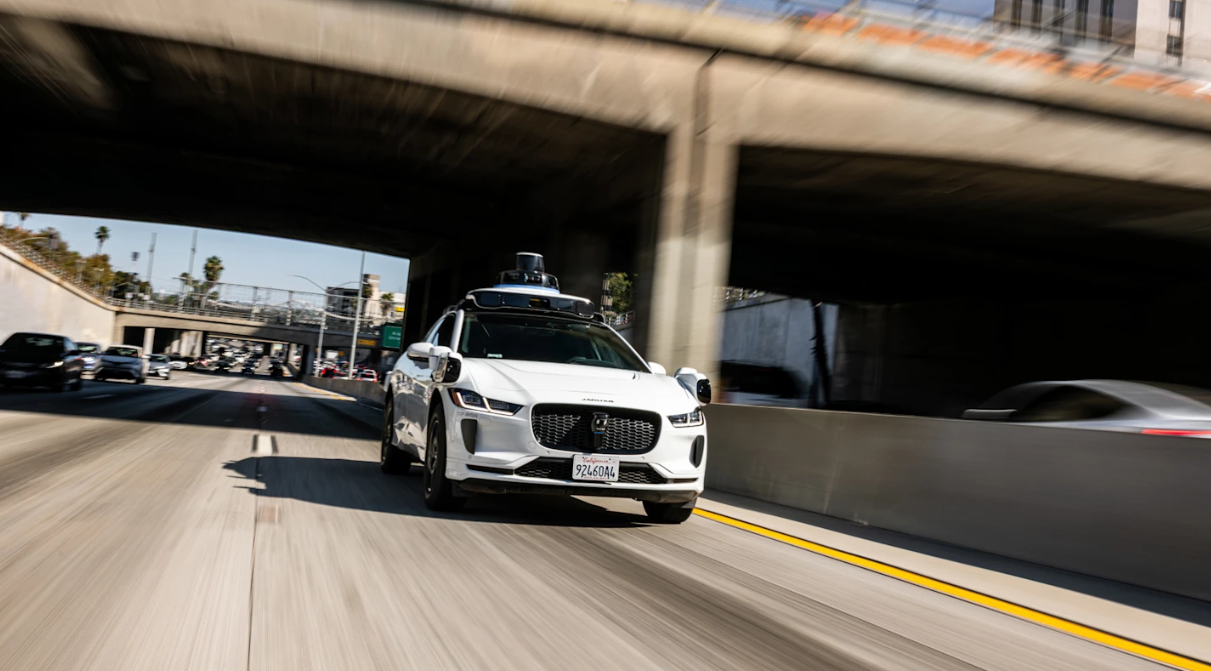
On November 12th local time, Waymo, Alphabet's self-driving car company, announced a milestone breakthrough: launching its driverless highway Robotaxi service to the public in its three core markets of San Francisco, Los Angeles, and Phoenix. This means passengers can now ride in fully driverless, autonomous vehicles on highways, and the system will automatically match passengers with highway routes when it determines that a route will significantly shorten the journey time.
01 Technological Breakthrough: The Unique Challenges of Highway Scenarios and Waymo's Solution
Highway driving may seem simple, but it presents entirely different technological challenges for autonomous driving systems. Compared to urban roads, the highway environment is characterized by three main features: high speeds, short decision times, and complex game dynamics.
Waymo Co-CEO Dmitri Dolgov stated, “While highway driving may seem easy in terms of achieving fully autonomous driving, no human drivers, and scalable operation, truly mastering it is extremely difficult. It took us a long time to get it right.”
1.1 Key Technological Breakthroughs
The core of Waymo's breakthrough lies in its significant upgrades to its sensor fusion strategy and decision-making algorithms:
-
High-Speed Sensor Data Processing: Vehicles need to process LiDAR, camera, and radar data at speeds up to 105 km/h, placing higher demands on the computing platform. Waymo's proprietary machine learning models maintain stable object recognition and tracking accuracy in this high-speed environment.
-
Merging Decision Algorithm: The most challenging scenario on highways is merging at entrance ramps, where vehicles need to judge traffic gaps and merge safely within a very short time. Waymo's deep reinforcement learning models, trained over millions of miles of simulated driving and real-world testing, are now able to handle this high-risk scenario.
-
Predicting Other Drivers' Behavior: Waymo's system can predict the behavior of surrounding human drivers, such as whether they will yield merging space. This ability is crucial for safe highway driving.
02 Safety Architecture: Multi-Layer Redundancy Design Ensures Operational Safety
Safety is the primary consideration for highway services. Waymo has established a comprehensive, multi-layered redundant safety system:
2.1 Hardware Redundancy Design
Waymo vehicles are equipped with dual control systems, including backups for steering, braking, and the computing platform. When the primary system detects an anomaly, the backup system can take over vehicle control within milliseconds, ensuring that even if a single component fails, the vehicle can safely stop or continue driving.
2.2 Joint Response Mechanism
Waymo has established a joint response mechanism with the California Highway Patrol and the Arizona Department of Public Safety. It has also added a dedicated charging network along the route to cope with the power consumption of highway travel. This vehicle-to-infrastructure (V2I) capability greatly improves the efficiency and reliability of emergency response.
03 Business Layout: Waymo's Expansion Strategy and Industry Impact
The launch of this highway service marks a significant milestone in Waymo's commercialization process. Operational data shows that Waymo has already established a clear leading advantage in the US market:
By mid-2025, Waymo has completed over 10 million driverless paid trips, with monthly orders exceeding 250,000. This figure was only 10,000 per week in August 2023, demonstrating its rapid growth momentum.
3.1 City Expansion Roadmap
Waymo's expansion plan is highly forward-looking: Building on its existing presence in Austin, San Francisco, Phoenix, and Los Angeles, the company plans to expand to Miami, San Diego, and Washington D.C. by 2026. Simultaneously, Waymo is conducting tests in New York and Tokyo and plans to open trial rides to the public in London next year.
Of particular note is Waymo's expansion of its San Francisco Bay Area service to San Jose, including trips to and from San Jose Minnetta International Airport, making it its second service point with direct access to the international airport.
04 Competitive Landscape: Waymo's Dominant Technological Approach
Waymo's success highlights the effectiveness of its multi-sensor fusion technology approach. Unlike Tesla's purely vision-based solution, Waymo combines high-definition maps, LiDAR, radar, and human supervision. This compromise—emphasizing perception over mapping—demonstrates a clear advantage in highway scenarios.
Regarding competitors, several companies that once attempted to challenge Waymo have withdrawn: Uber and Lyft abandoned their self-driving projects, and General Motors shut down its Cruise robotaxi program. Amazon's Zoox has not yet reached scale, leaving Tesla as perhaps the only truly formidable challenger.
Elon Musk once joked, "Waymo's problem is that their cars are too 'expensive'." In response, Waymo co-CEO Tekedra Mawakana stated, "We prioritize safety over cost, not the other way around. There may be many ways to go down this path, but currently—we're the only one that's truly succeeding."
05 Technology Outlook: AI Advancements Behind Highway Services
Waymo's breakthroughs in highway scenarios are underpinned by the synergistic advancements of multiple AI technologies:
5.1 Simulation Testing System
Waymo has been conducting highway testing for over a decade. In addition to validation on public roads and closed test tracks, the company also uses simulation experiments to test vehicle performance under various typical and extreme conditions. This closed-loop iterative system of simulation-real vehicle-operation is key to Waymo's ability to rapidly improve system performance.
5.2 Continuous Learning Framework
The Waymo system possesses online learning and continuous optimization capabilities. Data generated by each vehicle's operation is used for model optimization, creating a positive feedback loop. This capability allows the Waymo system to continuously adapt to new scenarios and edge cases.
06 Future Outlook: The Inflection Point for the Autonomous Driving Industry Has Arrived
The launch of Waymo's highway service marks the official transition of the autonomous driving industry from "technology demonstration" to "large-scale operation." From a commercial perspective, the opening up of highway scenarios signifies a qualitative change in the service scope and economic model of Robotaxi:
-
Expanded Service Radius: Highway access enables Robotaxi to cover a wider geographical area, expanding from intra-city to intercity transportation.
-
Increased Economic Value: The average transaction value for long-distance travel is significantly higher than for short-distance intra-city travel, helping to improve the unit economic model.
-
Enhanced Network Effect: More application scenarios will attract more users, forming a virtuous cycle of data, experience, and revenue.
Huaxin Securities analysis points out that Robotaxi is still in its early stages of development, with significant future growth potential. Currently, Waymo offers commercial services in five US cities, with eight more cities announcing plans to offer the service or being on the waiting list. Considering only the US market, Waymo has significant room for future expansion.
Conclusion
The launch of Waymo's Robotaxi service on highways is not only a technological breakthrough but also a crucial turning point in the development of the entire autonomous driving industry. Only when driverless vehicles can safely and reliably operate on highways will the foundation for the large-scale commercialization of autonomous driving technology be truly established.
For the industry, Waymo's success validates the feasibility of the multi-sensor fusion + high-precision map + powerful simulation system approach. With the continuous maturation of technology and ongoing cost optimization, autonomous driving is expected to enter a wider range of application scenarios in the coming years, ultimately achieving a fully driverless transportation system.
As Waymo Product Manager Jacopo Sannazzaro said, "The strangest thing is that this journey isn't strange at all." When technological innovation truly serves human needs, cutting-edge technology will gradually integrate into daily life and become a part of our daily routines. Waymo's highway service is the latest testament to this process.
Reference: https://waymo.com/blog/2025/11/taking-riders-further-safely-with-freeways
Leave your comment
- No comments yet.
Recommended AI Tools
Carefully selected AI tools to improve your work, study, and live efficiency.





Related Articles
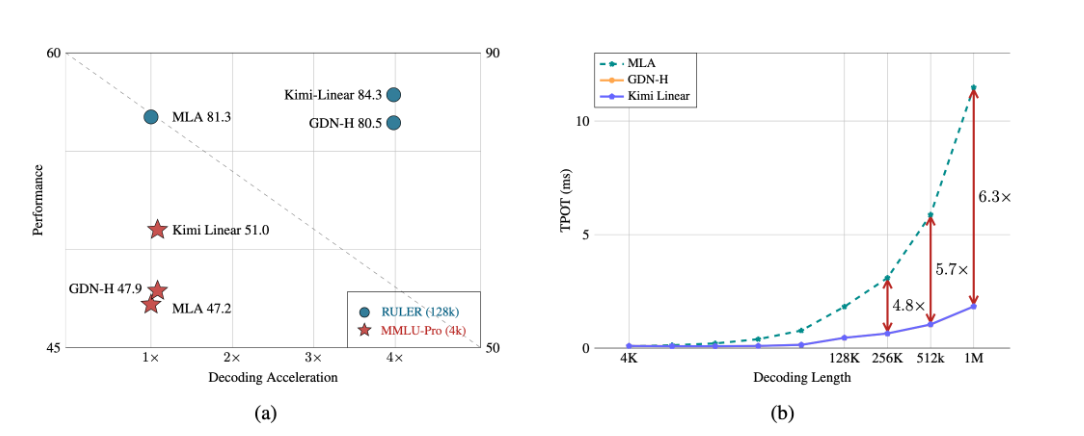
A major breakthrough has been achieved in the core architecture of large-scale models! The release of Kimi Linear marks the first time that linear attention technology has comprehensively surpassed and significantly outperformed the traditional Transformer full-attention model in both performance and efficiency. This "win-win" achievement is expected to significantly reduce the computational barriers and costs for long text processing, complex reasoning, and AI agent applications, potentially changing the competitive landscape of underlying technologies for large-scale models.

Over the past week, the AI community's attention has been drawn to a mysterious model that quietly emerged on the OpenRouter platform—Polaris Alpha. As a direct continuation of yesterday's discussion of the GPT-5.1 leak, this suddenly appearing model brings more technical details and strategic signals worthy of in-depth exploration.

Alibaba open-sources Qwen-Image-2.1: a 7B unified image model with native RGBA transparency and 10-reference editing.