Li Feifei's World Labs releases Marble, a 3D world generation model: enabling the leap from text and images to editable 3D worlds.

On November 12th local time, World Labs, co-founded by AI pioneer Professor Fei-Fei Li, officially released its first commercial "world model" product, Marble. This marks a new stage in generative AI, moving beyond processing text, images, and videos to generating 3D spaces.
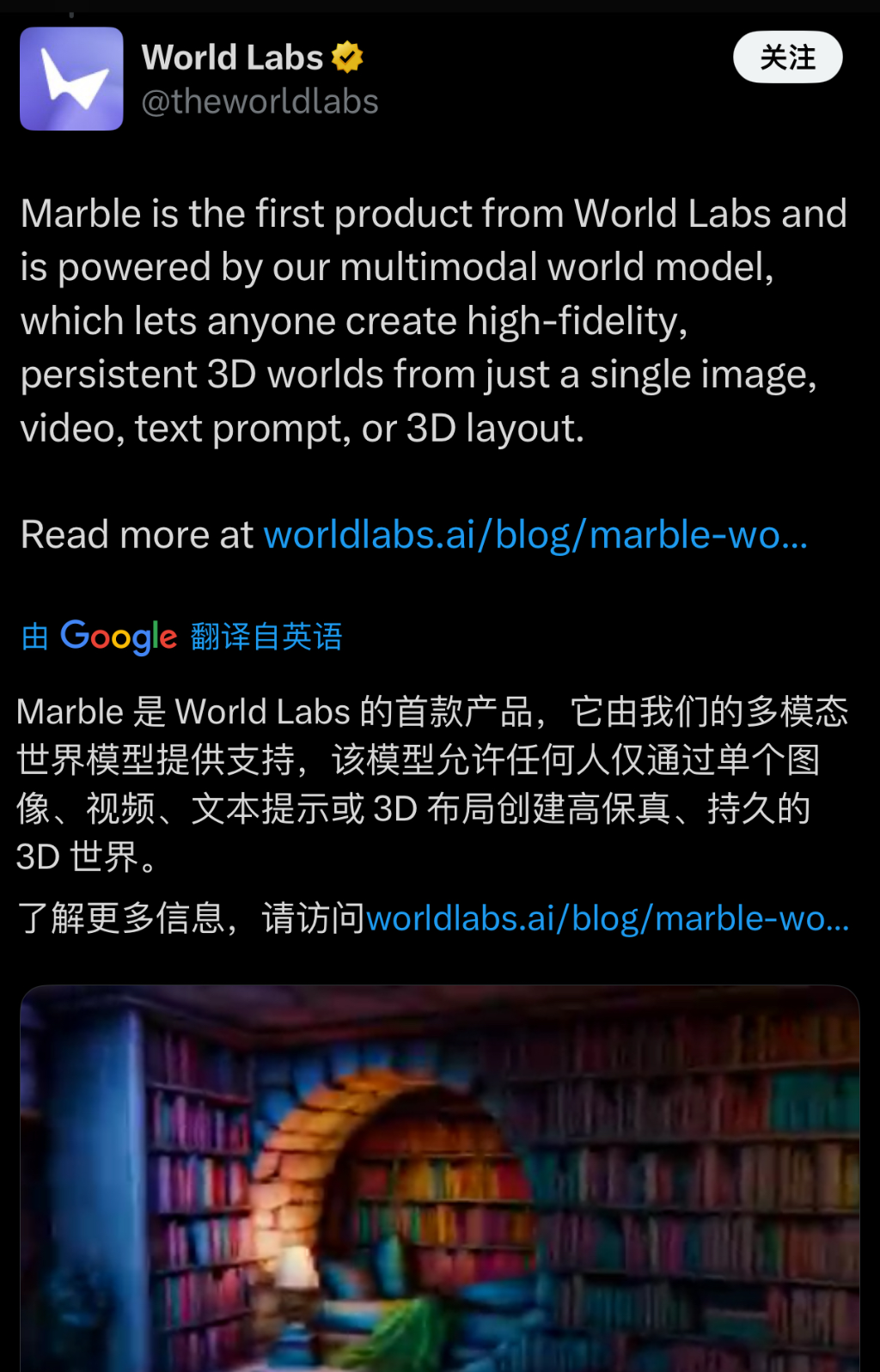
As the industry's first world model natively integrated with AI editing tools, Marble's core advantage lies in its ability to generate persistent, downloadable 3D environments, rather than the more common dynamic generation mode. Users can quickly generate editable, interactive, and highly detailed 3D worlds simply by providing text descriptions, uploading images, or video clips.
Technological Breakthrough: Multimodal Input and Realistic 3D Generation Capabilities
Marble achieves several significant technological breakthroughs. Its core lies in its ability to create persistent, downloadable 3D environments, rather than dynamically generating worlds during user exploration. This design significantly reduces scene deformation and inconsistency issues.
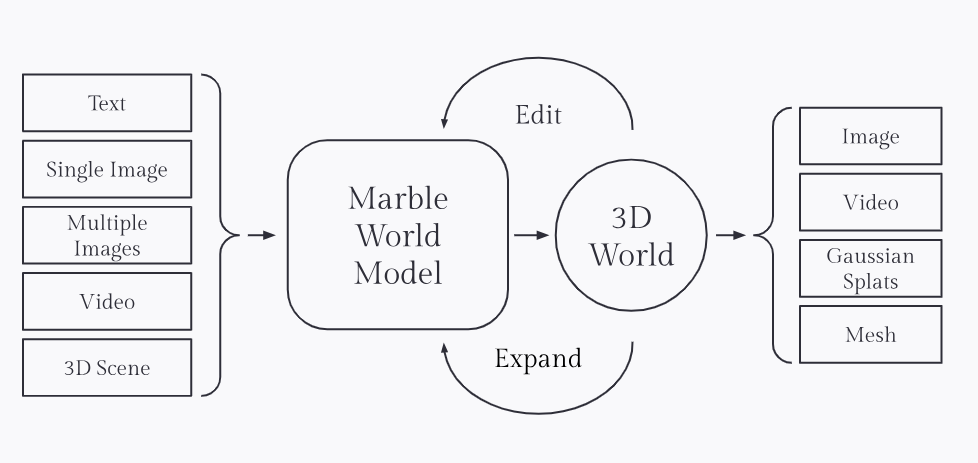
Multimodal input support is a major highlight of Marble. The system can reconstruct a complete and detailed 3D world from a single image, multi-angle images, short video clips, or simple text prompts. Whether it's a text description like "a sunny coffee shop" or an uploaded photo of an actual scene, Marble can generate a 3D space that the user can "walk into" within seconds.
Marble employs an innovative STAG (Spatiotemporal-Behavior Graph) architecture, representing the world in a structured way, including four core elements: nodes (representing objects), edges (representing relationships), attributes (storing state information), and behaviors. This architecture cleverly solves the computational complexity problem faced by traditional Transformers when processing video through sparsity and structured priors.
Core Functions: AI-Native Editing and World Expansion Capabilities
Marble is not just a generation tool, but also provides a complete creative ecosystem. Its built-in Chisel editor decouples structure and style, allowing users to first build the spatial structure and then define the visual style through text prompts.
The world expansion feature enables users to extend the generated world. When moving to the edge of the scene, the model can be instructed to continue generating in the surrounding area, increasing detail density. For ultra-large-scale creations, the compositor mode supports seamless stitching of multiple independent worlds, allowing users to combine different worlds with distinct styles into one.
For exporting, Marble supports generating Gaussian sputtering, triangular meshes, or video formats, and can be directly integrated into mainstream creation tools such as Unity, Unreal Engine, and Blender, seamlessly integrating into existing workflows. Gaussian sputtering technology accurately simulates the optical properties of objects by generating millions or even billions of tiny "sputtering points," achieving cinematic rendering effects.
Application Scenarios: From Creative Industries to Scientific Simulation
Marble's initial application scenarios focus on three major areas: game development, film and television visual effects, and virtual reality:
-
In game development: Developers can use Marble to generate background environments, import the obtained 3D assets into mainstream game development platforms, and then add interactive logic and code. World Labs emphasizes that Marble aims to empower, not replace, existing processes, serving as a complementary tool.
-
In the film and visual effects field: Marble effectively avoids the image instability and camera control problems common in traditional AI video generators. Its output 3D assets support frame-level precision for set design and camera movement, bringing revolutionary changes to special effects production.
-
In virtual reality: Marble is fully compatible with mainstream VR devices such as Apple Vision Pro and Meta Quest 3. All generated worlds can be directly experienced immersively through VR headsets, potentially alleviating the long-standing "content hunger" problem faced by the VR industry.
Beyond the creative industries, Marble also shows potential in robotics training, easily building simulated training environments and providing a wealth of realistic training data for developing AI systems such as autonomous vehicles and robots.
Business Model: Four Subscription Tiers to Meet Diverse Needs
Marble employs a combination of freemium and paid subscription models, offering four subscription tiers:
-
Free: Supports 4 text/image/panorama input generation attempts
-
Standard ($20/month): Provides 12 generation attempts and advanced editing features
-
Professional ($35/month): Includes 25 generation attempts and commercial usage rights
-
Flagship ($95/month): Unlocks all features and 75 generation attempts
This flexible pricing strategy allows for suitable solutions for everyone from individual enthusiasts to large enterprises, lowering the technical barriers and costs of 3D content creation.
Technical Background and Future Outlook
The launch of Marble marks a significant step for World Labs in the field of "spatial intelligence." Professor Fei-Fei Li, in her "World Model Manifesto," points out that while current AI, represented by large language models, excels at processing abstract knowledge, it lacks a true understanding of the physical world. She believes that spatial intelligence will be a key breakthrough in achieving true machine intelligence.
Compared to its competitors, Marble has already achieved a leading edge in the commercialization of world models. Currently, competitors like Decart and Odyssey only offer free demo versions; Google's Genie is still in a limited research preview phase.
Looking ahead, Marble will not only change the workflow of the creative industries but also has the potential to become a "computable hypothesis generator" for scientific discovery. In fields such as biology, chemistry, and materials science, Marble can be used to simulate the dynamics of complex systems, accelerating the scientific research process.
Conclusion
The release of Marble is a significant milestone in the field of 3D content creation. By lowering the technical barrier to 3D creation, it allows more creators to quickly transform their ideas into high-quality 3D scenes, which will undoubtedly drive the prosperity and development of the entire digital content ecosystem.
With continuous technological iteration and improvement, we have reason to believe that Marble will become an important tool for game developers, visual effects artists, architects, product designers, and researchers, propelling AI from processing abstract knowledge to understanding and interacting with the physical world.
For AI technology users, Marble is undoubtedly a cutting-edge tool worthy of close attention and recommendation, bringing unprecedented 3D content creation experiences to our users.
References: This article is compiled from official announcements and related technical analyses from World Labs. For more information, please visit the Marble official website: https://marble.worldlabs.ai. https://www.worldlabs.ai/blog/marble-world-model
Leave your comment
- No comments yet.
Recommended AI Tools
Carefully selected AI tools to improve your work, study, and live efficiency.





Related Articles
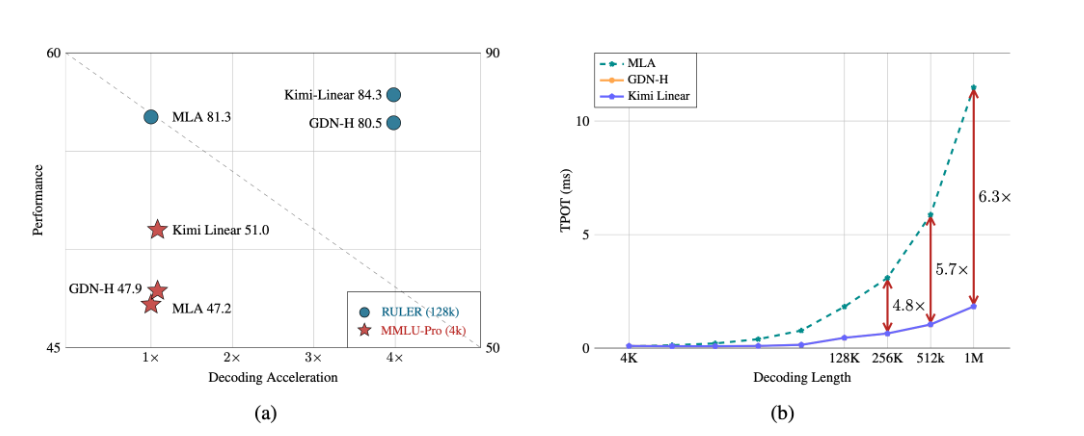
A major breakthrough has been achieved in the core architecture of large-scale models! The release of Kimi Linear marks the first time that linear attention technology has comprehensively surpassed and significantly outperformed the traditional Transformer full-attention model in both performance and efficiency. This "win-win" achievement is expected to significantly reduce the computational barriers and costs for long text processing, complex reasoning, and AI agent applications, potentially changing the competitive landscape of underlying technologies for large-scale models.
Over the past week, the AI community's attention has been drawn to a mysterious model that quietly emerged on the OpenRouter platform—Polaris Alpha. As a direct continuation of yesterday's discussion of the GPT-5.1 leak, this suddenly appearing model brings more technical details and strategic signals worthy of in-depth exploration.
A new paradigm in knowledge acquisition has arrived, this time powered by AI.

Standing at this moment in 2025, when we look back at the development journey of artificial intelligence, we witness how this revolutionary technology has reshaped every aspect of human society. From initial theoretical concepts to today's practical applications, each step forward in AI technology has changed the way we live. Let's revisit this fascinating journey together.